Clark County District Court Judge Eighth Judicial District Department 23
District Court Judges preside over major civil and criminal cases, including felony prosecutions, large civil disputes, family law matters, and constitutional challenges. These judges interpret and apply Nevada law, make decisions about sentencing, rule on the admissibility of evidence, and ensure that court proceedings follow due process. Because District Court judges shape how laws are enforced and how individual rights are protected, their decisions directly affect public safety, civil liberties, and access to justice. Although judicial races often receive less attention than other offices, these positions play a critical role in upholding the rule of law, ensuring fairness in the legal system, and maintaining public confidence in an independent judiciary.Note: This is a nonpartisan race. The designation only applies to the race, and does not reflect the political affiliations of the candidates.
Click a candidate icon to find more information about the candidate. To compare two candidates, click the "compare" button. To start over, click a candidate icon.
-

Martina Bauhaus
(NON)
-
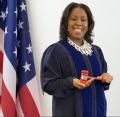
Jasmin Lilly-Spells
(NON)
What experience or qualifications best prepare you to serve in this judicial role?
How do you approach interpreting and applying the law when deciding cases?
How would you ensure fairness, impartiality, and public confidence in the courtroom?
Candidate has not yet responded.
Candidate has not yet responded.
Candidate has not yet responded.
Campaign Phone Number
702-907-5565
Endorsements
https://judgelilly-spells.com/community-outreach-endorsements/
More than a decade in the Clark County Public Defender's Office prepared me for this bench in ways that are hard to replicate. Rising to chief deputy public defender meant managing a high-volume criminal caseload from first appearance through final disposition: hearings, motions, negotiations, trials, while simultaneously maintaining a pro bono civil practice. I sat across from clients facing the most serious moments of their lives and learned how the system actually operates from the inside. When I took the bench in Department 23 in January 2021, I already understood what it feels like to be on the other side of a judicial decision. That perspective informs how I run my courtroom every day.
The law is the starting point, not a finish line. My approach is to follow the law as written, applied to the facts in front of me, without outside pressure or personal preference shaping the outcome. That means reading the record carefully, hearing every side, and making decisions that can withstand scrutiny on appeal. My years as a public defender gave me fluency across both criminal and civil proceedings, which matters in a general-jurisdiction courtroom like Department 23 where the case type changes from one proceeding to the next. I don't bring an agenda to the bench. I bring the law.
Fairness starts with consistency. Every person in my courtroom gets the same standard, regardless of who they are or who they're up against. Impartiality means the law drives the outcome, not the personalities involved. As for public confidence, that's built over time through a record people can actually look at. My case filings are public. My record in Department 23 is searchable. I hold myself to four standards on the bench: compassion, integrity, accountability, and public safety. I'd rather be measured against those by what I've done than by what I say about them.
To make a selection for a candidate you must first find your races. Would you like to find your races now?
You have already selected the maximum number of candidates for this race.
You must uncheck an existing selection before making another selection.