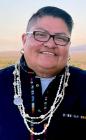
Justice of the PeaceEvery county has justice courts presided over by a Justice of the Peace. Each court has one justice of the peace and one constable. Justice courts primarily deal in small claims cases for $10,000 or less. They handle misdemeanor crimes, protective orders, evictions, traffic infractions (including DUIs), and small-dollar civil matters, such as shoplifting and writing bad checks. The number of justices in a county depends on the population. Justices do not need to be attorneys or have any specific education. 4-year term.Why you should care:Due to the nature of the offenses they adjudicate, many people will have some interaction with one of their county justices of the peace. Justice courts also hear many non-criminal civil disputes, often without attorneys; in these cases, the justice of the peace will interact directly with residents.For additional information:https://www.azcourts.gov/AZ-Courts/Justice-Courts
Candidate has not yet responded.
Candidate has not yet responded.
Candidate has not yet responded.
Campaign Phone
5205613132
Public Policy Priorities
Due‑Process Protections — I support clear, statutory safeguards ensuring that any change to an elected Justice of the Peace’s administrative authority requires notice, an opportunity to respond, and a written, reviewable explanation.Judicial Transparency — I believe court actions that affect public trust must be documented, accessible, and grounded in clear reasoning so voters and counties understand how justice is administered.Respect and Dignity in the Courtroom — Every person deserves to be heard and treated with professionalism, regardless of background, income, or circumstance.Local Court Stewardship — I believe in responsible management of court resources, collaboration with county partners, and ensuring that rural courts remain accessible, functional, and responsive to community needs.
Qualifications and Experience
I bring four years of experience as the elected Justice of the Peace for Precinct 3, where I have applied the skills of an advocate, leader, and educator to every decision on the bench. My academic background includes a B.A. in Elementary Education and an A.A. in Political Science, giving me both the grounding in law‑related studies and the practical training in communication, problem‑solving, and community engagement that this role demands. Much of my life has been devoted to public service, including seven years on the Governing Board of the Baboquivari Unified School District on the Tohono O’odham Nation. Those years taught me how to listen, how to lead collaboratively, and how to navigate complex systems while staying rooted in community needs. These experiences—combined with my time on the bench—shape the steady, principled approach I bring to administering justice for the people of Precinct 3.
Community Service
Chukut Kuk District Member, West Village Communities: Kots Kuk Village Tohono O'odham Nation Legislative Council - Alternate, Chukut Kuk District, 2009 - 2013 Baboquivari Unified School District, Governing Board Member, 2011 - 2020 Baboquivari Unified School District, Governing Board President, 2018 - 2020 Baboquivari Unified School District, Subcommittee Chair: Addressed Truancy and related causes, 2012-2013, 2013-2014 National School Boards Association, American Indian/Alaskan Native Caucus, President, 2015 - 2017, President-elect, 2013 - 2015 Arizona School Board Association, Pima County Co-Director, 2012 - 2014 Arizona School Board Association, Hispanic Native American Indian Caucus, Director, Region II, 2013-2014 Arizona State Impact Aid Association, Member National Association of Federally Impacted Schools, Member Pima County Superintendent and School Board Member Collaborative, Member
Education
University of Arizona, Indigenous Teacher Education Project (ITEP), Elementary Education B.A., Dec 2022 Elementary Teacher Certification, 2022 Middle School ELA and Social Science Certified Pima Community College, Political Science A.A., Dec 2020
I bring four years of experience as the elected Justice of the Peace for Precinct 3, where I have applied the skills of an advocate, leader, and educator to every decision on the bench. I am the current Pima County Presiding Justice of the Peace. My academic background includes a B.A. in Elementary Education and an A.A. in Political Science, giving me both the grounding in law‑related studies and the practical training in communication, problem‑solving, and community engagement that this role demands.
Much of my life has been devoted to public service, including seven years on the Governing Board of the Baboquivari Unified School District on the Tohono O’odham Nation. Those years taught me how to listen, how to lead collaboratively, and how to navigate complex systems while staying rooted in community needs. These experiences—combined with my time on the bench—shape the steady, principled approach I bring to administering justice for the people of Precinct 3.
Arizona’s Justices of the Peace are elected constitutional officers, accountable directly to the voters we serve. Yet in recent years, administrative authority in some justice courts has been reassigned through internal orders issued without notice, findings, evidence, or any public explanation. That lack of process exposes a procedural gap in state law—one that undermines transparency, weakens accountability, and leaves both counties and voters without a clear record of why an elected judge’s statutory authority was altered.
To address that gap, I helped write HB 2976, legislation establishing basic due‑process protections before any administrative action can materially change the authority of an elected Justice of the Peace. Although the bill did not cross the finish line this year, the need for reform remains urgent. We will continue pursuing this safeguard because due process is not about power—it is about legitimacy, and the people of Arizona deserve a system that honors it.
My judicial philosophy is grounded in fairness, accountability, and an understanding of the rural community I serve. In a court with limited local resources and many indigent defendants, sentencing must reflect both the seriousness of the offense and the practical barriers people face. A sentence that cannot be completed because services don’t exist, transportation is limited, or fines exceed a person’s means does not promote accountability—it sets people up to fail. I focus on responses that are proportionate, realistic, and workable in rural life.
Accountability still matters. I believe in sentences that encourage responsibility and respect for the law, supported by tools that actually function in our community—structured payment plans, community‑based obligations, or compliance check‑ins. Justice must be firm, fair, and humane. Everyone who enters the courtroom deserves dignity and a sentence that is meaningful and achievable