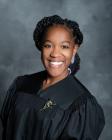
Justice of the PeaceEvery county has justice courts presided over by a Justice of the Peace. Each court has one justice of the peace and one constable. Justice courts primarily deal in small claims cases for $10,000 or less. They handle misdemeanor crimes, protective orders, evictions, traffic infractions (including DUIs), and small-dollar civil matters, such as shoplifting and writing bad checks. The number of justices in a county depends on the population. Justices do not need to be attorneys or have any specific education. 4-year term.Why you should care:Due to the nature of the offenses they adjudicate, many people will have some interaction with one of their county justices of the peace. Justice courts also hear many non-criminal civil disputes, often without attorneys; in these cases, the justice of the peace will interact directly with residents.For additional information:https://www.azcourts.gov/AZ-Courts/Justice-Courts
Campaign Phone
4803630295
Public Policy Priorities
Accountability, Reliability, Integrity.
Qualifications and Experience
Multi business ownership.
Memberships & Affiliations
Action Neighborhood Alliance
Community Service
Child Crisis Center, Just Serve Org.
Education
Masters Degree: Mental Health Counseling
I’ve carried the responsibility of owning/operating multiple businesses, including a private counseling practice. My background and knowledge base in human behavior and emotion will be a valuable resource, with numerous implications within the court and legal system.
Right now, one of the biggest challenges in the West Mesa Justice Court, is having a justice that simply won’t show up. As of fiscal year 2026, JP Sears has used 243% of her allotted pro tem (substitute) judges. Her record shows that her priority is not to do her job and serve the people at West Mesa.
I am committed to considering the all of the immediate and overarching circumstances of each case. I believe that everyone deserves the benefit of a doubt, the first time. I believe strongly in second, and sometimes third chances. I’m committed to working hard to find a consistent balance between justice and compassion.
Public Policy Priorities
Restorative Justice, Access to Justice, Representation
Qualifications and Experience
Incumbent, 8 years
Endorsements
Run For Something
Education
Arizona State University, BA Global Studies, Minor German, Certificates in International Relations, Political Entrepreneurship, and Women & Gender Studies
After joining the bench in January 2019, I completed the Judicial College by the Arizona Supreme Court. We complete continued judicial education ever year. My educational background is in international relations, with diplomacy being an emphasis. The court system relies on the fact finding abilities of the judge as well as the ability to problem solve. I also worked in the classroom with students in elementary and middle school before joining the bench. Often times, being a judge is like being a teacher, a coach, a babysitter, and a therapist all wrapped in one. 8 years later, I've seen it all and feel I am the best person qualified to sit in this seat.
The economy is one of the biggest issues that the community is facing, which always leads back to the justice courts. An unhealthy economy leads people to inadvertently lose their housing due to financial instability, job loss, or even just the cost of living increasing with inflation. People are barely making it. This also creates an uptick in substance abuse disorder, which gets people in trouble with DUIs, drug possession, theft, and other misdemeanors we see in justice courts. While the justice courts can not solve these issues, we can treat everybody with dignity, fairness, and respect. Allowing people to be heard, even if they are not the prevailing party, is incredibly important. I also release warrants and driver's license holds without requiring fines to be paid in full, so they can be set on a payment plan and be able to survive. We also have Veterans Court and Homeless Court which helps a lot of people resolve their cases and moved forward with their lives.
Restorative justice vs punitive justice is key. For all juvenile civil traffic cases, I provide diversion. Instead of paying a fine or taking a defensive driving course, I assign community service, essays, even Canva presentations. Sometimes depending on their interests, I will have their parent take them on a tour to a trade school. When it comes to criminal issues, the brunt of the penalty is in fines. Most of the time when I find someone guilty at a bench trial, they are already facing a financial hardship due to other things going on their life. It is not uncommon for me to listen to the sentencing recommendations and allow for a lower fine or a combination of fines and community service. However, the majority of cases that go forward resolve via plea agreement. If a notice a plea agreement seems off or a defendant stands by their innocence, I will reject the plea and set it to trial. It's important to me that everybody knows and exercises their rights.