Campaign Phone
6028854959
Public Policy Priorities
Improving academic performance in the schools
Qualifications and Experience
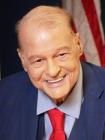
school board member and president; legislator, chair of academic accountability committee, former attorney general,
Memberships & Affiliations
Republican Party
Endorsements
Jerry Colangelo, Jerry Sheridan, Fife Symington, former education chair Mark Anderson, former county supt Don Covey, AZCOPS
Community Service
Volunteer teacher of legal writing at ASU Law School, volunteer teacher of Ariz Construction Law at ASU Engineering College
Education
Harvard College BA magna cum laude, Harvard Law School with honors
What I am doing currently and would continue:
Public schools, including charter schools which are public schools:
We suggest standards to the state board, test students to see if they have mastered the standards, and report the results to the public.
ESA: Whether we can test students in ESA is up to the legislature. If it passes a bill to provide for this, I will administer it. The original philosophy of the legislature is that parents provide the accountability in that if a parent takes a student out of a public school to send him/her to a private school, and the private school does not perform, the parent will move the child again. The overwhelming majority of students (1 million 200 thousand) are in public schools, compared to 104,000 in ESA.
funding: My whole adult life, starting with my service on a public school board, I have advocated for more funding for the schools. Now it can be done without affecting taxes, because there is plenty of money in land trust, and advocate this in all of my annual state of education speeches at the legislature.
Teacher pay and recruitment: I have constantly been a strong advocate of raising teacher pay as described above.
Funding gaps: see answers above.
Student achievement: I have changed the direction of the department, compared to my immediate predecessors, to focus on academic achievement. Here are a few of my initiatives to help schools improve academics:
1. Project momentum: department employees go to the schools to help principals and superintendents with leadership, and teachers with instruction. One of our projects was to work with the bottom 5% of schools and 80% of those schools are no longer in the bottom 5%
2. Adopting a school in a low income area: department employees went to that school every week and it's math scores went up 27%, proving that poor kids could learn as well as rich kids if they are properly taught.
3. Cell phones: Ied the fight to get cell phones out of the classrooms and they can now focus on learning.
4. Career or college readiness: My main job is to help schools prepare students for success in college. But not everyone goes to college, so I have vastly expanded the career and technical education pr
rural and tribal communities: Every program that we do is successful in all 15 counties (see azed.gov). I changed the approach to the department of Indian Education from that of prior superintendents to focus intensely on improving the students' academics. Most had previous proficiency rates of around 5% which I was sworn to change.
Example math: Ganado 159% increase; Red Mesa 149% increase; Baboquivari 197% increase; Kayenta 122% increase; Sacaton 124% increase; Tuba City 113% increase; and so on. The star was Chinle which reached the overall state average in math.
School safety: this has been a priority. I increased the number of police officers in schools from 117 to almost 500. And they are the best trained in the country, because I hired Navy Seals to train them.
Mental health services: we fund more mental health professionals than police officers, because the legislation requires us to meet the request of the schools, and that is what I have done.
Career and technical education: In my discussion of this topic in answer to an earlier question, I ran over 1000 words and was cut off mid sentence so I am glad I can finish the thought: I made a deal with 40 of the largest companies in Arizona, such as TSMC, the Taiwanese semiconductor company: we would furnish the skilled labor they need, and in turn they would train our teachers what skills they need to give the students the skills they need to get a well paying job after High School, with their company. We had a traveling road show, where a company that wanted to hire in that area would tra
Public Policy Priorities
My top public policy priority is ensuring every Arizona student has access to a high-quality public education, regardless of their ZIP code or background. That starts with fully funding public schools, raising teacher pay, and addressing the educator shortage through recruitment and retention initiatives. I support evidence-based instruction to improve literacy and math achievement, stronger special education services, and expanded mental health supports. I also believe taxpayer dollars must be spent responsibly, with greater transparency and accountability for all publicly funded education programs, including ESA and charter schools. Finally, I will strengthen pathways to college and careers by expanding career and technical education, dual enrollment, and partnerships with higher education and industry so every student graduates prepared for future success.
Qualifications and Experience
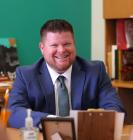
I have dedicated my career to improving outcomes for children, families, and educators across Arizona. As a Board Certified Behavior Analyst and Regional Clinical Director, I have led multidisciplinary teams, managed complex programs, and developed evidence-based solutions that support student success. I also serve as an Assistant Professor, preparing future behavior analysts and educators, and I am pursuing a Ph.D. in Applied Behavior Analysis. With a master’s degree in Special Education and additional training in leadership and organizational management, I bring both classroom knowledge and executive experience. As a father of two daughters in Arizona schools and a product of public education myself, I understand the challenges facing our students, educators, and families and am committed to building a stronger, more equitable education system.
Memberships & Affiliations
BACB, AZABA
Endorsements
TBA
Community Service
Youth Sports Organizations, Elks Lodge, Pi Kappa Alpha
Education
University of the Pacific, Michigan State University, Northern Arizona University, University of Chicago, Florida Institute of Technology, Cambridge College
As Arizona Superintendent of Public Instruction, I believe every publicly funded education option should be transparent, accountable, and focused on student success. Public schools need stable funding, strong teacher support, and a commitment to improving literacy, math, and special education services. Charter schools should maintain flexibility while meeting clear fiscal and academic accountability standards. I respect families who choose homeschooling and support access to optional resources without unnecessary regulation. For ESA programs, I support stronger guardrails, including audits, fraud prevention, vendor oversight, and transparent reporting. Success should be measured by student achievement, graduation rates, teacher retention, parent satisfaction, and responsible stewardship of taxpayer dollars.
Arizona’s chronic underfunding of public education has contributed to teacher shortages, low pay, and inequities across districts. I support increasing sustainable K–12 funding, raising teacher and support staff salaries, and investing in recruitment and retention through mentorship, loan assistance, and career advancement opportunities. I would prioritize resources for rural, Tribal, and high-poverty schools to ensure every student has access to quality educators and programs, regardless of ZIP code. I also support restoring trust in public education by directing taxpayer dollars to classrooms, increasing transparency, and advocating for policies that strengthen neighborhood public schools while addressing longstanding funding disparities across Arizona.
Improving Arizona’s public schools starts with investing in students and educators. I would expand evidence-based reading and math instruction, strengthen early intervention and tutoring, and ensure schools have the resources to support every learner. I will work to recruit and retain high-quality teachers, reduce unnecessary administrative burdens, and expand access to special education and mental health services. To improve graduation rates and college and career readiness, I support increasing dual enrollment, career and technical education, internships, and workforce partnerships. Success should be measured by student growth, literacy and math proficiency, graduation rates, and postsecondary outcomes—not just standardized test scores.
Every Arizona student deserves access to a high-quality education, regardless of where they live or their background. I would advocate for equitable funding, expand teacher recruitment and retention incentives in rural and Tribal communities, and improve access to broadband, technology, and specialized services. For students with disabilities, I would strengthen special education supports, ensure timely evaluations, and invest in qualified staff. For English language learners, I support evidence-based language instruction, multilingual family engagement, and resources that help students thrive while honoring their cultural and linguistic strengths. My goal is to remove barriers so every student has the opportunity to succeed.
Safe, healthy schools are essential for student success. I would expand access to school counselors, psychologists, social workers, and evidence-based mental health supports while strengthening bullying prevention and crisis response programs. I support investments in secure campuses without creating barriers to learning. To prepare students for the future, I would expand career and technical education, dual enrollment, apprenticeships, and partnerships with community colleges, universities, labor organizations, and local employers. By connecting classroom learning to real-world opportunities, we can improve graduation rates, strengthen Arizona’s workforce, and ensure every student is prepared for college, a career, or military service.
Candidate has not yet responded.
Candidate has not yet responded.
Candidate has not yet responded.
Candidate has not yet responded.
Candidate has not yet responded.
Candidate has not yet responded.
Candidate has not yet responded.
Candidate has not yet responded.
Candidate has not yet responded.
Candidate has not yet responded.