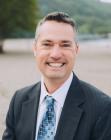
Campaign Phone Number
3602071665
Biography (max 750 char)
Chris Bloomquist is a husband, father, coach, musician, engineer, climate recruiting founder, and proud Latino American. His father was a fourth-generation farmer; his mother, a Chilean immigrant and social worker, survived a political coup before becoming a U.S. citizen. These roots taught him the value of family, community, respect for nature, and treating others as you'd want to be treated—values that now drive his campaign for the 32nd District. His wife Olivia, a 20-year Boeing employee and former Broadview Thomson PTA President, and their daughters share this civic spirit through student government, the Olympia Page program, sports, and the arts. The family road-trips in their EV to National Parks and State Capitols, exploring the cou
I want to focus on fully funding our public schools, restoring funding to the CCA and look at creating a tax code the supports hiring in the public and private sectors . We need to put people back to work to generate more revenue and economic opportunity to support our vital programs like education, infrastructure and public safety.
Make good on our election promises! We can start with the millionaire's tax, and not only seeing in through, but also balancing the tax code to then lower taxes on the working class.
Invest in both first responders, but also our criminal justice system and infrastructure. If we can have communities that are more invested in via beautification and create a more expedient criminal justice system, we can have all 3 of these systems work together to have safer and more commerce friendly neighborhoods that are also more desireable to live in. The focus starts with improving conditions on Aurora Ave/Hwy 99.
I believe elected officials should make themselves accessible to local journalist. I believe the idea of "legislative privelage" is nonsense; legislators are servants of the people and therefore their work and communications should be subject to public scrutiny and open to be seen and read.
I am not knowledable enough to weigh in on this subject, but I'm open to listening to views to hear the pros and cons of redisctricting if and where needed.
It comes down to the economic crisis if living in the north Puget Sound. Folks are hurting economically with the 2nd most regressive tax code in the country, and local unemployment is causing an even greater divide between the wealthy and working class. We need to balance the tax code while creating economic job opportunities that give folks pathways to equitable employment.
Campaign Phone Number
4255839101
Biography (max 750 char)
Licensed Certified Public Accountant (CPA), business owner, and financial executive with more than 20 years of experience in accounting, auditing, financial analysis, tax consulting, strategic planning, and public service leadership. Proven track record of strengthening corporate compliance, improving operational efficiency, reducing costs, and providing trusted financial guidance to individuals and businesses. Former Fortune 500 auditor and senior finance analyst with extensive international auditing experience across Europe and Asia. Owner and Managing CPA of Will Chen CPA PLLC and as an elected Edmonds City Councilmember. Recognized for leadership, fiscal stewardship, community engagement, and commitment to organizational accountability.
Washington's budget should reflect the priorities of the families who pay for it. Government has a responsibility to invest in what matters most, measure results honestly, and spend taxpayer dollars with the same care families use when managing their own household budgets.
My top budget priorities are affordability, education, and public safety. We need to invest in housing, transportation, and workforce development so working families can afford to stay in our communities and seniors can age in place. We must strengthen K-12 education while expanding apprenticeships, career and technical education, and community colleges to prepare students for family-wage careers. We also need to expand behavioral health services while ensuring first responders and crisis response systems.
Public confidence in our elections isn't built through rhetoric—it's earned through transparency, accountability, and participation. Washington already has one of the strongest election systems in the country, and our responsibility is to continue strengthening that trust by ensuring every eligible voter can participate with confidence that every lawful ballot is counted accurately and securely.
That means continuing to invest in election security, cybersecurity, ballot tracking, post-election audits, and the local election officials who administer our elections. Public confidence grows when the process is transparent, understandable, and consistently applied. Elected leaders also have a responsibility to earn the public's trust every day—not just during election season.
The state must ensure local law enforcement and first responders have the staffing, training, and resources they need to do their jobs effectively. Communities facing gang violence, drug trafficking, human trafficking, and repeat criminal behavior deserve a state partner that takes those challenges seriously. Violent offenders should be held accountable, and victims should know the justice system is working for them.
At the same time, lasting public safety means preventing crime before it starts. We should continue expanding access to behavioral health care, addiction treatment, and crisis response so people can get help before a situation becomes an emergency. We should also invest in strong public schools, apprenticeships, career and technical education, and workforce development.
Local journalism is essential to healthy communities. It keeps residents informed, holds government accountable, and gives people reliable information about the issues affecting their families and neighborhoods.
I believe Washington has a role in supporting a healthy local news ecosystem, but that role should never compromise editorial independence. Government should focus on transparency, making public information easier to access, ensuring state communications reach local and community-based news outlets, and exploring responsible ways to strengthen local reporting, especially in communities that have lost access to reliable local news.
In a diverse district like the 32nd Legislative District, trusted information comes from many sources, including neighborhood publications, digital news
Washington's independent bipartisan redistricting commission is a better model than having whichever party is in power draw its own political maps, and I believe that structure should remain.
However, we can make meaningful improvements before the 2031 cycle. First, the process should be more transparent. Major negotiations should occur in public, with draft maps and supporting data released early enough for meaningful public review. The public deserves to understand why boundaries are being proposed, not just see the final product.
Second, I would prioritize keeping communities of interest together whenever possible. Districts should reflect how people actually live, work, attend school, and share local services—not simply meet population targets.
The greatest challenge facing the 32nd Legislative District is affordability. Too many working families, seniors, and young adults are finding it increasingly difficult to afford housing, childcare, transportation, and other everyday necessities. Even people with good-paying jobs are feeling squeezed.
State government has a responsibility to focus on lowering the cost of living through practical, long-term solutions. That means increasing the supply of housing at all income levels, making it easier to build where infrastructure already exists, investing in transportation that reduces commuting costs, expanding access to affordable childcare, and ensuring state policies do not unnecessarily increase costs for families and small businesses.
Affordability is more than housing. It is life.
Campaign Phone Number
2066736194
Biography (max 750 char)
I want to make life better for your family and you in South Snohomish and North King Counties. I do not think that the status quo is working for working people. As a business attorney, family caregiver, and animal rights activist, I’ve seen the systemic failures caused by insider politics firsthand. Overcoming partisan gridlock, I united our community as the first woman of color elected to Edmonds City Council, where I built my reputation on governing through outreach, education, bipartisanship, and compromise. I am the only candidate endorsed by our teachers via WEA-PAC, Snohomish County Executive Dave Somers, and other elected officials who want meaningful change. Join my fight to government fair for all Washingtonians!
Personally, I support fully funding public education as well as defending our health care system from federal cuts, such as Apple Health. As a community, we must build more safety nets to cover behavioral health services and addiction treatment beds. Rather than cutting these vital human services when the needs are dire, Washington must seek progressive revenue sources that lessen the burden on working-class families. I highly favor progressive revenue streams that reform regressive fines and fees that are disproportionately affect upon some of our most vulnerable residents.
Washington needs to continue to combat election misinformation and strengthen cybersecurity defenses for our mail-in, electronic voting system. Participation in democracy means having every single person at the table, which means allowing more languages to be used for ballots and voter guides, and actively reaching out to working-class, immigrant, and refugee voters. This also means we should ensure that our tracking of campaign contributions through the Public Disclosure Commission is robust and open so that voters are aware of who is paying for political speech.
I believe that true public safety cannot be achieved with enforcement alone. It takes clean streets, economic opportunity, and fully addressing the underlying causes of crime through funding police and social services. In the face of the persistent opioid epidemic, Washington must step up with real political will to fund mental health centers and emergency treatment beds so people in crisis can get immediate help. We must provide our local law officers and emergency responders with the resources, wages, and the training they need to deal with complex situations involving behavioral health.
Local journalism is an extremely important resource for governmental accountability, and locally independent news organizations are imperative in informing the community about decisions made by their city council, school levies, and regional emergencies. The state of Washington should aid local newsrooms by providing tax incentives to those organizations that hire local journalists and by giving tax breaks to small businesses advertising in the local newspapers. State involvement should be prioritized and should be strenuously done in order to preserve editorial independence and keep local newspapers alive.
As a candidate, I am a strong proponent for changes to the current redistricting process in Washington state that would bring complete transparency to it, rather than one which involves back-room deal-making and late-night drawing of district maps which raises concerns and faces lawsuits. In order to ensure that the 2031 redistricting cycle is carried out fairly, it should be necessary to have clear guidelines that provide protections for minority voting populations, such that these diverse, working, and immigrant populations are not divided up or 'packed' in ways that diminish their overall influence.
The biggest problem for the 32nd District is that working-class families are getting pushed out of their homes due to increasing tuition, healthcare costs, and astronomically growing housing prices that will break the American Dream of future generations. Washington needs to adopt an interventionist approach by putting its money a state land trust and converting blighted areas to affordable housing, and revising the insurance laws as well as the building code in order to incentivize developers to construct affordable condominiums, not luxury apartments. Moreover, with my past experiences, I am fully aware of what it means to receive a medical diagnosis and we need the state to provide us with a shield to protect our healthcare system, so a serious illness does not bankrupt a local family.
Campaign Phone Number
2065694538
My top budget priority is to un-regress our tax system by relieving the burden of our most regressive taxes including sales and property taxes. And make sure any new revenue is fair, stable, and predictable. Second, we must fully fund public education, so every student has access to quality schools, regardless of zip code. Third, we can reduce waste and improve outcomes by closely examining the 3 areas that make up 90% of our state budget: healthcare, education, and incarceration. To start, follow Oregon and eliminate private equity in healthcare to put patients over investor profits while saving the state money. Next, we need to build systems that prevent costly failures in education and the Department of Children, Youth, and Families that lead to giant liabilities and state payouts.
To strengthen confidence in elections and civic participation, Washington should restore and expand civics education and media literacy in public schools and elsewhere. I've advanced this work through PTA advocacy that led to adoption of a nationwide civic learning policy by the PTA. I also developed a modular course on scaling student-caregiver civic engagement. This means we must create real opportunities for people to engage in the process. For years I’ve led efforts to bring first-time participants to Olympia to meet their legislators, helping nearly 100 Washingtonians directly share their stories touching on education, technology, and justice. By demystifying government and making participation more accessible, we can build trust and ensure more voices are heard in our democracy.
Everyone deserves to feel safe at home, at work, and in the community. Short term, we need more effective laws and stronger enforcement on our streets and in our courtrooms to address serious threats like human trafficking and gun violence, along with full funding for prosecution and public defense to ensure fair justice. Public safety also depends on community-based responses, de-escalation, and accessible mental healthcare. At the same time, we must disrupt the online pipelines driving trafficking, dangerous substances, weapons, and large-scale fraud to our communities through better coordination and a statewide clearinghouse. Long term, evidence shows the most effective strategy invests upstream in education, nutrition, healthcare, and early learning, with accountability for results.
Washington should play an active role in supporting local journalism and access to reliable information. Independent journalism is essential to a healthy democracy, yet its economic model has been undermined in the digital age. My research at UW’s Center for an Informed Public focused on misinformation’s impact on our markets and democracy, and we need policies that promote transparency and accountability. Last session I supported bills to label AI-generated content and expand media literacy, but there is more work to do in Olympia. One way to fund this work is to modernize the fines in our Consumer Protection Act penalties to better deter fraud and dedicate a portion of those revenues to support local reporting and journalism programs in our schools and communities.
Fair representation is the foundation of a healthy democracy. I support building strong state-level protections to backstop the gutting of the federal Voting Rights Act and limiting the influence of big money in elections. The same work of unrigging our economy will help to unrig democracy because today commercial influences are far too powerful. Washington should quickly take Montana and Hawaii's approach to limit corporate political spending after Citizens United, so our elections are driven by people not corporations. For redistricting, I support establishing an independent citizen commission to oversee the process. States that have adopted this model have seen less gerrymandering and more equitable representation. Washington should follow this path to help ensure fair maps in 2031.
The greatest challenge facing the 32nd LD is a fast-moving digital economy tilted toward a few Big Tech companies that collect vast amounts of data and increasingly using our data against us to set personalized prices, wages, and rents. We don’t have any guardrails and won’t be getting any from the federal government. States must act now to ensure this technology works for people, not against them. That means clear regulations on data use, limits on surveillance-based pricing, and accountability for automated decisions that affect jobs, housing, education, and health care. With experience in AI policy and enforcement, I will work to ensure innovation expands opportunity rather than deepens inequality. Let’s make sure this technology works for all of us, not just a handful of billionaires.
Campaign Phone Number
2069291451
My top budget priorities are public safety, education, and essential services. But before asking taxpayers for more, the state must prove it is responsibly managing the money it already receives. Washington's operating budget has grown from roughly $38 billion ten years ago to nearly $78 billion today, yet we keep asking taxpayers for more. I would push for aggressive audits and oversight to identify fraud, waste, duplication, and ineffective programs. The recent KCRHA forensic audit, with millions in unreconciled funds and serious financial control failures, is a glaring example. If reductions are necessary, I would protect core services and cut bureaucracy and programs that cannot show measurable results first.
Confidence in our elections has been damaged, and dismissing legitimate concerns only makes it worse. Washington should clean and audit voter rolls, strengthen voter identification and verification, and provide full transparency throughout the election process. I also support restoring in-person voting as an option. Voters should be able to cast a ballot in person, show identification, and know their vote was received and counted. Election problems and irregularities must be investigated, not ignored or explained away. Clean voter rolls, strong safeguards, transparency, and accountability are essential to restoring public trust in our elections.
We don't need more laws; we need to enforce the laws we already have. Public safety starts with adequately staffing law enforcement and supporting officers in doing their jobs. Seattle has roughly 29% fewer deployable police officers than it did in 2020. We must recruit and retain more officers and stop the revolving door of catch and release for repeat offenders. For those struggling with addiction and mental illness, I support a treatment-first approach that gets people off the streets and into mandatory treatment rather than allowing them to continue cycling through jails, emergency rooms, and encampments. Accountability and treatment must work together to make our communities safer.
A free and independent press is important, but state government should not be choosing which news organizations receive taxpayer support. That creates an obvious risk of political influence and conflicts of interest. The state's role should be transparency: making public records, budgets, meetings, and government data easier for journalists and citizens to access. Local journalism is strongest when reporters are free to investigate government, ask difficult questions, and hold elected officials accountable without depending on that same government for funding.
I support a transparent redistricting process that prioritizes compact districts, natural geographic boundaries, and keeping communities of interest together. District lines should serve voters, not protect incumbents or engineer political outcomes.
The greatest challenge facing our district is that it is becoming increasingly difficult to afford to live, raise children, and run a business here. Taxes and the cost of living continue to rise while our schools struggle and public safety declines. Businesses face high costs, regulations, and retail crime, while the prostitution and trafficking crisis along Aurora has been allowed to grow. State government must stop creating policies that make these problems worse. We need to reduce unnecessary costs and regulations, restore excellence and accountability in education, enforce our laws, support law enforcement, and give local communities the tools to address crime and trafficking.
Campaign Phone Number
2064465491
Biography (max 750 char)
I'm proud of the work we've accomplished in my ten years on the Shoreline City Council. We've transformed the city, bringing affordable housing, building sidewalks and parks, and increasing the social safety net. I’ve also been a lawyer for nearly 30 years. I’ve served as a King County Deputy Prosecutor, prosecuted war crimes for the United Nations, been the legal director of an environmental nonprofit, represented citizens and citizens’ groups in environmental litigation, and for the last 15 years have been doing intellectual property litigation. My first career was as a paramedic in inner-city New Jersey. I live in Shoreline with my wife, Sarah Cohen and our 13 year-old-twins. My daughter Kate is a teacher and my son Finn is an EMT.
Education funding and behavioral health treatment. Other than those two areas, the focus needs to be on limiting state spending. I favor an across-the-board budget cut to all departments other than those two areas. In King County, budget reform was achieved with a 3% overall cut rate. The exact number for the state needs to be determined by the budget office, but I believe budget equilibrium can be achieved with a similar number, enabling departments to avoid drastic cuts to any area while still trimming down.
Washington's elections are secure. Those who claim otherwise are quite simply trying to undermine democracy. Are there occasional outliers of fraud? Probably. That's inevitable in any system. But as a whole, we are doing what needs to be done and we shouldn't pander to extremists by claiming otherwise.
The broader question of confidence in government is real. I've doorbelled almost 9,000 doors and heard again and again that Olympia isn't trusted because the budget is constantly expanding and, in many people's view, there aren't tangible results. We need to control spending, focus on programs that work, and do a better job of telling the story of successes in Washington.
There's a myriad. Adequate funding for police and the criminal justice system is a start. But we also need dramatic expansions in behavioral health and substance abuse treatment options, particularly for juveniles. There simply aren't enough treatment beds and programs available.
And, I'd like to switch the prison system from a punishment to a reform model. There are some crimes that don't work for that, but for most, a lengthy sentence and a hope that a better life will be found isn't enough. Focusing the sentence length on completion of job and other skills, as is done in many other countries, makes re-entry more possible and all of us safer.
This is a tough question. Government has no role in regulating content. And even nonpartisan, theoretically walled-off grant programs are biased by the people who run them. Instead, I favor tax exemptions and easy nonprofit registration requirements for any individual or organization focused on journalism. As a note, in the last couple of years, we've seen a resurgence in the 32nd District of local news outlets, many of them extraordinarily professional. There's a consumer hunger for it. I am hopeful that, with a little assistance, local journalism will flourish again.
1. Get political parties out of the process. Yes, that needs a constitutional amendment, but after the recent debacles I think we're ready for it.
2. Everything has to be done in public, with the OPMA and PRA fully applicable.
3. Make sure we comply with the federal voting rights act. The Yakima lawsuit, which held that at-large voting for every council district disenfranchised Latino voters, is a key example of how districting, or in that case the lack of districting, can unfairly affect some portions of the electorate.
Affordability. The 32nd has gone from the place where Boeing machinists, police officers, teachers, and firefighters bought their first home to a place where houses retail at $1 million plus and property taxes force seniors out of their homes. We need to get better at the permitting process, so it doesn't take two years and tens of thousands of dollars to get permits to build new housing. We need to keep expanding the areas multifamily can be built while still preserving neighborhood character. And we need to accept that, for the bottom 30% of income, government needs to build housing.