Campaign Phone Number
4259547320
Biography (max 750 char)
David Berg is a longtime education advocate and community leader who has spent more than two decades working to strengthen public schools and expand opportunities for students and families across Washington. Born and raised in Washington, David attended public schools in Renton and graduated from the University of Puget Sound. In 2021, David was elected to serve as a school board director, focused on supporting students, improving transparency, and ensuring decisions reflect the needs of a diverse and growing community. David is running to bring his collaborative approach to Olympia, listening to community voices, engaging early in policy conversations, and working to build solutions that reflect the values and priorities of the 25th LD.
Too often we've seen our legislature make decisions that bring short term savings, but increase long term costs. We need to be strategic in our investments to ensure that our tax monies are spent wisely.
Education funding, though improved, still doesn't match well with what our schools are being asked to do. We need to replace the prototypical school funding model with one that better matches services to needs, and doesn't continue to assume that a school in Puyallup has students who need the same services as a school in Seattle, Yakima, Wishkah, or Spokane.
The "Millionaire's Tax" is a good first step, and I'd like to see it paired with more sales tax reductions to better address our regressive system. Tax incentives have to deliver results, or be eliminated.
Our vote by mail system is safe and secure. It's open to the public to observe and monitor. Confidence in our elections isn't an issue because of what actually happens between when a vote is cast and when it's counted, it's an issue because leaders who ought to know better are trying to stoke the fires of fear. We need to continue to demonstrate in clear terms what happens during our electoral process, and push back against the false narratives that are distracting us from the real issues at hand.
As a legislator, my role isn't just to have an open door policy, it's to invite people to participate. I've worked to build a culture of civic participation in students as a school board director, demystifying the process, and giving them confidence they can be heard.
Most public safety issues are local, though we do need to be mindful that problems aren't just pushed from one jurisdiction to another. One that is the responsibility of the state is gun safety. We lose an average of about 950 Washingtonians a year to gun violence. Safe gun storage is an important tool to address that number, and it's one that is widely supported by gun owners. Reasonable permitting, dealer licensing, and extreme risk protection laws also have broad support. Rights have responsibilities, and we can all agree that what we've done to this point is still putting too many people at risk.
I recently sat down with a journalist who was struggling to sort through an avalanche of stories to sort out what was real reporting and what was AI generated click-bait being republished by content mills. There is excellent work being done by local journalists, but too often it gets buried by AI slop. We can teach our students how to better consume information and discern the difference between quality and engagement. The general public is more challenging. Engagement gets clicks and shares on social media, but is easily manipulated and can quickly distort public perception. AI can be regulated, and when it's used it should be labeled to help the public decide its credibility. Learning to be a critical consumer of information is essential, and we need to build that knowledge.
The redistricting process was designed to ensure that all voters have a chance for their voices to matter, and for all voters to have an opportunity to elect representatives who are truly representative of their constituency. It's shameful how redistricting has been weaponized to silence some voices and amplify others. Abuse of the process elsewhere threatens all of us everywhere. While I'd prefer we not have to manipulate our own districts to respond, the true solution is to eliminate the incentive for abuse that has driven what we're seeing today.
The 25th LD has seen significant population growth in recent years. Housing has been more affordable than in other parts of the state, our schools are strong, and economic opportunities abound. What we haven't done is ensure that we've built the infrastructure to support that population growth. Once affordable, housing is an area of concern now for many. Our roads are often beyond capacity. Transit can't reach across the expanse of the District. Our schools and healthcare systems are stretched beyond what they were designed to support. We need to invest in our infrastructure, in all of the different ways we can define it, to provide the solid foundation we need for our future. Investing in that foundation will generate economic benefits for all.
Candidate has not yet responded.
Candidate has not yet responded.
Candidate has not yet responded.
Candidate has not yet responded.
Candidate has not yet responded.
Candidate has not yet responded.
Campaign Phone Number
3023571876
Biography (max 750 char)
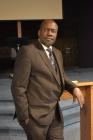
Nick Oloo is a dedicated community leader, pastor, and educator committed to building a stronger, safer, and more prosperous District 25. With decades of experience serving families, schools, and local organizations, Nick has seen firsthand the challenges our communities face—and he has the vision and leadership to address them. As a pastor, Nick has guided countless families through difficult times, providing support, mentorship, and hope. As an educator, he understands the importance of quality education and believes every child deserves the tools to succeed. I am a hardworking man who deeply believes in family values and the importance of keeping families strong and together. This is the vision I want to promote in District 25.
My top budget priorities are investing in core public services that directly impact daily lives: fully funding public education, improving public safety infrastructure, and maintaining critical transportation networks.
Revenue & Savings: Before asking taxpayers for more, we must look inward. I would initiate a comprehensive audit of state agency spending to eliminate redundant administrative costs and streamline bureaucratic processes. If additional revenue becomes necessary, I would advocate for closing corporate tax loopholes and ensuring out-of-state corporations pay their fair share, rather than raising taxes on working families.
We build trust by breaking down barriers to participation. Washington can lead by implementing automatic voter registration at more state agencies and expanding pre-registration for 16- and 17-year-olds. To strengthen confidence, we should expand translation services for election materials, place more secure ballot drop boxes in rural and underserved communities, and support local civic organizations that engage historically marginalized communities. True confidence comes from an inclusive democracy where every voice is heard.
Improving public safety requires a dual commitment to supporting law enforcement and building community trust. Washington must address our severe officer shortage by increasing state funding for recruitment, expanding training academy capacity, and ensuring competitive retention packages. At the same time, we need to strengthen state-level strategies to combat retail theft and fentanyl trafficking by giving local prosecutors better tools to target organized crime rings. True safety means ensuring our police are fully staffed, highly trained, and equipped to protect every neighborhood.
While a robust press is essential for an informed electorate, government intervention in journalism carries significant risks of perceived or actual bias. The state’s primary role should be to maintain a fair, low-regulation business environment that allows independent and digital-first news startups to innovate and thrive. Rather than providing direct financial support or subsidies to specific outlets, we should focus on protecting transparency through strong public records laws, ensuring journalists have open access to state data to do their jobs effectively.
Washington’s current system relies on four party-appointed commissioners, which inherently injects partisan self-interest into map-making. For 2031, I support transitioning to an independent, citizen-led commission or adopting a geography-and-population-based algorithmic approach. By strictly prioritizing equal population, contiguity, and minimizing the splitting of cities and counties, we can strip partisan gerrymandering out of the equation. Maps should be drawn objectively to reflect where people live, not to shield incumbents or favor political
The greatest challenge facing our district is managing rapid population growth without sacrificing our quality of life. Traffic congestion on our key corridors is choking local commerce, and our infrastructure is failing to keep pace. State government must play an active role by prioritizing funding for local transportation projects, expanding regional transit options, and ensuring our cities have the necessary state infrastructure grants to support smart, sustainable development. We must build a stronger foundation for our community before adding more density.