Campaign Phone Number
2066298713
Biography (max 750 char)
Daria Paul Ilgen is a proud Democrat, husband, and father of two raising his kids on a small family farm in Poulsbo. The son of an Iranian immigrant mother and American father, he was raised with a deep respect for service, hard work, and opportunity. Daria brings 20+ years of business strategy, budgeting, and negotiation experience across startups and global companies, including years living abroad in Singapore, China, and the UAE. In Kitsap, he has built a record of service through leadership roles in education, economic development, philanthropy, Rotary, and youth and family organizations. His LIVE platform focuses on responsible leadership, lower costs, healthcare that works, and protecting Kitsap’s environment and communities.
My top budget priorities are protecting the services people rely on: strong public schools, healthcare, childcare, housing, behavioral health, public safety, reliable ferries, and clean air and water. As a Democrat, I believe government should help people live with dignity and opportunity. As someone with 20+ years in business strategy and budgeting, I also believe those commitments must be funded responsibly so they last.
If reductions became necessary, I wouldn't start with working families, seniors, children, or people with disabilities. I'd first review outdated tax preferences, loopholes, duplicative programs, administrative overhead, underperforming contracts, and spending that cannot show clear public value. Any new revenue should be progressive, transparent, and tied to results.
As a Democrat, I believe voting rights must be protected. As a candidate, I also believe trust is built locally — through transparency, accountability, and leaders who respect the results, tell the truth, and encourage participation instead of fear.
Washington should continue strengthening vote-by-mail while ensuring every eligible voter can participate. That means supporting county auditors, secure drop boxes, ballot tracking, signature verification, voter education, and clear communication about how ballots are processed and counted.
We should also invest in civics education, candidate forums, student voter registration, and nonpartisan outreach so more people understand the process and misinformation has less room to grow.
The most effective public safety strategy is prevention, accountability, and the right response at the right time. Washington should support well-trained law enforcement, faster emergency response, and accountability systems that build public trust. We should also expand behavioral health, substance-use treatment, youth intervention, housing stability, and crisis response teams so officers are not asked to solve every social problem alone.
As a Democrat, I believe safety and justice go together. People deserve to feel safe in their homes, schools, businesses, and public spaces. We can hold people accountable, support victims, reduce repeat crime, and still invest in the upstream services that keep problems from becoming emergencies in the first place.
The state has a role in supporting access to reliable local information, but not in controlling or influencing editorial content. A free and independent press is essential to democracy, public accountability, and civic participation.
The state can help by improving public notice access, supporting transparency in government records, strengthening civic education, and exploring viewpoint-neutral support for local news deserts, nonprofit journalism, and community information needs. Local journalism helps residents understand school boards, city councils, courts, budgets, elections, and public safety issues that rarely get statewide attention. When people lose trusted local news, misinformation fills the gap. The goal should be more access, more transparency, and a stronger civic foundation.
I would support reforms that make Washington’s redistricting process more transparent, timely, and centered on voters rather than partisan advantage. I support keeping an independent, bipartisan commission, but strengthening it before 2031 with clearer deadlines, stronger open-meeting rules, published map data and criteria, and meaningful public input from communities of interest before final maps are negotiated.
If the commission deadlocks, the backup process should be clear, credible, and not rushed. Districts should protect voting rights, keep communities together where possible, respect tribal and local boundaries, and avoid gerrymandering. People should be able to see how decisions were made and trust that maps were drawn for fair representation, not political protection.
The greatest challenge facing the 23rd LD is affordability under pressure. Families are being squeezed by housing, childcare, groceries, healthcare, insurance, and unreliable ferries. At the same time, Washington’s budget shortfall puts the very programs people rely on for housing, education, healthcare, safety, and stability at risk.
State government must treat these challenges together: lower everyday costs while protecting core services through disciplined, accountable budgeting. That means more housing supply, better healthcare access, reliable ferries, affordable childcare, strong schools, and clean air and water - with programs that prove results and budgets that can last. My focus is practical: protect what works, fix what does not, and make government deliver.
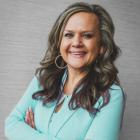
Campaign Phone Number
3606498378
Biography (max 750 char)
Tarra Simmons grew up in Kitsap County and has proudly served the people of the 23rd LD since her historic election in 2020. As a former registered nurse, small business owner and civil rights attorney, Rep. Simmons uses her lived experiences of overcoming poverty, violence and behavioral health conditions to fight for vulnerable communities. She's been an effective legislator authoring 21 bills signed into law from healthcare and community safety, to environmental protections and voting rights. Representative Simmons currently serves as Deputy Speaker Pro Tempore and during her legislative work she brings a science and evidence based approach to every discussion grounded in the deep connections she has to the communities she serves.
My top priority is affordability for vulnerable and working families: housing, healthcare, transportation, groceries, and childcare. Climate change is also a real threat to future generations so we must prioritize funding for our environment. On revenue, I believe the wealthy should pay a larger share of taxes to relieve the burden on working families. That's why I advocated for the Millionaires Tax, a significant measure in recent Washington history eliminating sales tax on diapers, over-the-counter medications, and hygiene products, and extends the Working Families Tax Credit to 460,000 additional Washingtonians. It also funds free school meals for all students and creates new funding stream for childcare while giving small businesses a tax break.
Voting rights and civic access have been a consistent focus of my legislative record. I authored HB 1078, restoring voter eligibility for people with felony convictions. I sponsored legislation on automatic voter registration (HB 1229/SB 5112). I am currently working with Bainbridge High students on legislation to increase youth voting registration and civic participation. Outside of my legislative record, I strive to be an accessible legislator who constituents can count on to listen to their concerns while providing education about the legislative process. Supporting our county auditors with transparency measures also increases trust and confidence with the public. Government works best when elected officials truly represent the people they serve through meaningful engagement.
Safety looks and feels different for different communities. I believe we should deter crime with accountability and provide opportunities for meaningful rehabilitation so individuals exit their criminal legal system involvement better than when they entered it. My record backs this up: I authored two laws reforming legal financial obligations (HB 1412 and HB 1169) that removed debt traps keeping people cycling back into the system, and the Criminal Justice Treatment Account (HB 1983), which created dedicated and flexible funding for therapeutic courts. More work is needed to effectively and efficiently administer justice throughout our state but I'm committed because everyone deserves to be and feel safe in their community.
Washington State is so fortunate to have TVW where the public has access to government meetings and legislative operations. More is needed to create a dedicated revenue stream to fund public radio and journalism so the public can count on a fair and factual reporting of current events. Washington should create a journalism fund to provide competitive grants to local news organizations that cover city councils, county governments and schools. The state could also offer tax incentives for donations to nonprofit news organizations. Furthermore, increases access to digital literacy training, media literacy education in K-12 schools, and public library support for local news access could really help our communities be more informed.
Washington is already regarded as having one of the better redistricting systems in the country because our maps are drawn by a bipartisan commission rather than directly by the Legislature. We should keep this model but expand the commission to include additional genuinely independent members, tribal representation, and commissioners reflecting Washington's geographical and demographic diversity. We should consider having more hearings across the state, translation services, and a permanent professional staff position between census cycles so the commission is not starting from scratch every decade. All commissioner communications related to map drawing should be made public and there should be public explanations for every major boundary decision.
The cost of living is the issue I hear about most. Housing, healthcare, childcare, and groceries, the basics have become out of reach for too many families in Kitsap. Alongside affordability, constituents face challenges around access to healthcare, aging infrastructure, ferry reliability, and the ongoing need for workforce development. These are interconnected problems that require sustained legislative commitment, which is why I've focused on fair tax policy, expanded early learning and childcare access, affordable housing, and food access, along with a functional ferry system that keeps time and money from being wasted.