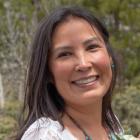
Submitted Biography
Chris Floyd is a lifelong public servant, accomplished attorney, and dedicated community advocate running to represent Colorado House District 13. With decades of legal and civic experience, Chris brings a unique blend of toughness, compassion, and pragmatic leadership to the table—qualities shaped by a childhood marked by foster care, housing insecurity, and economic hardship. Raised by a single mother and separated from her sisters at an early age, Chris developed a deep sense of resilience and determination that has driven her to uplift others and fight for fairness at every stage of her life. Chris has spent her legal career serving individuals, entrepreneurs and communities—first as a litigator, then as in-house counsel for larger companies, and ultimately founding her own law firm to offer affordable services to small businesses and nonprofits after realizing how hard it was for them to find and afford good legal advice, especially in the rural mountain communities of Colorado. A
Campaign Phone
7192933769
For me, the most critical characteristics and principles for an elected official include integrity, a collaborative approach to problem-solving, and accessibility to constituents. Given Colorado's diverse geography and political landscape, balancing community interests and transparent governance is paramount. Elected officials need to be held to high standards to ensure that they are good stewards of public funds and decisions are impartial, putting community needs ahead of personal or special interests.
The willingness to engage in bipartisan collaboration and pragmatism are also essential in order to work with differing viewpoints, build coalitions, and find solutions for the issues facing our communities.
Active listening and responsiveness are additional qualities I value in elected leaders. They must be willing to actively solicit input from a wide spectrum of constituents, rather than just the loudest special interest groups.
Elected officials must also value accountability. Adopting measures for evaluating outcomes ensures that they can actively manage resources and effectively serve as decision-makers, financial stewards, and public representatives.
Finally, given Colorado's current economic and environmental challenges, elected officials need to demonstrate a willingness to embrace creative approaches to problem solving and explore a variety of options for addressing issues, especially those related to affordable housing, healthcare and the environment.
Absolutely! In Colorado, compromise is both politically necessary and desirable for effective policymaking. Given the state's diverse electorate, closely contested state legislative seats, and frequent use of ballot measures, laws are rarely passed without compromise, especially when they relate to major issues like housing, taxation, and the environment. Even though the Democratic party holds a majority in Colorado, diverse factions within the party mean that major policy changes require negotiation to pass.
In addition, special interest groups often use the threat of a ballot initiative process to force issues to the forefront (e.g., citizen-led tax cuts). In order to avoid costly and unpredictable ballot outcomes, policymakers have to be willing to go to the negotiating table to find legislative solutions.
More importantly, policies shaped through bipartisan compromise often provide more stability and predictability than strict partisan measures, which are likely to face persistent legal and political pushback. Plus, data collecte through polls of electors has shown that the majority of Coloradans are frustrated by political polarization that stands in the way of finding solutions for the challenges they are facing, desiring a deliberate, collaborative approach to lawmaking rather than rigid ideological gridlock. Consensus-building and negotiation are essential to actually getting things done!
Expanding Access to Affordable Housing: The most common thing I hear from folks in HD13 is that they are being priced out of their own hometowns. As Lake County Attorney I was instrumental in bringing our first affordable housing project to life. At the legislature, I’ll work to pass legislation that provides expanded housing access so that teachers, healthcare professionals and first responders can afford to live in the very places they serve.
Improving Economic Opportunity in Rural Colorado: I understand the challenges rural economies face. I will champion policies that expand broadband access, invest in local infrastructure, and support small businesses and entrepreneurs—strengthening local economies while reducing the cost of living for families. I will also advocate to expand reliable broadband and invest in workforce training so people can build good careers without leaving the community they call home. And I’ll work to improve access to capital for small businesses, because when local entrepreneurs succeed, our main streets thrive.
Ensuring Access to Healthcare and Mental Health Services: Healthcare remains a growing concern. Rural families and seniors shouldn’t have to drive hours through mountain passes for care. I’ll fight to ensure that rural hospitals, clinics and school-based health centers are sustainably funded and staffed. I also support growing mental health resources and investing in telehealth so every Coloradan has access to healthcare.
I believe that there is a high level of integrity in our elections. Colorado’s election system is widely recognized by experts as a national model and the "gold standard" for balancing election security with high voter access. The state's utilization of a vote-by-mail framework reinforced by layered security safeguards, strict chain-of-custody protocols, and rigorous post-election audits ensures accurate results.
In addition, the state legislature recently passed measures like the Colorado Voting Rights Act and the Freedom from Intimidation in Elections Act to expand voter access. Lawmakers also passed HB26-1113, a comprehensive package signed into law by the governor to expand ballot return windows, improve college campus voting access, and further insulate state-run elections from potential federal overreach or interference. These measures further bolster the integrity of our elections.
Such election integrity is vital because it forms the core foundation of a functional democracy, ensuring that the exercise of power by those elected reflects the true will of the people. Without it, the stability of our nation's political, economic, and social frameworks are endangered. Election integrity establishes political legitimacy; safeguards voter rights and equality; promotes accountability and responsiveness; mitigates national security risks; and encourages civic engagement.
Submitted Biography
My name is Consuelo Redhorse. I am a proud member of the Navajo Nation, lifelong Coloradan, mother, and community leader. I was elected to the Summit School District Board of Education and serve as board president, where I have worked to build consensus, focus on outcomes, and keep students and families at the center of decision-making. My background includes accounting and operations management, small business experience, volunteer leadership in local nonprofits and schools, and long-term rental housing in mountain communities. That experience taught me to work across perspectives, navigate complex issues, manage competing priorities, and make thoughtful, informed decisions. I am running because mountain and rural communities deserve a representative shaped by lived experience, not political insiders. Our voices, experiences, and future deserve to be heard at the Capitol, and our representation should reflect the diversity, values, and lived experience of the people who live here.
Campaign Phone
720-212-6610
Serving as a director, then vice president, and now as president of the Summit School District Board of Education has taught me that some of the most important characteristics for an elected official are integrity, curiosity, and the ability to truly listen and learn.
Elected officials should not assume they have all the answers or fully understand all perspectives. They should lead with an open mind and a desire to listen, especially to the people most affected by their decisions. They should lead with integrity and listen to all constituents, not just those with the loudest voices or most power, and work to understand the experiences of those whose voices are too often overlooked or ignored. That leads to more effective, responsive policy and stronger communities.
My experience on the school board has also taught me that leadership is not about being the loudest in the room. It is about making sure people feel heard and know that they are at the center of the decision-making process. Elected officials make hard decisions, face complex challenges, and must often balance competing priorities. That requires integrity, careful consideration of the facts, and a holistic understanding of the communities they represent.
As your representative for House District 13, I will show up, listen deeply, and advocate clearly for local communities. I will elevate rural and mountain voices, including marginalized communities, and work with you to build a stronger Colorado.
I believe compromise is necessary and valuable in policymaking. Compromise is part of everyday life, and in public service it is often essential to creating thoughtful, effective policy in a diverse district like House District 13. Communities have different priorities, experiences, and challenges. Good leadership requires listening, learning, and balancing those perspectives. Compromise should mean that people feel heard and perspectives are carefully considered before decisions are made.
That said, compromise should not come at the expense of core values or the people we are elected to represent. Throughout my service on the school board in Summit County, I have learned that the best decisions are made when we listen carefully, act in alignment with our values, and stay focused on students, families, and communities.
As a legislator, I know I will hear from many people with competing priorities, and compromise will often be necessary. My decisions will be guided by integrity, careful consideration of the facts, and a commitment to the people of this district, rural and mountain communities, and those whose voices are too often left out of decisions that affect their lives.
Compromise can lead to stronger, more effective policy when it is rooted in respect, collaboration, and a clear understanding of the needs of people and local communities. The compromise I support is focused on people, not on protecting wealthy corporations, special interests, or outside influence.
My experience in education, rental housing, and raising a family in Summit County has shaped the public policy areas I am most passionate about: education, housing, healthcare, and the environment. These work together to build economically resilient communities.
Through my service on Summit County’s school board, I have learned that these issues are connected. Housing affects whether schools can attract and retain educators. Healthcare affects whether people can support their families and contribute to the local economy. Water, public lands, wildlife, and climate affect tourism and quality of life. When one area struggles, the impacts are felt across the community.
We need strong public schools, and expanded access to early childhood education, postsecondary learning, and workforce training. All students deserve the opportunity to succeed.
We need housing solutions that help locals live, work, and stay in the communities they love. Rising housing costs continue to strain families, schools, businesses, and healthcare systems across House District 13.
We need access to quality healthcare, including mental health services, especially where services are limited. We also need to protect public lands, water, wildlife, and climate. Challenges like drought, wildfire, and changing snowpack directly affect our economy, safety, and way of life.
Policies should help people stay in the communities they love and support strong, sustainable communities for generations to come.
I believe our elections are secure and trustworthy, and protecting that trust is essential to democracy. Integrity of elections means every eligible voter can cast a ballot without barriers, and election systems are transparent, accurate, and secure. It also means making sure election officials are held to high standards and misinformation about elections is rejected.
I am proud of Colorado, where vote by mail, secure drop boxes, voting centers, online voter registration, and coordination with the DMV increases access for eligible voters. These systems strengthen integrity of elections through protecting both access and security without creating barriers for eligible voters.
I am seriously concerned by voter suppression efforts across the country in the name of “election integrity.” Limiting access to mail ballots, early voting, voter registration, or secure drop boxes does not make elections more trustworthy. It makes it harder for eligible people to vote, especially working people, rural communities, young voters, seniors, and communities that have historically faced barriers to participation.
I am also strongly opposed to Governor Polis’s commutation of Tina Peters, who was convicted for actions tied to a serious breach of election security while serving as a county clerk. Protecting the integrity of elections means holding elected officials accountable, rejecting misinformation, defending secure systems, and protecting the voting rights of every eligible voter.