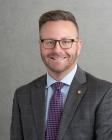
Campaign Phone
801-709-1790
Current Employment
Attorney
Education
B.A. American Studies - BYU, Law Degree - BYU, Master's of Public Administration - BYU
Campaign Website
www.votebrammer.com
I passed a bill to assist cities with accessing funding through the state infrastructure bank at below market rates for infrastructure. However, the state should not be forcing cities to adopt zoning ordinances against their will.
Clear timelines, transparent zoning standards, and public reporting on approvals and delays should be accepted by all cities. Local control matters and cities should exercise that control with accountability to citizens.
The state should focus on practical steps that actually improve air quality along the Wasatch Front: cleaner (tier 3) fuels have already been adopted and are improving our air quality each year. However, we also need better traffic flow and appropriate encouragement for cleaner industry and newer vehicle fleets. We should also keep investing in infrastructure that reduces congestion and plans ahead for growth. Clean air and economic growth are not opposing goals if we lead with stewardship, sound science, and accountability.
The state should start by easing the cost drivers it actually controls: (1) keep taxes low, (2) reduce unnecessary regulation, (3) expand affordable and reliable energy, and (4) remove barriers that drive up housing and childcare costs.
We should also strengthen competition in essential markets and make sure state policies are not quietly adding costs to groceries, utilities, or fuel. Utah families need practical relief, not more bureaucracy.
The state should prioritize transportation projects that reduce bottlenecks, improve traffic flow, and plan ahead for growth rather than always reacting after congestion has already set in. That means targeted road expansion, better interchange design, synchronized traffic systems, and strategic corridor preservation in fast-growing areas. We should also support practical transit options where they make sense, but the priority should be moving people and goods efficiently.
For this reason, I have worked to get $1.5 billion in funded road construction for the next five years in the Lehi, American Fork, Saratoga Springs, and Eagle Mountain areas. You can see this work getting started at 2100 S. in Lehi. More to come.
Yes, but only in a limited and disciplined way. The state should focus first on the biggest opportunities appropriate pricing for actual water usage. I would favor targeted standards backed by good data, local flexibility, and clear accountability over sweeping statewide mandates. Utah needs a conservation strategy rooted in stewardship, practicality, and long-term responsibility.
Campaign Phone
801-980-0161
Current Employment
Small business owner
Education
Bachelor of Science Eastern Oregon University
Campaign Website
kellyforutah.com
I would focus on incentives rather than mandates. The state could provide infrastructure grants, transportation funding, and water and sewer assistance to cities that approve more attainable housing. Cities receiving those incentives should adopt clear housing plans and streamline approval processes so projects can move forward more quickly. This approach encourages housing while respecting local control. I would also like to see financing incentives for purchasing existing homes not just building new ones.
The state should focus on practical solutions with actionable steps that make the biggest difference: improving traffic flow, expanding transportation options, encouraging cleaner vehicle technology, and reducing emissions from major industrial sources. We should also invest in long-term transportation planning that reduces congestion and supports responsible growth. Clean air is a regional challenge, and the state, local governments, businesses, and residents all have a role to play in improving air quality along the Wasatch Front. We should be working as strategic partners with a shared goal each doing our part.
To help lower the cost of living, Utah should focus on practical solutions that have worked elsewhere. That includes streamlining housing approvals to increase supply and reduce costs, supporting employer-sponsored and flexible childcare options so more parents can participate in the workforce, investing in reliable and affordable energy infrastructure, and expanding technical education and apprenticeship programs to address labor shortages. Rather than creating new long-term government programs, we should remove barriers that drive up costs and create an environment where housing, energy, childcare, and everyday goods are more affordable for Utah families.
The state should prioritize projects that improve traffic flow at major congestion points, preserve future transportation corridors, and invest in infrastructure before growth outpaces capacity. I also support expanding innovative solutions like Utah County’s Last Mile program, which makes transit more accessible and helps reduce single-occupancy vehicle trips. We should encourage job growth in high-housing-growth areas so people can live closer to where they work. In Utah County, housing growth has been among the fastest in the state, while many new jobs continue to concentrate in Salt Lake County, increasing commuting times and transportation demands.
I would focus on incentives, innovation, and local flexibility rather than broad new mandates. Households, agriculture, industry, and large water users all have a role to play in conservation. The state should continue supporting water-efficient landscaping, secondary water metering, leak detection, agricultural efficiency projects, and water reuse technologies. As Utah evaluates new large-scale developments, including data centers, we need to carefully consider their long-term water demands and ensure growth is aligned with our available water resources. Any new requirements should be data-driven, locally appropriate, and focused on measurable conservation results.