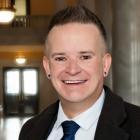
Current Employment
Business Owner/Millcreek City
Education
BS Communications/Journalism, MBA
Campaign Website
silviacatten.com
Municipal water suppliers should change rate structures (including secondary meters) that will cost high-water users more for usage beyond a typical household. Cities (along with their water-supply entities) play a big role in how residents are educated on conservation. Restricting use and charging more creates new standards and changes habits, and the balance for these changes should come from giving residents infrastructure and access to water reuse systems. Get rid of any policy that restricts reusing water for non-potable purposes. Utah needs an aggressive timeline that can align with realistic goals for water conservation, and those goals would need to be met within the next 5-10 years.
Expanding transit initiatives to improve frequency and accessibility, especially during the winter months. We should be investing in electric transit opportunities and development to get more cars off the street. Stricter vehicle emissions standards could also ease the inversion. The state should do more to incentivize or subsidize using energy efficient appliances in homes and businesses that contribute to poor air quality. Programs like these cannot be temporary, but should be permanently available.
We must prioritize the water that is in the Great Salt Lake. There will be no quick fix to mitigating toxic dust, so the focus should be on maintaining water levels. One large contributor to a declining lake level is water diversion that happens before it reaches the shores of the lake. Our water diversion policy is antiquated and needs an overhaul. There are however, mitigation efforts that can happen to help get water to the lake that include weed management, water quality issues that support ecosystems, and prioritizing stormwater infrastructure. These are things that can and should be done now because there will be no easy fix for toxic dust.
Each city in the valley is unique in character, and most residents feel strongly that protecting and preserving that character is important. Thus, one size does not fit all for every city to achieve attainable housing. The state can ask cities to provide ways to build or preserve attainable housing by offering tax incentives, help with building infrastructure, or providing programs to preserve existing affordable housing, instead of forcing cities to approach solving housing issues all the same way. The state can do a better job at supporting cities to make their own decisions in land use and development options by offering incentives that are flexible to the needs of each city. Let cities be creative in their approach.
Utah should prioritize clean energy sources that are sustainable, affordable, and scalable. We are in a situation where we rely on power so much for our daily lives, but we don’t have the water to sustain any power source that requires it to function. It makes the most sense to prioritize solar and wind, with a small investment in other types of energy that could potentially be beneficial with the right funding, location, and technology, like eventually investing in nuclear. I am a strong proponent of clean energy, but I also recognize that our need is outpacing what infrastructure we have to support it. Utah must invest in clean and truly sustainable energy that makes the most sense for our state and it's available natural resources.
Campaign Phone
(801)215-9285
Current Employment
Advocacy & Public Policy Director, Utah Support Advocates for Recovery Awareness
Education
AS in Social Work, Salt Lake Community College
Campaign Website
www.evandone.com
Cities should balance water rates by shifting the cost burden toward high-volume consumption while incentivizing the replacement of non-functional turf with drought-tolerant landscaping. I support prioritizing investments in water reuse and treatment systems over the next decade to maximize every drop, ensuring our infrastructure keeps pace with growth while rewarding conservation-minded residents.
Air pollution, particularly in the Salt Lake Valley, is a public health crisis. To address winter inversions, I support a comprehensive agenda that includes expanding access to public transit, expanding zero-fare transit during red-air days, incentivizing the transition to clean-energy home heating, and strengthening oversight of industrial emissions. By reducing our reliance on internal combustion and promoting sustainable urban design, we can significantly lower the concentration of trapped pollutants in our valleys.
The situation with water levels in the Lake is dire, and I believe the best approach is to keep the lakebed wet and underwater. Protecting public health from the shrinking Great Salt Lake requires a commitment to building and maintaining stable water levels through enhanced upstream conservation. I support state-led initiatives for dust mitigation and expanded environmental monitoring to track toxins, ensuring that we address the root causes of lakebed exposure while protecting the respiratory health of our residents.
I support creating stronger incentives for local governments to approve diverse housing types, such as multi-family and transit-adjacent developments. By providing state-level support for cities that adopt inclusive zoning and streamlining the approval process for affordable projects, we can increase the housing supply and ensure that Utah remains accessible to working families.
Utah should pursue a diversified energy strategy that includes geothermal, solar, wind, and next-generation nuclear to ensure a resilient and clean power grid. Prioritizing a mix of renewable sources alongside reliable base-load technology will allow us to transition away from carbon-intensive fuels while maintaining energy affordability and security for the next thirty years.
Candidate has not yet responded.
Candidate has not yet responded.
Candidate has not yet responded.
Candidate has not yet responded.
Candidate has not yet responded.