Current Occupation
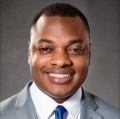
Quality Control Coordinator
Age (optional)
28
Campaign Phone
7048400079
I bring real world experience rooted in service and results. I am a community organizer and veteran who has knocked thousands of doors and listened directly to working families about healthcare housing education and wages. I have led issue driven campaigns built on grassroots support not special interests and I know how to turn ideas into action through coalition building and accountability. I am prepared to govern on day one because I understand both the policy and the people it impacts and I have earned trust by showing up consistently and delivering.
My most important priority is making sure working families can afford to live with dignity. That means fighting for healthcare as a right including Medicare for All investing in public education and educators and addressing the rising cost of housing and utilities. Too many people are one emergency away from crisis because politicians protect corporate interests instead of people. I will focus on lowering everyday costs strengthening the social safety net and delivering policies that put working and middle class families first.
Education policy should start with fully funding our public schools and respecting educators. My priority is increasing per pupil funding raising teacher and staff pay and ensuring schools have counselors nurses and support staff so students can succeed. We must stop diverting public dollars to unaccountable voucher programs and instead invest in strong neighborhood schools. I also support expanding mental health resources reducing class sizes and partnering with parents and educators to address learning loss and school safety. When we invest in public education we invest in our communities and our future.
Tax policy should be fair progressive and focused on meeting real needs. Right now working families pay a higher share of their income than large corporations and the wealthy and that is backwards. I support a tax system that lowers the burden on working and middle class families while ensuring profitable corporations and high earners pay their fair share. Revenue should be used to fund public education healthcare infrastructure and housing which are proven drivers of long term economic growth. When we invest in people we strengthen North Carolina’s economy for everyone.
Community safety starts with meeting people’s basic needs and holding systems accountable. I support common sense gun safety measures including safe storage requirements and closing loopholes that put dangerous weapons in the wrong hands while respecting responsible ownership. We must invest in violence prevention mental health care and substance use treatment and reentry programs that reduce repeat offenses. I also support reforms that improve police accountability and build trust so communities feel protected not targeted. Safer communities come from prevention fairness and opportunity not just punishment.
Candidate has not yet responded.
Position/philosophy statement
I believe that the NC State government should serve as a stabilizing force in people’s everyday lives, and my legislative work reflects a practical, results-oriented approach balanccing fiscal responsibility with our duty to serve North Carolinians.
Current Occupation
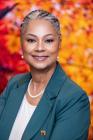
NC House Representative
I currently serve on 26 legislative committees, and over 13 years in office, I have achieved victories in healthcare access, mental health, food security, and community investment — including advocating for Medicaid expansion and suicide prevention programs. I have secured over $23 million in resources for our district and Mecklenburg County, supporting organizations like Habitat for Humanity, Second Harvest Food Bank of Metrolina, Hope Haven, and Gracious Hands Transitional Housing. Working across party lines in a difficult political environment, I have built coalitions to achieve results. Today, seniors worry about aging in place, and families struggle to meet basic needs. Now is the time for proven leadership to protect our communities.
While experts predict 2026 will be a strong year for North Carolina’s economy, families in District 106 are asking a simple question: Who is this growth really for? Rising housing costs, property taxes, and everyday expenses are squeezing working families and seniors. Economic success means little if people can’t afford to stay in the communities they helped build or access new opportunities. As a member of the House Select Committee on Property Tax Reduction and Reform and the Commerce and Economic Development Committee, I focus on keeping affordability at the forefront — fighting for policies that protect homeowners, support working families, and make sure economic growth benefits everyone.
Education policy must fully fund our schools, support students’ well-being, and value the educators who serve them. In Mecklenburg County, many teachers earn roughly $50,000 to $58,000 a year, while average rent in Charlotte approaches $2,000 a month—making it hard for educators to live where they work and provide classroom stability. Competitive pay must reflect the cost of living. I have also fought to eliminate student lunch debt, so no child is hungry or burdened just for trying to learn. North Carolina ranks near last nationally in per-pupil funding, spending about $5,600 less than the national average. We must increase investments in education, mental health supports, and school resources so every student can succeed.
Tax policy should encourage growth while protecting North Carolina families and seniors. As our retiree population continues to grow, we must ease the burden on fixed incomes through targeted deductions, exemptions, and credits that help seniors stay in their homes and communities. At the same time, responsible tax policy involves using public funds wisely. Leveraging public-private partnerships enables us to stretch resources—especially as federal funding varies—while expanding access to essential services like mental health care and community health programs. By combining affordability with smart investment strategies, we can strengthen our workforce, support small businesses, and build a resilient economy that benefits everyone.
Public safety must support both law enforcement officers and the systems that allow them to do their jobs safely and effectively. I have introduced legislation to strengthen penalties for violence against officers, expand benefits for their families, and ensure care for those injured or traumatized in the line of duty, including the Gabe Torres Act and House Bill 571. I also introduced House Bill 380 to fund additional jail inspectors following serious failures in jail oversight across North Carolina. In addition, I support mental health initiatives such as crisis intervention training for officers and diversion and treatment programs that reduce repeat offenses and improve outcomes. Smart systems for safer communities.
I look forward to continuing to prioritize investments in Medicaid expansion, mental health care—especially for juveniles—public education, competitive educator pay, workforce development, and community-based public safety. Expanding access to affordable health care and mental health services remains central to my work, along with ensuring North Carolina’s economic growth is inclusive and benefits families across our state. I am committed to principled leadership and, where possible, bipartisan collaboration to deliver results. Before serving in office, I spent 35 years as a nurse and 7 years as a small-business owner operating a Subway franchise. I have also led nonprofit and community organizations focused on workforce development, family support, and economic empowerment. This real-world experience gives me a grounded understanding of how state policies affect everyday lives and continues to guide my commitment to building a stronger North Carolina for all our residents.
Position/philosophy statement
Put the People First
Current Occupation
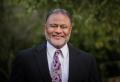
Baptist minister, Bible scholar
Age (optional)
58
Campaign Phone
984-327-2037
Campaign Youtube URL
I have lived in Charlotte for more than 20 years. My core principles from an early age have been to Love God, Love Your Neighbor, and Love the Stranger. I have brought that into my deep work in the community, from connecting across faith through MeckMin to advancing racial justice through the Reimagining America Project.
In 2013, I entered the NC General Assembly for the first time – not as a legislator, but to pray, sit in, and take arrest along with other faith and community leaders in one of the first actions of the Moral Mondays Movement. I returned to Charlotte knowing something had changed in my life, committed to building this movement for a North Carolina where we can all afford to thrive.
Right now, working people in Mecklenburg County can’t afford to live. The basic things — paying the electric bill, going to the doctor, buying eggs at the grocery store, keeping a roof over your head — get more expensive every day, while wages stay rock-bottom and jobs get harder and harder to find.
We know that things can be different. We all deserve wages we can live on. We all deserve a home we can afford. We all deserve quality healthcare as a basic human right. Our kids deserve strong public schools and safe streets.
In the wealthiest nation on earth, this is not beyond reach. But it will only be possible when our government works for people, instead of for profit.
Our public schools are the bedrock of our community. But, for more than a decade, the extremists in the NCGA have starved our schools of the resources they need to thrive. Too many of our school buildings are crumbling; too many of our best educators leave the classroom because of low pay and overwork; and our children find themselves in overpacked classrooms with textbooks that haven’t been replaced in years.
I know that it is possible to have strong public schools where all of our kids can thrive. We must fully fund our public schools up to the levels required by our state constitution and the Leandro ruling. We must raise pay and enact collective bargaining rights to recruit and retain the very best educators in our schools.
Right now, the MAGA-controlled General Assembly is misusing our money to redistribute wealth upward: to billionaires and big corporations, on the backs of working families. They give Duke Energy free rein to raise utility bills. They siphon hundreds of millions out of our public schools and into private school voucher schemes. They want to bring the corporate tax rate down to zero, so working people foot the bill.
Our public wealth should go to public schools, healthcare, and quality housing. We must ask the wealthy few and big corporations to pay their fair share so that we can all thrive.
Everyone in North Carolina deserves to get safely to work, safely to school, and safely back home.
When extremists in our General Assembly pass laws to put more guns in our communities – and even in our schools – they make us less safe.
When they force local law enforcement to collaborate with Trump's ICE and disappear our immigrant neighbors overnight, they make us less safe.
In the NC House, I will defend the right to safety for all of us – so that no one needs to live in fear, and so our kids can play safely in the neighborhood. I will advocate for fully funded mental healthcare, housing, public education, and good living-wage jobs, to cut through cycles of poverty and violence. We must fight poverty, not the poor.
Candidate has not yet responded.