Candidate has not yet responded.
Candidate has not yet responded.
Candidate has not yet responded.
Candidate has not yet responded.
Candidate has not yet responded.
Experience and Qualifications
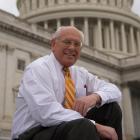
Tonko’s career in local, state, and federal public office spans five decades. His public service began on the Montgomery County Board of Supervisors, where he served from 1976 to 1983 and was chosen as Board Chairman in 1981. He then spent 24 years in the New York State Assembly representing Montgomery and surrounding counties. Since 2009, he has represented New York’s Capital Region (NY-20) in the U.S. House of Representatives. Before entering federal office, Tonko served as the President and CEO of the New York State Energy Research and Development Authority (NYSERDA) from 2007 to 2008, where he directed state-level clean energy policy and energy research initiatives. This executive leadership built on his 15-year tenure as Chair of the New York State Assembly Energy Committee, where he oversaw state energy legislation and clean power policy. In Congress, Tonko is a senior member of the House Committee on Energy and Commerce, where he has served as Ranking Member and past Chair of t
Community Involvement
A lifelong resident of Amsterdam, Congressman Paul Tonko maintains a strong grassroots presence across New York's Capital Region. He frequently hosts and co-sponsors grassroots public events, including regional housing expos connecting residents with non-profit services, resource and empowerment fairs alongside local non-profits, and regular town halls throughout Albany, Schenectady, Troy, and Saratoga counties. Beyond hosting public forums, Tonko works directly with local governments, community
Education
Congressman Paul Tonko holds a Bachelor of Science in Mechanical and Industrial Engineering from Clarkson University. As one of the few trained engineers in Congress, he brings a unique, data-driven perspective to public policy. Early in his career,
Campaign Endorsements
Rep. Tonko has received multiple endorsements from varied groups each cycle, both local and national.
Campaign Instagram
@paultonko
The three most critical challenges facing our nation are the urgent threat of climate change, the need to build a fair economy for working families, and the pressing imperative to modernize our nation’s infrastructure.
To combat climate change, we must aggressively transition to a clean energy economy by promoting renewable energy innovation, expanding green manufacturing, and investing in climate resilience, creating good-paying union jobs in the process.
To address economic inequality, we must strengthen lower- and middle-income families through targeted tax relief, protect union rights, make healthcare and prescription drugs more affordable, and invest heavily in STEM education and workforce development.
Finally, we must revitalize our national infrastructure by modernizing our power grid, upgrading water systems, expanding high-speed broadband, and fixing transit networks to keep our communities safe, connected, and economically competitive for generations to come.
The federal government should be the ultimate guardian of our democracy, enforcing a level playing field where a voter’s voice matters more than a billionaire’s bank account. Instead, due to decades of disastrous conservative court decisions, its current role has been crippled, leaving the federal government as little more than a toothless referee in a system rigged for the wealthy few.
I have cosponsored legislation to overturn Citizens United, which is one of the most damaging SCOTUS decisions in our nation’s history. Finally, we must pass the DISCLOSE Act to shine a light on every single dollar of dark money in our elections.
The case is yet another devastating, partisan assault on the landmark Voting Rights Act of 1965. Under the guise of "colorblindness", Justice Alito and the court's right-wing majority have handed state legislatures a blueprint to systematically dilute Black political power and suppress minority representation across the South.
We cannot rely on an activist Supreme Court majority to protect democratic rights. Congress must step up immediately to pass the John Lewis Voting Rights Advancement Act to restore full federal protections, end partisan and racial gerrymandering nationwide, and ensure every community receives equal representation under the law.
First, Congress must mandate ambitious clean energy standards to phase out fossil fuels, accelerate investment in wind, solar, and geothermal power, and pass cap-and-invest frameworks to slash economy-wide emissions while lowering household energy bills.
Second, America must build a domestic green manufacturing economy using federal procurement and targeted industrial incentives. By funding technologies like direct air capture, weatherizing homes, and securing critical supply chains, we can create millions of high-paying union "green collar" jobs.
Third, federal funding must modernize our aging grid, expand high-voltage transmission, and deploy floating solar and offshore wind to deliver reliable, resilient, and affordable clean power to every community.
Crucially, the government must strictly enforce the Clean Air Act and direct investments toward frontline and low-income communities that have historically borne the brunt of toxic industrial pollution and extreme weather disasters.
The United States has a profound moral, political, and strategic obligation to lead, support, and actively participate in international institutions. For decades, the global consensus built after World War II was rooted in the idea that real security comes not through unilateral aggression, but through collective action, shared rules, and democratic accountability.
After Trump is out of office, Democrats will spend years restoring the trust of our allies, fixing the damage he caused, and strengthening NATO against bad actors like Russia.