Change Address

VOTE411 Voter Guide

Wisconsin Assembly, District 73/Asamblea de Wisconsin, Distrito 73

Wisconsin Legislative BranchWisconsin’s legislature makes state laws. The legislature has two houses: the Wisconsin Senate and the Wisconsin Assembly. Proposed laws (bills) can originate from either the state senate or assembly. Both houses must approve the bill before it is passed on to the governor for signature or veto. The legislature can override a veto with a two-thirds majority vote in each house. The legislature controls the spending of state funds through appropriation.Wisconsin AssemblyThe Wisconsin Assembly has ninety-nine representatives. Voters elect representatives to represent their assembly district for a two-year term. There is no term limit.__________Poder Legislativo de Wisconsin La legislatura de Wisconsin produce las leyes estatales. La legislatura consta de dos cámaras: el Senado de Wisconsin y la Asamblea de Wisconsin. Las propuestas de ley pueden originarse tanto en el Senado estatal como en la Asamblea. Ambas cámaras deben aprobar el proyecto de ley antes de transmitirla al gobernador para su firma o veto. La legislatura puede anular un veto con un voto mayoritario de dos tercios en cada cámara. La legislatura controla el gasto de los fondos estatales a través de las leyes de asignación. Asamblea de WisconsinLa Asamblea de Wisconsin tiene noventa y nueve representantes. Los votantes eligen representantes para representar a su asamblea de distrito por un término de dos años. No hay límite de términos.Nota: Las respuestas de los candidatos que aparecen en español se tradujeron de las respuestas originales de los candidatos en inglés.

Click a candidate icon to find more information about the candidate. To compare two candidates, click the "compare" button. To start over, click a candidate icon. To rank a candidate, click the "rank" button.

Ranked Candidates

{_getRcvHelpLabel()}

All Candidates

  • Candidate picture

    Frank Kostka
    (Rep)

  • Candidate picture

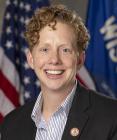
    Angela Stroud
    (Dem)

Biographical Information

Please describe your priorities for your term in office and your specific qualifications to effectively address those issues.

What do you see as the most pressing housing-related issue in Wisconsin, and what policies, if any, would you support to address the issue?

What redistricting process, if any, do you believe the legislature should put in place before the next national census to ensure fair representation for voters?

What, if anything, will you do to ensure our schools have the resources to improve outcomes for its students, including those with disabilities?

What guardrails, if any, would you support to protect our environment, health, property values, and household budgets from large projects such as hyperscale data centers and Concentrated Animal Feeding Operations (CAFOs)?

Candidate has not yet responded.
Campaign Mailing Address PO Box 211
Ashland, WI 54806
Education PhD- Sociology (University of Texas)
Personal Pronouns she/her
Lowering property taxes, utility bills, and housing costs are three priorities for next year. By ensuring that the state pays its fair share for public education rather than shifting the funding burden onto property tax payers, we can end the cycle of school referenda that are harming our communities. Regulating data centers and making sure that utility expenses aren’t transferred to the public is key to keeping electric rates low. And ensuring that the state is doing all that it can to stimulate home building is an important part of the story of bringing down housing costs. As a sociologist, I have the skills to research issues, listen attentively, and communicate effectively with my constituents. It is an ideal background for this work!
The two biggest issues that we must focus on are creating more supply for long-term rentals and home purchases and bringing down property taxes. The portion of property taxes driven by school funding is a product of a Legislature that has failed to adequately fund public schools, which has meant that local communities are picking up too much of the burden. As for housing supply: we need to build more and we need to ensure that short-term rentals do not represent a disproportionate share of the rental market. The state should subsidize building wherever possible, and it should also allow local communities to regulate the number of short-term rentals they allow. Housing is an ecosystem that must be in balance to meet the needs of people.
I support non-partisan maps that do not give an advantage to any political party. That said, the Trump administration has shown a willingness to completely undermine democracy by dictating that states redraw their maps to benefit him. This means that we are in a new, dark era, and I am unwilling to suggest that as a state, we should lock ourselves into a process that makes us unable to respond to federal abuses. I feel that we must fix this problem at the national level or we risk having some states acting on principle, while others are acting in the raw pursuit of power. My values lie with non-partisan processes, but I will fight back if necessary, as many states have done this year.
We must begin to uphold our constitutional obligation as a state and fully fund public schools. I support reimbursing special education at 60% and ensuring that general aid is adequate to pay for what it costs to fully educate a student and to pay teachers a fair wage. We need to rework the school funding formula to ensure that there is a fair and rational logic for how much funding is allocated to each school. A strong educational system is expensive, which is why I do not think we should be sending public dollars to private schools. I am all for school choice, but I do not think tax dollars should go to schools that don't require educators to be licensed and that have no standards or accountability. We simply cannot afford two systems.
I was the lead author in the Assembly on a bill that would regulate data centers by requiring transparency in their electricity and water usage, protect utility rate payers, and require that 70% of their energy come from renewable resources if they want access to state tax credits (among other provisions). My perspective is that the government has a critical role to play in protecting the public from giant corporations, and that includes factory farms. I support local operational ordinances, like that which was first created in Bayfield County, to allow municipalities to decide what standards and guardrails they want to protect their water, air, and soil. The only force powerful enough to fight giant corporations is the people!