Change Address

VOTE411 Voter Guide

Wisconsin Assembly, District 43/Asamblea de Wisconsin, Distrito 43

Wisconsin Legislative BranchWisconsin’s legislature makes state laws. The legislature has two houses: the Wisconsin Senate and the Wisconsin Assembly. Proposed laws (bills) can originate from either the state senate or assembly. Both houses must approve the bill before it is passed on to the governor for signature or veto. The legislature can override a veto with a two-thirds majority vote in each house. The legislature controls the spending of state funds through appropriation.Wisconsin AssemblyThe Wisconsin Assembly has ninety-nine representatives. Voters elect representatives to represent their assembly district for a two-year term. There is no term limit.__________Poder Legislativo de Wisconsin La legislatura de Wisconsin produce las leyes estatales. La legislatura consta de dos cámaras: el Senado de Wisconsin y la Asamblea de Wisconsin. Las propuestas de ley pueden originarse tanto en el Senado estatal como en la Asamblea. Ambas cámaras deben aprobar el proyecto de ley antes de transmitirla al gobernador para su firma o veto. La legislatura puede anular un veto con un voto mayoritario de dos tercios en cada cámara. La legislatura controla el gasto de los fondos estatales a través de las leyes de asignación. Asamblea de WisconsinLa Asamblea de Wisconsin tiene noventa y nueve representantes. Los votantes eligen representantes para representar a su asamblea de distrito por un término de dos años. No hay límite de términos.Nota: Las respuestas de los candidatos que aparecen en español se tradujeron de las respuestas originales de los candidatos en inglés.

Click a candidate icon to find more information about the candidate. To compare two candidates, click the "compare" button. To start over, click a candidate icon. To rank a candidate, click the "rank" button.

Ranked Candidates

{_getRcvHelpLabel()}

All Candidates

  • Candidate picture

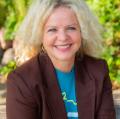
    Brienne Brown
    (Dem)

  • Candidate picture

    Paul McGraw
    (Rep)

Biographical Information

Please describe your priorities for your term in office and your specific qualifications to effectively address those issues.

What do you see as the most pressing housing-related issue in Wisconsin, and what policies, if any, would you support to address the issue?

What redistricting process, if any, do you believe the legislature should put in place before the next national census to ensure fair representation for voters?

What, if anything, will you do to ensure our schools have the resources to improve outcomes for its students, including those with disabilities?

What guardrails, if any, would you support to protect our environment, health, property values, and household budgets from large projects such as hyperscale data centers and Concentrated Animal Feeding Operations (CAFOs)?

Committee Friends of Brienne
Campaign Phone 5122978928
Campaign Mailing Address PO Box 163
Whitewater, WI 53190
Education Bachelor's of Journalisn
Personal Pronouns she/her
Campaign Announcement http://brienneforwisconsin.com
My top priorities are public education, well-paid labor, and protecting family farms. Wisconsin must shift school funding from local property taxes back to the state's general revenue fund to provide equitable educational opportunities while easing the burden on homeowners, young families, and retirees. I support restoring collective bargaining rights for teachers and workers so they can earn family-supporting wages and retire with dignity. As a member of the Agriculture Committee, I introduced legislation to help family farms stay in business and pass to the next generation. My qualifications include a decade each as a public health scientist and journalist, six years on the Whitewater Common Council, and years of community leadership.
Wisconsin's most pressing housing challenge is the lack of starter homes. We have not built enough small, affordable homes in the last 35 years, and the average first-time homebuyer is now around 40 years old. We need more housing density, more housing options, and more small homes that young professionals can afford and retirees can downsize into. Small cities often cannot afford the incentives needed to attract builders, especially when smaller homes generate lower profits. I support increased state assistance to help local communities encourage the construction of affordable starter homes and workforce housing. I also support tax breaks to keep retirees and veterans in their homes.
I support creating an independent, nonpartisan redistricting process that draws fair maps, keeps communities together, and ensures voters can effectively advocate for the issues that matter most to them. Redistricting should prioritize communities of interest rather than partisan advantage. I also believe mapmakers should avoid unnecessarily splitting of voting wards, which can create confusion for voters and make the work of local election clerks more difficult and costly. Fair representation depends on both fair district boundaries and an election system that is practical to administer.
15 years ago, Wisconsin was ranked among the top states in the nation for educational outcomes. At that time the state fund provided a much larger share of school funding. Ensuring schools have the resources to serve all students, including those with disabilities, requires increasing special education reimbursement. Public schools are required to provide services to all students and employ specialists, therapists, and other professionals to meet those needs. When reimbursement does not cover the full cost of those services, districts must often draw from their general education budgets, reducing resources available for other students and programs. I cosponsored AB1176 to fight for special education reimbursement and lower property taxes.
I cosponsored AB 722 to establish guardrails for hyperscale data centers. The bill would have monitored and limited water use, created a large energy customer fee to protect residential ratepayers, established a regulated large-customer class, required the use of renewable energy resources, and required well-paid union labor. While I believe additional safeguards are needed, the bill never received a committee hearing. I also support allowing town boards and city councils to adopt reasonable restrictions on CAFOs to help ensure they operate in an environmentally responsible manner and protect local communities.
Candidate has not yet responded.