Change Address

VOTE411 Voter Guide

Wisconsin Assembly, District 21/Asamblea de Wisconsin, Distrito 21

Wisconsin Legislative BranchWisconsin’s legislature makes state laws. The legislature has two houses: the Wisconsin Senate and the Wisconsin Assembly. Proposed laws (bills) can originate from either the state senate or assembly. Both houses must approve the bill before it is passed on to the governor for signature or veto. The legislature can override a veto with a two-thirds majority vote in each house. The legislature controls the spending of state funds through appropriation.Wisconsin AssemblyThe Wisconsin Assembly has ninety-nine representatives. Voters elect representatives to represent their assembly district for a two-year term. There is no term limit.__________Poder Legislativo de Wisconsin La legislatura de Wisconsin produce las leyes estatales. La legislatura consta de dos cámaras: el Senado de Wisconsin y la Asamblea de Wisconsin. Las propuestas de ley pueden originarse tanto en el Senado estatal como en la Asamblea. Ambas cámaras deben aprobar el proyecto de ley antes de transmitirla al gobernador para su firma o veto. La legislatura puede anular un veto con un voto mayoritario de dos tercios en cada cámara. La legislatura controla el gasto de los fondos estatales a través de las leyes de asignación. Asamblea de WisconsinLa Asamblea de Wisconsin tiene noventa y nueve representantes. Los votantes eligen representantes para representar a su asamblea de distrito por un término de dos años. No hay límite de términos.Nota: Las respuestas de los candidatos que aparecen en español se tradujeron de las respuestas originales de los candidatos en inglés.

Click a candidate icon to find more information about the candidate. To compare two candidates, click the "compare" button. To start over, click a candidate icon. To rank a candidate, click the "rank" button.

Ranked Candidates

{_getRcvHelpLabel()}

All Candidates

  • Candidate picture

    Daniel J. Bukiewicz
    (Dem)

  • Candidate picture

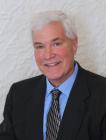
    David Liners
    (Dem)

  • Candidate picture

    Dylan Pfaffenbach
    (Rep)

Biographical Information

Please describe your priorities for your term in office and your specific qualifications to effectively address those issues.

What do you see as the most pressing housing-related issue in Wisconsin, and what policies, if any, would you support to address the issue?

What redistricting process, if any, do you believe the legislature should put in place before the next national census to ensure fair representation for voters?

What, if anything, will you do to ensure our schools have the resources to improve outcomes for its students, including those with disabilities?

What guardrails, if any, would you support to protect our environment, health, property values, and household budgets from large projects such as hyperscale data centers and Concentrated Animal Feeding Operations (CAFOs)?

Candidate has not yet responded.
Committee Friends pf David Liners
Campaign Email hello@davidliners.com
Campaign Phone 4147362099
Campaign Mailing Address 4015 S Burrell St
Milwaukee, WI 53207
Personal Pronouns BA, Marquette University, DMin, St. Mary of the Lake University
We must fully fund public education, starting with 90% reimbursement for special education. We must subsidize childcare for working families. We need to pay for those by: closing corporate tax loopholes (like the Manufacturing and Agricultural Tax Credit), by raising the tax rate on the top tax bracket and instituting a special income tax on those making more than $1 million/year. We need to immediately repeal Act 10 and "Right to Work." We need to pause Data Center construction until we have a public conversation about the economic and environmental costs. I have worked as an advocate for matters of social justice for 30 years. I have a good understanding state government works, and understand we cannot continue with business as usual
We need to end exclusionary zoning practices around the state, so that new and affordable housing can be built in most every community. I would support efforts for the state to help first-time home buys with the cost of purchasing a home. And indirect but important way to support more housing would be to move some of the tax burden for things like schools and municipalities back to the state and away from property taxes.
We should have an independent board that draws the maps, like what I understand Iowa to have. Maps ought not be drawn in an attempt to gain partisan advantage. If anything, they should create as many competitive districts as possible. We need to get map-making out of the hands of politicians. Ideally, we should at least start the process of amending the state constitution to get this done.
The next state budget needs to include 90% reimbursement for all public school costs for ESL and Special Education. We also need to move back to the state bearing 2/3 of the total cost for public education. We need to overhaul the whole school funding formula. It is bizarre that funding rates in 2026 are still pegged to funding levels from 1992, and that inequality is baked into the formula. The schools and districts with the greatest number of students in poverty, English-language learners and children with special needs should receive the most resources. We need to stop the expansion of the "School Choice" program, and need schools receiving vouchers to have the same accountability (e.g. standardized testing, teacher licensing, etc.)
We need an immediate moratorium on construction of Data Centers. Besides the huge tax giveaways to the world's wealthiest corporations, we have launched into a massive expansion of fossil-fuel- powered power plants for the sake of new and prospective data centers will have an impact on utility bills and the climate for decades to come. Local communities need to have the ability to regulate and limit the growth of CAFOs in their own counties and townships. As with Data Centers, CAFO expansion should be subject to robust local, regional and state dialogue about the common good, including impacts on water, air and quality of life before any expansion is approved.
Candidate has not yet responded.