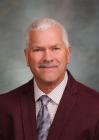
I have grandchildren that will have to live in the world we are choosing to create. That means working to build back strong communities, communities with access to affordable healthcare, affordable housing, and meaningful work. As a multi-generational Wyomingite educated in our public schools who has worked and volunteered in a variety of positions, including leadership positions, I believe I can help craft legislation that will do just that.
I do not support the ballot initiative that will be on the ballot November 3, 2026. This initiative is a reverse Robin Hood bill. The worst effects of this initiative would fall on seniors, children, and working families while the greatest benefits would flow upward to the wealthy. This initiative would devastate the funding for municipal services, county services, and public education. Rural communities in particular rely heavily on property taxes to fund government services. Emergency services, public infrastructure, and special districts such as hospitals, senior centers, cemeteries, and libraries would all lose critical funding.
If the initiative were to pass, I would support the state backfilling lost local revenues.
I have had the privilege of living in Wyoming where I can recreate on public lands throughout the state. Most Wyomingites can enjoy public lands twenty minutes in any direction from their home. Many of us live in Wyoming in part because of our unequalled access to public lands. Tourism, driven by public lands, is the second largest industry in the state. For all these reasons, I oppose the sale of public lands.
The current structure and level of funding as passed out of the most recent legislative session is neither appropriate nor adequate. The Wyoming Legislature has a history of inadequately funding education and losing lawsuits repeatedly due to that inadequate funding. For the first time in 15 years, a recalibration bill was passed. However, that bill did not follow the recommendations of the recalibration study. The bill also changed the block grant structure to the detriment of public education as a whole in Wyoming.
Public schools, hospitals, libraries, senior centers and other social services are public goods that benefit all of us directly or indirectly. I believe it is our obligation to care for each other as members of a shared community.
Facebook
J. R. Riggins
Campaign Phone
307-262-8446
I am running for re-election to finish work the Legislature has started but not completed. Experience gained in my first term will help advance stalled efforts involving taxation, land policy, and economic development.
I bring 40+ years of experience in Wyoming's natural gas industry, one of the state’s primary economic drivers. That background provides extensive experience with regulatory and infrastructure problem-solving in a heavily regulated industry.
For decades, I have championed public land access by working with federal land management agencies through NEPA, Resource Management Plans, and Forest Plan revisions. My efforts have included successful appeals of RMP decisions, litigation preventing trail closures, and improving access.
I believe the ballot measure has a strong likelihood of passing. If so, I expect some existing property tax relief measures may be repealed or revised as part of a broader restructuring effort.
In 2025, the House passed legislation to backfill most of the anticipated local revenue losses, and I supported that measure. I support similar efforts again to protect essential local services while still providing meaningful tax relief.
I also supported the 4% cap on annual property tax increases. Had reasonable caps been in place earlier, I do not believe taxpayer frustration would have grown to its current level. I am concerned recent actions by the Board of Equalization could weaken those caps and undermine long-term property tax reforms.
We have always had a public land exchange program, and I think it provides a method to provide public land access where none exists. I think it can be advantageous for public recreation and an economic benefit.
When you say "public" are you including "state lands"? If so, I would urge anyone interested to consider if $90,000+/acre for state land that could not be monetized per the State Constitution was a fair exchange? It was a great deal for the state, but a poor one for the federal taxpayer.
The current structure is under revision now. Will the recommendations the legislature adopted meet our expectations? We will see.
Will teacher salaries go up as public sentiment appeared to demand, I expect they will.
Will student performance improve as a result? We expect so, because recent national student performance reports show continued declines in reading achievement and stagnant math recovery, underscoring the need for greater accountability and renewed focus on core academic skills.
Should we have dumped the recalibration recommendations as some legislators wanted. Push it off on future legislatures? I thought not.
The spectrum of social services has grown so large that it generates contempt even when it's applied to those with genuine need.
I am a strong supporter of programs such as Wyoming's Home-based Community Care Services that help those with genuine need, stay at home and avoid expensive institutional care. I also support our Childhood Development Center because I'm witness to some of the challenging situations young families face.
Let's not confuse these services with one's that cater to able-bodied adults whose life decisions place them in undesirable situations but lead to dependency instead of independence. Programs should lead to a way out of need.