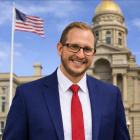
The Wyoming House of Representative is the lower house of the state legislature. Similar to the U.S. House of Representatives, they work with Senators to create laws, set the state budget, and determine state tax rates. State Representatives are elected to a two-year term with no term limits.
Facebook
https://www.facebook.com/hill4wyo
I am running for Wyoming House District 50 because I believe our state needs principled, conservative leadership focused on protecting constitutional rights, local control, and the Wyoming way of life. As a husband, father, attorney, former drug court judge, and President of the Cody Country Chamber of Commerce, I have spent my career serving our community and solving problems.
My experience includes working with the U.S. Attorney’s Offices in Wyoming and Washington, D.C., serving on nonprofit and community boards, and advocating for local businesses and families. I am not seeking a political career—I am running to be an effective voice for House District 50 and deliver results for the people I serve.
I support reducing property taxes to pre-COVID levels and placing reasonable limits on future increases. Many Wyoming homeowners have seen property taxes rise far faster than their incomes.
However, I do not support a one-size-fits-all approach. Some counties experienced dramatic increases in valuations, while others did not. In areas that haven't seen large increases, a 50% reduction without a plan could seriously impact local services.
If the initiative passes, the Legislature should consider targeted backfill where necessary, while pursuing long-term reforms that provide tax relief without shifting the burden elsewhere.
I oppose the sale of public lands. Wyoming's public lands are a vital part of our heritage, economy, and way of life. They support recreation, hunting, fishing, grazing, energy development, and tourism, while providing access for future generations.
While limited land exchanges can be appropriate when they improve management, increase public access, or resolve boundary issues, I do not support selling off public lands. Once public land is sold, it is rarely recovered. We should focus on responsible stewardship and maintaining public access, not shrinking it.
I support strong public schools and believe teachers should be fairly compensated and given the tools they need to succeed. However, I am concerned about one-size-fits-all solutions imposed from Cheyenne. Wyoming's school districts face different challenges, and what works in one community may not work in another.
I strongly support local control and believe school boards, administrators, teachers, and parents are often in the best position to make decisions for their students. We should be cautious about policies that unintentionally hamstring school districts or limit their ability to meet local needs while still ensuring accountability for taxpayer dollars.
I support making decisions about social services as close to the people as possible. Local communities are generally in the best position to understand their needs and determine what programs are effective. While there is a role for public funding in addressing legitimate community needs, I believe local governments, nonprofit organizations, faith-based groups, and community partners should have significant input into how those resources are used. Local control promotes accountability, flexibility, and solutions tailored to the unique needs of each community.