Facebook
James ByrdforUSSenate@facebook.com
Campaign Phone
307-289-9810
Debate or Interview Videos
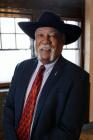
I am running for the United States Senate to protect our heritage and deliver practical results. As a fifth generation Wyomingite whose family homesteaded in Laramie in 1862, my roots are deep. I served for a decade in the Wyoming House of Representatives, mastering the art of working across the aisle as Minority Whip and Caucus Leader. My professional background spans serving as an exploration geophysicist in the oil industry to managing technology networks, giving me a strong grasp on our economic drivers. Guided by the legacy of public service left by my parents, Liz and Jim Byrd, I offer the proven legislative experience and private sector skills required to fight for Wyoming.
I would support targeted federal legislation focused on lowering everyday healthcare, energy, and housing costs. First, I would support expanding the federal cap on prescription drug and insulin costs to cover all citizens, not just seniors, immediately lowering family medical bills. Second, I would advocate for legislation that streamlines federal permits for domestic energy production, which lowers utility and fuel costs for consumers. Third, I would support bipartisan bills that offer targeted tax credits for first time homebuyers and incentivize local housing development. Finally, I would back infrastructure grants to expand rural broadband, reducing the cost of goods and services in our remote communities.
Our broken immigration system must be fixed with a pragmatic approach that directly supports Wyoming economic needs. The current system creates administrative delays that hurt our state industries. In Wyoming, our agriculture, livestock, and hospitality sectors rely heavily on temporary labor. I support streamlining the H 2A and H 2B visa programs so our ranchers, farmers, and small business employers can legally and efficiently fill seasonal job gaps when domestic labor is unavailable. Finally, we need a tough but fair legal pathway to earned citizenship for undocumented individuals who are already living here and actively contributing to our local communities.
To improve healthcare in Wyoming, I support pragmatic solutions tailored to our rural geography. First, we must expand federal reimbursement for telehealth so residents can consult specialists without traveling hours. Second, we must protect our critical access hospitals by stabilizing federal funding models to prevent closures. Third, I support expanding the federal cap on prescription drug and insulin costs to cover all citizens, immediately lowering family bills. Finally, we must address healthcare workforce shortages. I advocate for expanding medical residency slots in rural states and strengthening student loan forgiveness for doctors, nurses, and mental health professionals who commit to practicing in Wyoming communities.
I oppose the sale or exchange of Wyoming public lands. Nearly fifty percent of our state is managed by the federal government, and these spaces are vital to our heritage, economy, and way of life. I will fight to block short sighted federal attempts to sell off or transfer these tracts to private entities or corporate interests. We must preserve public access for hunting, fishing, outdoor recreation, and traditional livestock grazing. Public lands must remain open and accessible, serving as a shared resource that supports our local tourism, energy, and agricultural sectors for generations to come.
Facebook
https://www.facebook.com/harriethageman/
Campaign Phone
3072284886
Debate or Interview Videos
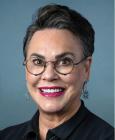
I practiced as a water, natural resources and constitutional trial attorney for over 30 years, defending private property rights, fighting bureaucratic overreach and working on policy for a variety of clients. I represented the State, farmers, ranchers, municipalities, counties, trade organizations, and small businesses, among others. I was elected to Congress in 2022, and serve on the Judiciary and Natural Resources Committees including as chair of the Subcommittee on Water, Wildlife and Fisheries. I have secured more than $40 million for local infrastructure throughout the State. We have also returned $16 million directly to Wyoming businesses and individuals through case work. I have passed 41 legislative wins over my 3 ½ year tenure.
The historic One Big Beautiful Bill signed by President Trump last year was designed to deliver dividends for generations of Americans who will carry on the next 250 years of our country. Last year’s reconciliation package gave Wyoming residents more tax relief than any other state in the country, with an average reduction of nearly $5,500. I will continue to support additional tax breaks for Wyoming families similar to those passed in the One Big Beautiful Bill, which included a permanent expansion of the Child Tax Credit, a $10,000 tax break on loans for cars made in America, and the elimination of federal taxes on tips and overtime. I will also continue to champion legislation to unleash Wyoming’s full energy and mineral potential.
The previous administration’s open border policy directly resulted in the deaths of Americans and wreaked havoc on almost every aspect of our lives. I have spoken with parents who lost children to fentanyl overdoses, whose daughters were brutally raped and murdered by criminal illegal aliens, and whose schools are becoming less governable by the day because of non-english-speaking students. I am fighting to get untrained and illegal truck drivers off our roads, and prevent non-english speaking drivers from obtaining commercial drivers licenses. A country without borders is no country at all. A closed border is necessary for the safety and security of any nation. Those wishing to immigrate into the United States should enter legally.
I am proud to have secured more than $205 million for Wyoming health care through the Rural Health Transformation Program to strengthen care and access across our state. The deliverability of rural health care should always be considered in any nationwide reform considered by Congress. I will continue to advocate for strengthening Wyoming’s healthcare system in the United States Senate.
The long-term preservation of our public lands remains a core component of our national identity that I will always be proud of as a 4th generation Wyomingite. I also believe many of our public lands hold the solutions to a plethora of problems that impact the west today such as limited economic opportunities for rural communities and a severe shortage of affordable housing. I have never supported mass land sales and have instead supported addressing the impact of the large federal footprint in our state where roughly half the land is under federal jurisdiction. Such policies have included dealing with the federal regulatory burden that constrains access and undermines congressionally mandated multiple use of our federal lands.