Education
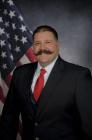
Bachelors degree and fire administration and emergency management
Campaign Email
Votematthewclayton@gmail.com
Occupation/Current Position
Firefighter/Paramedic
Campaign Phone
9285421110
Property Tax Relief and Spending. We have experienced the largest property tax increases in history. County spending has increased at 2.5 times the rate of inflation. The County has had huge surpluses. State law has provided ways to issue property tax rebates and credits, and my opponent says no to all tax cuts, unless you are over 55 and have lived in your home 10 years – only 7% of homes.
My plan is to return 75% of any surplus to ALL homeowners. Over the last 3 years, this would have delivered a 45% cut in the county share of your property taxes. Restraining growth in spending to the previous year plus inflation would provide even more money for tax relief.
The poor condition of our county roads is our most pressing problem. We do not need a tax increase. The county has had huge surpluses the last 3 years. Why hasn’t our County Council spent some of that surplus on the roads? We need to reprioritize the Council spending decisions.
In 2026, the County budget projects property tax revenue to grow 3.1%, more than inflation. In addition, revenues from the Local Income Tax have increased 67% in 3 years, due to the booming economy. The County has averaged a $21 million surplus over the last 3 years.
There is no crisis in County finances. Our property tax revenue could fall 25%, and we would still have a balanced budget. The County Cash balance is $140 million, 59% of annual expenditures, almost 3 times the gold standard of 20%.
Large scale developments must be done responsibly. They must be environmentally sound, and balance the need for jobs and economic improvement with the needs of the community. Abatements and TIF districts have been very over-used. A significant share of property tax revenue from any new large developments should be sent back to the taxpayers for property tax relief.
Perhaps more media coverage would help. But mostly, people elect representatives to get the job done. If you elect me, know that I will be working hard from every angle to get you property tax relief, and the best communication will be when you get that tax rebate check, or see that lower tax bill.
Most County employees are working class people, living paycheck to paycheck. Many make $37,000 per year. It was shocking when my opponent voted against Cost of Living raises in 2026, because the County “could not afford” the $2.1 million. The County had an $18 million surplus in 2025, and property tax revenues are projected to rise 3.1%. I will always vote for cost of living raises for county employees.
Education
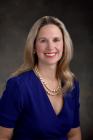
Bachelor's Degree in Journalism from Marquette University in Milwaukee, WI
Campaign Email
althoffamy@yahoo.com
Occupation/Current Position
St. Joseph County Councilwoman
Campaign Phone
571-214-9095
One of my top priorities is listening to our community on the data center issue. I voted against the data center in Granger and the second data center in New Carlisle because of the mass number of citizens who asked me to vote no. Property taxes are the other big issue that voters care about. I spearheaded a tax cut for seniors 55 and older. I’m also working on a plan for younger families. The council cannot enact these kinds of changes without the approval of the Indiana legislature, so this is something that requires us to work in tandem with state representatives.
The roads are extremely important to voters in St. Joseph County. We also have a number of bridges that we must keep safe and in order. I do not support a tax increase; rather, I support careful budgeting and spending -- as well as taking advantage of grant opportunities -- to help us cover the cost of these needs.
Fortunately, St. Joseph County has generally spent wisely and passed balanced budgets. We are also making sure to put aside money to keep our reserves healthy. We created a reserves plan that helps ensure we have enough money put aside for future liabilities, like pension and insurance funds. Like any family, the county has to make sure we remain fiscally strong and responsible by keeping money put aside for unanticipated expenses, emergencies, and state revenue cuts. The biggest spending priorities for me are on public safety, roads, and snow services. We recently set aside $1.5 million for roads and are hoping to modernize our snow fleet. As far as cuts, we review our budget yearly and look at spending line by line to see what is and isn’t a priority for the coming year.
In my first term, I spent time reviewing our solar policies and changing our laws to lessen the solar industrialization of valuable farmland. On the data center front, I voted against a $4 billion abatement for the Amazon, because it was unnecessary to provide such a big tax break to a big tech company that wanted to be here anyway – and had already started building. If one of the payoffs of data centers is tax revenue, it doesn’t make sense to grant such massive tax breaks. We are still learning about how data centers impact our way of life, and so I’ve listened to my constituents when they’ve asked us to hold off on the last two data center projects in the county.
I worked on a transparency ordinance that would have given us more insight as to how our county lawyers bill: how they track, record, and spend money. I felt that more detailed records would allow us to get a better grasp on our legal costs. Unfortunately, I didn’t feel like I had the support to move it forward. I have not given up, however, and I hope that this could go forward sometime in the future, especially if the make-up of the council should change. In terms of public input, I think our council provides ample opportunity for the public to participate. This was particularly highlighted at our data center vote, which went until four in the morning, because we had so many people in the community wanting to express their opinions.
We had a particularly controversial vote on our economic development director’s salary. While the rest of our county employees got essentially no pay raise because of economic uncertainty, the economic development director was praised for his work attracting data centers and given a $30,000 pay raise. I didn’t agree, and I did not vote for the budget which included that line item. We want to attract and retain good employees who provide key services to our constituents with good compensation packages, but I felt this was wrong and out of line. We were able to revisit our employees pay and provide a stipend recently to make up for their original lack of a pay raise.
Education
Indiana University, Ph.D.; Northwestern University, B.A.
Campaign Email
ranjan@voteforranjan.com
Occupation/Current Position
mathematics professor
Campaign Phone
4842410461
My top priorities for the Council when I’m elected are ending partisan polarization and protecting public health and safety. We can’t solve the affordability crisis and other pressing problems on the Council if we can’t discuss them reasonably, rationally, and without the influence of partisan division. Public health and safety are fundamental responsibilities of the government at every level, and our citizens’ quality of life depends on how safe they feel from crime and threats to public health.
Two infrastructure needs stand out to me: roads and energy. Winter is ending, so roads will be worse than usual. But there are potholes and other hazards that have gone unaddressed for years and snow plowing was an issue in some locations this past winter. Energy prices have skyrocketed, and solar infrastructure would be one way to address them. Unfortunately, attempts to expand renewable energy in our county have been blocked by members of our County Council. A tax increase at this time wouldn’t be possible, given the affordability crisis our constituents are facing.
We need to work together as a county to prevent any cuts that would put our constituents in jeopardy. The current Council is more focused on national partisan issues, with some members even fighting within their own party. State politicians have hampered local governments’ ability to operate with Senate Enrollment Act 1, and it is up to us all to figure out how we can cover the shortfall or cut programs with the least impact on St. Joe County residents. New ideas from new faces on the Council are how we can make it through these budget issues.
Our Council has approved two data centers; we first need to understand their environmental and economic impacts. The Council must establish consistent standards for evaluating these projects. At the minimum, companies must commit to the following: 1) no NDAs, 2) no tax breaks, 3) using local union labor, 4) fully covering infrastructure costs, 5) independent environmental monitoring with penalties for damage, 6) using only closed-loop systems for cooling. Additionally, they must address residents’ questions in public meetings, evaluate the potential impact on traffic congestion, noise and light pollution, energy bills, water wells, and property values, and create a sustainability plan. If a company satisfies these requirements, I'm willing to listen to their proposal. But at the end of the day, I will vote for what residents want.
I believe the County Council has a lot of work ahead on the subject of transparency and soliciting public input. A good step would be availability of meeting agendas across various media more than 48 hours in advance, whether that means publishing on social media, working with local news organizations, or other opportunities. Additionally, encouraging our Council members to explain their votes could create a lot more trust in our community.
Pay increases should be made across the board. Especially during an affordability crisis, we need to support all of the dedicated folks doing hard work for our county, including community health workers, maintenance workers, folks in administrative roles, and others. When funds are available, we can afford pay increases for all; we cannot afford to lose expertise and experience. By attracting and keeping good talent, we can build a better St. Joseph County that works to support everyone, not just a select few.