Candidate has not yet responded.
Candidate has not yet responded.
Candidate has not yet responded.
Candidate has not yet responded.
Candidate has not yet responded.
Candidate has not yet responded.
Candidate has not yet responded.
Occupation/Current Position
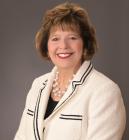
Current State Senator, Indiana District 11 and Owner/Operator Juday Creek Golf Course and Nugent Builders
Education
Bachelors Degree in Mathematics in Secondary Education from Central Michigan University
Campaign Phone
574-277-5512
Campaign Email
linda@lindarogers.org
St. Joseph County has adopted the County Option Circuit Breaker, allowing homeowners age 55 or older who have lived in their home for at least 10 years to apply without an Assessed Value limit. This credit ensures that qualifying homeowners will see their property tax bill increase by no more than 2% from the previous year. I supported legislation to extend the sunset date to 2028 but want to make it permanent in the 2027 session.
I three legislative priority areas: First, education policy—specifically improving math outcomes, similar to our reading initiatives. Second, I will continue work on property taxes and Local Income Tax (LIT). Finally, as Chair of Pensions & Labor, I will work to make certain our pensions remain fully funded. I want to ensure state agencies help, not punish Hoosiers by adding guardrails and cutting regulations.
Companies are looking for states and communities with reasonable regulations, a strong workforce, and available housing. Indiana performs better than most states, but we still have more work to do. We should continue reducing unnecessary regulations on employers and on new construction. In fact, regulations account for about 24% of the cost of a new home. If we want to attract jobs, support growth, and make housing more affordable, we must keep cutting red tape.
SEA 1 provided property tax relief and made changes to Local Income Tax (LIT) distribution. Striking the right balance is the goal, but until we have data showing the full impact, it’s difficult to know where adjustments are needed. When it comes to LIT, one size does not fit all. We are giving counties the opportunity to work with cities and towns to set rates for each unit of government—ensuring essential services are funded without overburdening workers.
We began this process this year with HEA 1210 and the Municipal Unit Strategic Task Force (MUST). The next step is to review data submitted to the DLGF, refine the process, and ensure MUST becomes a viable option for counties to determine their own LIT rates.
State funding for schools is based on several things starting with the “foundation” which is a based on the combination of the number of students in the state and the budget allocation; there is additional funding through the “complexity” formula which directs funding to schools serving students in foster care or from families receiving TANF or SNAP; other items including Special Education and Career and Technical Education also come into consideration.
We want to be able to provide the appropriate funds to schools who have students at the poverty level. However, not all eligible families sign up for these programs, so some schools don’t receive the funding they need. I would support adding a multiplier to better account for those students. I also believe funding should be increased for English Language Learners and Special Education.
I support the new diploma pathways and readiness seals. They give students the opportunity to apply what they’ve learned in real-world settings and explore careers before making long-term decisions. Learning by doing is often more effective than sitting in a classroom alone.
That said, I do want to dismiss education fundamentals which will give students long-term options. We must ensure these requirements do not limit flexibility or create unintended barriers for students. I would encourage ongoing reviews and adjustments to make sure all students have access to multiple pathways and can choose the option that best fits their goals.
As a strong supporter of the Second Amendment, I am generally pleased with Indiana’s current firearm laws, which are among the less restrictive in the country. Indiana is a constitutional carry state, meaning individuals age 18 and older who are legally permitted may carry a firearm, either openly or concealed.
The root issues often associated with gun violence go beyond the laws themselves. Factors such as mental health, education, cultural influences, and economic conditions all play a role in both gun violence and suicide rates, and these are areas that also need to be addressed.
Healthy moms and healthy babies should be a given in Indiana. We have made progress but, too many families especially in rural areas still struggle to access care before, during, and after pregnancy. Programs like Nurse-Family Partnership are a great support for new mothers.
First, we need to improve access to education and prenatal care. Second, we must ensure mothers have consistent physical and mental health care after birth, as many complications occur postpartum. Third, we need to address provider shortages. Rural areas are losing maternity services, forcing long drives and delayed care. We need to help bring doctors, nurses, and midwives to underserved communities and keep hospital units open. Fourth, we should expand proven supports like home visiting programs and doulas. Finally, we must track and review data to ensure progress.
Candidate has not yet responded.
Candidate has not yet responded.
Candidate has not yet responded.
Candidate has not yet responded.
Candidate has not yet responded.
Candidate has not yet responded.
Candidate has not yet responded.