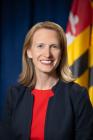
DUTIES: The Comptroller collects, manages, and plans for state revenues. This includes Maryland taxes on income (personal and corporate), retail sales, motor vehicle fuel, tobacco, alcohol, and estates. The Comptroller, Governor, and state Treasurer serve on the Board of Public Works, which approves major contracts for the purchase of goods and services by the state government. TERM: Four years. No term limit.SALARY: $175,000.HOW ELECTED: Elected statewide.WEBSITE: marylandcomptroller.gov
Campaign Twitter
https://x.com/votesonyadunn
Campaign Instagram
www.instagram.com/votesonyadunn/
Primary factor: Is the company a Maryland-based firm? If not, what state resources or taxpayer support will it require to establish and maintain a presence in Maryland? Capacity building within Maryland is critical to strengthening and growing our procurement economy.
State procurement dollars should support and circulate within Maryland whenever possible.
Other factors include local workforce impact, compliance history, accountability, efficiency, risk management, and community engagement.
FOR: HB 392 & HB 1554 - Short term revenue loss but helps retain manufacturing jobs and reduce food deserts in Maryland.
FOR: HB 1422 & SB0858 - Adds teeth to compliance unit to address repeated failed audits by state agencies. Strengthen financial management oversight of budgets and contracts.
AGAINST: 2025 BRFA (Tax Changes) - 2% capital gains tax on high earners and 3% tax on IT/data services discourages investment, limits capacity building, and accelerates wealth migration from Maryland.
Budget & Revenue Shortfalls: structural deficit, slow revenue growth, federal job losses, and high-income out-migration.
Economic Competitiveness: business out-migration, affordability, taxes, and inflation.
Public Spending Cost: education costs, Medicaid, state pensions, and rural hospitals.
Infrastructure Risks: transportation trust fund shortfalls, aging infrastructure (state buildings, water, sewer), energy transition costs, healthcare workforce, cybersecurity, and IT modernization.
I would be straightforward and transparent with taxpayers: Maryland is in a structural deficit. Rose-colored revenue projections create public distrust and lead to spending cuts to public and social programs. Maryland families, businesses, and communities deserve better.
I plan to use conservative forecasting practices with a spectrum of investment risk profiles. Build a team of reliable economists and financial analysts who evaluate risks like the migration of businesses and taxpayers.
Campaign Phone
4845151787
Campaign Instagram
https://brookelierman-dot-yamm-track.appspot.com/29-n1wOju3FF5UdSPikLvDdALAjEZA3mfBVRkRNmHkRF-1ab5lgETbImtVSfiHrm_7mJ7QXhZ6RdimQD69NgnysIJ44ZjjuSzsLAQqm1qttOpC6GBM0V95S-0MUESAG6yfVAP4zWv62L8OGglogc8RwZXhfBnJb2q0C2Y6X0XsicKPJYzvUpKXDv5oJUcmV3ndtrPPtWvF_ZyN2rMdu_KXbEvQO2dgWWIe4Jo5NS_2na_mOwjpl22KUuFgw
On the Board of Public Works, I ensure Maryland receives the best value - not just the lowest price - from every contract dollar. Beyond cost, I evaluate vendor track records, commitment to MBE goals, labor standards, local economic impact, and accountability mechanisms. I've also modernized contract spending reporting so Marylanders can see exactly how their money is being spent. Smart procurement means stronger communities and a more equitable Maryland economy.
As Comptroller, I do not set tax policy - I administer tax laws equitably and make government work better for every Marylander. I've expanded branch offices, boosted call center staff, and launched new tools to ease filing. I've championed access to Earned Income Tax Credit and the Child Tax Credit, supported small businesses, and returned a record $121 million in unclaimed property in FY25. I'll keep fighting for free federal tax filing so every Marylander can access the money they've earned.
Maryland faces two major financial stressors: a rising cost of living pushing residents out of state, and the unprecedented threat to federal funding - including the loss of thousands of federal jobs, cuts to grants and contracts, and reduced Medicaid, SNAP, and disaster relief. My office now publishes state-of-the-economy reports to keep policymakers and the public informed. We must be clear-eyed about what reduced federal investment means so we can build a strong financial future together.
Economic uncertainty is the defining challenge of revenue forecasting and today's environment is among the most volatile we've seen. Tariffs, federal cuts, inflation, and market instability all hit Maryland revenues in unpredictable ways. As Chair of the Board of Revenue Estimates, I ensured we proactively adjusted projections in December 2024 leading to a year of stable finances, and our new tax system gives us real-time visibility to better understand our financial situation.