Washington Supreme Court Justice Position 5 Choose 1
State Supreme Court JusticeTerm: 2 years (special election)Salary: $269,924The Washington Supreme Court is the head of the judicial branch of state government, co-equal with the legislative and executive branches, and it is the state court of last resort. The goal of the Supreme Court is to provide for the prompt and orderly administration of justice by the judiciary and to announce the law on issues brought before it. The Court determines cases, publishes opinions, adopts rules of procedure, provides continuing guidance for the admission and supervision of the members of the Bar, and conducts a continuous program of training and guidance for the judiciary.We encourage you to explore additional information about these and all candidates, particularly our "Four Questions" video interviews, TVW's Video Voters' Guide, and the Washington State Supreme Court Elections Visualizer.

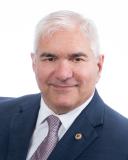

Biographical Information
In support of your campaign, please identify what, if any, ratings or endorsements you have received?
Candidate has not yet responded.
How have you served Washington's legal community outside of paid work?
Candidate has not yet responded.
What is the court’s role in shaping policy?
Candidate has not yet responded.
Under what circumstances would you recuse yourself from a case, and how would you handle pressure, from the public or political figures, to do otherwise?
Candidate has not yet responded.
How do you balance adhering to precedent (stare decisis) with the need to update the law for modern contexts?
Candidate has not yet responded.
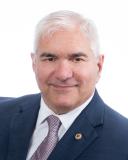
Biographical Information
Mailing Address
Larson for Justice
P.O. BOX 9083
SEATTLE, WA 98109
P.O. BOX 9083
SEATTLE, WA 98109
Campaign Email
campaign@larsonforjustice.com
Campaign Phone Number
2062072903
Campaign Website
http://www.larsonforjustice.com
Campaign Facebook
https://www.facebook.com/https:/larsonforjustice/
Campaign Instagram
http://www.instagram.com/larsonforwa/
Biography (max 750 char)
Brings 41 years of unmatched experience; 18 as a judge and 23 as a trial lawyer. Truly nonpartisan in his approach; worked with both political parties in the legislature and recognized nationally for criminal justice reforms. Served on multiple judicial committees, given the DMCJA Presidents Award twice, taught new judges for 10 years, recognized for domestic violence prevention and protecting judicial independence, named “Hero” of Federal Way Schools twice, given the Nevins award by the Washington Judge’s Foundation for his role in civics education, founded the Aktion Club for adults with disabilities, escorts veterans on Honor Flights, everyday hero by Kiwanis, best city leader by local citizens, and given the Key to the City in 2025.
In support of your campaign, please identify what, if any, ratings or endorsements you have received?
I am running a politically neutral campaign based on the values that judges are sworn to uphold. I have sought support from Democrats and Republicans, business and labor, defense attorneys and prosecutors, as well as law enforcement. I am even supported by lesser known political parties like the Cascade Party and the Forward Party. The Cascade Party was started by former Nirvana bass player Krist Novoselic and the Forward Party was started by Democratic presidential candidate Andrew Yang and former Republican New Jersey governor Christine Todd Whitman. Both parties were started as answers to the political divide in our country. Andrew Yang says, “Dave Larson is exactly the kind of candidate the Forward Party was created to support.” Rated exceptionally well-qualified by multiple bars.
How have you served Washington's legal community outside of paid work?
Past member of ten DMCJA committees. Taught new judges from 2010 to 2020. 2018 DMCJA President’s Award for protecting judicial independence. My work helped inspire creation of the Council on Independent Courts. Domestic violence prevention work recognized by the Gender & Justice Commission. Worked with both political parties in Olympia for reform and funding. Member of the Civic Learning Council, 2014 recipient of the Judge William Nevins Award, and named “Hero” of Federal Way Schools in 2018 and 2022 for work in civics education. Taught Street Law at a local high school from 2009 to 2025 and frequently appeared in classrooms at all grade levels. Founder of the former South King County YMCA District High School Mock Trial Competition. Given the DMCJA President’s Award again in 2026.
What is the court’s role in shaping policy?
The Supreme Court should play virtually no role in shaping public policy because to do so cheats the democratic political process that is actually intended to shape public policy through laws adopted by the legislature. The democratic process is designed to hear all interested voices and to achieve consensus. On the other hand, courts only hear from the litigants involved in the case and then decide who wins and who loses with little room for compromise. Public policy issues resolved through the political process are better accepted by the public at large, while judicial edicts tend to be continually resisted by the losing parties. With that said, the Supreme Court has a duty to involve itself in setting public policy when it affects the administration of justice.
Under what circumstances would you recuse yourself from a case, and how would you handle pressure, from the public or political figures, to do otherwise?
This question is quite broad. I would recuse myself when required to do so under the Code of Judicial Conduct or if I am disqualified from hearing the case by statute or court rule. Judges should not recuse themselves unless required because it would lead to judges finding ways not to hear cases so that they can avoid political pressure or public ridicule. Rule 2.7 of the Code of Judicial Conduct actually requires us to hear all cases assigned to us. As to pressure, Rule 2.4(A) provides that a “judge shall not be swayed by public clamor, or fear of criticism.” Rule 2.4(B) also provides that a “judge shall not permit family, social, political, financial, or other interests or relationships to influence the judge's judicial conduct or judgment.”
How do you balance adhering to precedent (stare decisis) with the need to update the law for modern contexts?
Following precedent is essential to societal stability and the predictability needed for people making decisions about their conduct. There is existing case law established by our State Supreme Court that dictates the rules to be followed when decisions about the continued viability of a past ruling are being made. Those rules avoid the introduction of the personal or political views of the Justices in their decisions. Justices need to follow that case law with great care and respect.