Los Angeles County Superior Court Judge, Office 87 Choose 1
⚖️ A superior court judge presides over a state-level trial court, acting as the primary judicial officer in both civil and criminal cases. They oversee legal proceedings, evaluate evidence and testimony, ensure adherence to laws, and make final decisions or instruct juries to do so. Judges are elected to six-year terms.
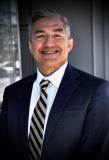
Biographical Information
Ballot Designation
Deputy Public Defender, County of Los Angeles
Candidate's Political Party
No Party Prefrence
Endorsement List URL
http://www.electbayneforjudge.com
Campaign Email
anthonybayne777@gmail.com
Campaign Website
http://www.electbayneforjudge.com
Campaign Twitter Handle
@@Bayne_for_Judge
Campaign Facebook URL
http://www.facebook.com/a.j.bayne.2025
What background, experience and/or education qualify you for this elected office? (You may use your candidate statement here if desired.)
I have over 31 years of legal experience since being sworn into the California Bar on December 1, 1994. I have spent nearly 26 years as a Deputy Public Defender in Los Angeles County, representing clients in serious and complex criminal cases and juvenile delinquency matters.
Reputation in the legal community matters. The Los Angeles County Bar Association Judicial Elections Evaluation Committee rated me “Well Qualified,” the highest rating for candidates in my race for Office 87. I am also endorsed by the Peace Officers Research Association of California, which represents more than 85,000 public safety members and over 950 associations.
My campaign has broad support from legal, labor, public safety, civic, and media voices, including La Opinión, the Metropolitan News-Enterprise, the International Longshore and Warehouse Union, and the Southern California News Group, including its Los Angeles County papers: the Los Angeles Daily News, Daily Breeze, Long Beach Press-Telegram, Pasadena Star-News, San Gabriel Valley Tribune, and Whittier Daily News. I am also supported by judges, defense attorneys, prosecutors, law enforcement, and community leaders.
I have tried over 100 jury trials to verdict and hold the title of Deputy Public Defender IV, the highest trial attorney classification in the Los Angeles County Public Defender’s Office, reserved for attorneys handling the most difficult and complex cases.
While working full time, I earned an LL.M. in Taxation and became self-taught in U.S. patent law. I have earned patents in communications and credit-related financial transactions, and I have patent-pending applications involving AI-assisted legal workflows, including applications that received favorable written opinions from the World Intellectual Property Organization.
I would bring to the bench preparation, fairness, patience, intellectual discipline, respect for the law, and respect for every person who appears in court.
What is working well in Los Angeles County courts? What needs improvement?
One thing working well in Los Angeles County courts is the increased use of structured diversion programs, including mental health diversion under Penal Code section 1001.36. In appropriate cases, this process has helped courts, prosecutors, defense attorneys, treatment providers, and probation recognize that some people charged with crimes are also struggling with serious, DSM-5 recognized mental health conditions that substantially contributed to their conduct.
When used properly, mental health diversion can protect public safety while also addressing the underlying issue that brought the person into court. Many individuals who come through the criminal courts have never received meaningful professional treatment because of poverty, lack of insurance, instability, neglect, or time spent in systems such as foster care. For those individuals, a carefully supervised treatment plan can be more effective than simply imposing a conviction and leaving the person with a lifelong felony record.
The strength of mental health diversion is that it is not automatic. It requires legal findings, treatment planning, supervision, accountability, and court review. When the person succeeds, dismissal can allow that person to move forward without being permanently burdened by “ex-felon” status. When the person does not comply or public safety concerns arise, the court still retains authority to respond appropriately.
This is an example of the court system working at its best: applying the law carefully, considering the individual facts of each case, protecting the community, and using available tools to reduce future harm rather than simply process cases.
IMPROVEMENT
An area that needs improvement is the speed and coordination of treatment-based alternatives in HS 11395 mandated treatment cases. Eligible people too often remain in custody while evaluations and treatment placements are arranged. When that process takes too long, some accept convictions just to get released sooner
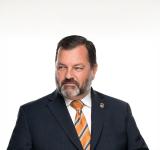
Biographical Information
Ballot Designation
Law Professor/Attorney
Candidate's Political Party
Democratic
Endorsement List URL
http://www.dejuteforjudge.com/endorsements
Campaign Email
david@dejute.vote
Campaign Website
http://www.dejuteforjudge.com
Campaign Instagram URL
http://www.instagram.com/dejuteforjudge/
Campaign Facebook URL
http://www.facebook.com/profile.php?id=61580000366001
What background, experience and/or education qualify you for this elected office? (You may use your candidate statement here if desired.)
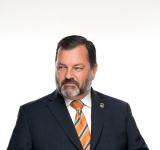
David DeJute is running for Los Angeles County Superior Court Judge to ensure our courts reflect those same values, where every person is heard, every case is judged on its merits, and every ruling is grounded in reason and respect.
David graduated summa cum laude and Phi Beta Kappa from the University of Notre Dame. At Harvard Law School, he graduated cum laude and served as an officer of the Legal Aid Bureau, the nation’s oldest student-run pro bono clinic, providing free legal aid to those in need. He went on to clerk for U.S. District Judge William J. Rea, a Reagan appointee known for his independence and fairness, who taught David to “call balls and strikes as you see them”.
Over more than three decades in law, David has represented clients in the public and private sectors with distinction. As an Assistant United States Attorney, he represented the FBI, NASA, and even the President of the United States at the time, Barack Obama. As Vice President of Litigation at Sony Pictures, he managed complex cases and developed a deep understanding of an industry central to Los Angeles’ economy.
Today, he practices at Michelman Robinson, a nationally respected firm, where he continues to advocate for fairness and mentor younger attorneys. David also teaches at Pepperdine University Caruso School of Law, where he serves as Director of the Disaster Relief Clinic, providing free legal aid to individuals harmed by floods and the Eaton and Palisade fires.
For DeJute, justice is not about winning. It is about ensuring that everyone who walks into a courtroom feels that they were treated with dignity and respect, even if the outcome was not what they had hoped for. As he often says, true justice is when both sides believe they were heard and the process was fair.
What is working well in Los Angeles County courts? What needs improvement?
Candidate has not yet responded.
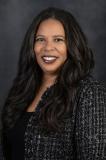
Biographical Information
Ballot Designation
Deputy City Attorney, City of Los Angeles
Candidate's Political Party
Democrat
Endorsement List URL
http://www.shareesandersgordon.com/endorsements1
Campaign Email
gordon4judge@gmail.com
Campaign Website
http://ShareeSandersGordon.com
Campaign Instagram URL
http://facebook.com/profile.php?id=61574268418021
Campaign Facebook URL
http://www.facebook.com/profile.php?id=61574268418021
What background, experience and/or education qualify you for this elected office? (You may use your candidate statement here if desired.)
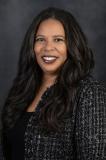
Sharee Sanders Gordon is uniquely qualified to serve as a Los Angeles Superior Court Judge based on her extensive legal experience, longstanding commitment to public service, and strong educational foundation. With more than two decades in the Los Angeles City Attorney’s Office. Beginning as a trial deputy in the demanding Central Trials unit, she quickly developed the litigation skills, sound judgment, and courtroom presence essential for the bench. Her selection as one of the original Neighborhood Prosecutors further demonstrates her ability to address complex public safety issues while working collaboratively with law enforcement and the community.
Her qualifications are strengthened by a record of innovation and measurable impact. She helped lead the nationally recognized Safer Cities II initiative, which reduced crime by 50% around Crenshaw High School. As Director of the Prostitution Diversion Program, she oversaw a model initiative, serving more than 9,500 participants with a recidivism rate of less than 5%, reflecting both accountability and rehabilitation. She also founded the Neighborhood School Safety Program, underscoring her proactive approach to protecting vulnerable populations.
Sharee’s path to the law was shaped by her early career as an elementary school teacher, where she witnessed firsthand the effects of crime on children and families. This experience informs her balanced perspective and commitment to fair, thoughtful decision-making.
Together, her legal expertise, proven leadership, and deep community ties make her exceptionally well-prepared to serve with integrity, fairness, and impartiality on the Los Angeles Superior Court.
What is working well in Los Angeles County courts? What needs improvement?
Los Angeles County’s courts are anchored by dedicated judicial officers, hardworking staff, and a deep commitment to fairness and access to justice. What is working well is the professionalism on the bench, the continued expansion of problem-solving courts, and the growing use of collaborative programs that address root causes of crime. Initiatives that emphasize diversion, accountability, and rehabilitation, especially for low-level, nonviolent offenses, are helping to reduce recidivism and make communities safer. The courts have also made meaningful strides in improving access through technology, allowing more people to participate in the justice system efficiently.
At the same time, there is more work to be done. Case backlogs and delays can undermine public confidence and prolong stress for victims, families, and those awaiting resolution. Greater consistency in outcomes, particularly across different courtrooms, is essential to ensuring equity. Access to justice must continue to be expanded, especially for underserved communities who may face language barriers, economic hardship, or limited understanding of the legal system.
Drawing on my experience as a longtime prosecutor, Neighborhood Prosecutor, and leader of innovative programs like Safer Cities II and the Prostitution Diversion Program, I understand both what works and where improvements are needed. I have seen firsthand that when the system is efficient, fair, and connected to the community, it produces better outcomes. As a judge, I would be committed to promoting timely case resolution, treating every person with dignity and respect, and supporting solutions that enhance both accountability and opportunity.