St. Petersburg Council Member District 6 Choose 1
The city of St. Petersburg operates under a strong mayor and city council system. The St. Petersburg City Council is the non-partisan governing body of the City. The Council is responsible for legislating ordinances and resolutions, approving the city budget, appointing the charter review commission, and establishing a code of ethics for the city government and city employees. The Council consists of eight Council Members, elected from each of the eight districts of the City. Elections for the City Council are held in even-numbered years, usually with each election including four of the eight districts.In the general election, all eligible city voters vote "at large" for the candidates running in all of the Districts that are on the ballot.Term: 4 years Salary: $67,275/yearClick here to view the June 2nd, 2026 candidate forum: https://youtu.be/yFuvyHAZkXc?si=NIO8cP_8oxpPsKQQFor a detailed video explanation of the role of City Council, click here…https://www.youtube.com/watch?v=3LdBHrgaWZo

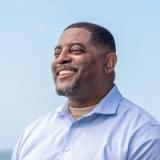

Biographical Information
Campaign Website
http://www.groveforstpete.com/
Campaign Email
vote@groveforstpete.com
Campaign Phone
7274341559
Campaign Mailing Address
PO Box 466
St. Petersburg, FL 33731
St. Petersburg, FL 33731
Education
I received my Bachelor of Science in Public Health and Health Education from Central Michigan University in 2010. I earned my Master of Public Health in 2013 and Doctorate in Public Health in 2018 from the University of South Florida.
Professional Experience
Dr. Linsey Grove is a certified public health practitioner, civic leader, and CEO of The Hypatia Collaborative. She has over 10 years of experience in nonprofit capacity building, management, and community development, and has worked with federal, state, and local governments, as well as nonprofit agencies. She also taught at USFSP.
Public Service
She has served as president of the League of Women Voters of the St. Petersburg Area, vice chair of the Pinellas County Charter Review Commission, and was appointed to the Pinellas County Council for Persons with Disabilities by Commissioner Charlie Justice.
Instagram
http://www.instagram.com/groveforstpete
Whether or not to reduce property taxes is officially a ballot amendment for this November. What services would have to be cut or how would you make up for revenue losses if this goes through? What, in your view, should be done? (750 character limit)
The financial pain Floridians are feeling is very real. However, if we wanted to provide financial relief for Floridians, our state legislature would work on reforming property insurance, investing in and expanding affordable housing, and expanding healthcare. If this referendum passes, I will work to ensure that we do not cut any services. There are limited ways for local governments to raise revenue via taxes; therefore, we may have to increase user fees for services to make up for the revenue losses. It is unlikely we could acquire federal and state grant funding and appropriations, given current budget cuts. Residents would likely see an increase in sales tax to raise revenue, which would disproportionately harm lower-income households.
Hurricanes Helene and Milton placed an unprecedented burden on municipalities and residents. What steps would you take to improve city capacity for future storm resilience and response? What can be done to better help residents recover and rebuild, including the issuance of building permits in a timely manner and difficulties stemming from the FEMA 49/50% rule. What changes are needed to improve this process? (750 character limit)
I believe that we need to continue to accelerate upgrades to stormwater infrastructure to reduce flooding, protect residents and property, and mitigate rising sea levels. With a comprehensive resilience plan, we can identify ways residents can help increase our city’s resilience. For instance, the city could better coordinate with neighborhood associations to disseminate information and resources. More can be done to help residents post-storm: educating them about federal, state, and local property damage programs, their criteria (ie. FEMA 49/50% rule), and ways they can prepare ahead of hurricane season (ex., having a proper property appraisal for potential assessments) and making it easier to navigate permits.
The Historic Gas Plant District represents 86 acres of land. Should the City sell the property as a single block to one developer, or should it retain ownership subdividing the land to maximize long-term public return? If you support a sale, do you believe the price should be set by a current fair-market appraisal? (750 character limit)
Like our waterfront parks, we only get one chance to do this right. After many conversations with residents, some of whom are Gas Plant descendants, we need to ensure there is ample, diverse community input to drive the redevelopment process. Selling the 86 acres to one developer could restrict our ability to have a community-driven development process, maximize long-term public return, and meet the changing needs of our city. I believe other mechanisms can allow for city ownership, benefit residents, and ensure that the needs of our city (current and future) are met. I would like to see more Community Benefits Advisory Board oversight to ensure that this development has specific community benefits with accountability measures included.
The Governor and State Legislature recently banned local governments from participating in or promoting initiatives considered DEI. How will you ensure that all residents, regardless of race, gender or sexual orientation, feel welcomed, celebrated and their voices heard? (750 character limit)
We can ensure that all residents feel welcomed, celebrated, and that their voices are heard by including language around gender and sexual orientation in our anti-discrimination language in our city charter. I also think that there will be instances where litigation will be needed to fully exercise our ability to protect and empower residents from different minority groups. I believe that through training, intentional culture, community partnerships, and creative marketing, we can ensure that our city makes everyone feel like they belong, are heard, and that their identities are celebrated.
Approximately $440 million in Tax Increment Financing (TIF) had been earmarked for a new stadium and related infrastructure. TIF expenditures currently do not require a referendum. Should voters have the opportunity to approve or reject that spending via a ballot referendum? (750 character limit)
TIF dollars are tied to mechanisms like Community Redevelopment Areas–examples include the Intown and South St. Petersburg CRAs. The South St. Petersburg CRA has a citizen advisory committee made up of community members, appointed by the city and county, to determine how each year’s budget is spent. I believe that the creation of a citizen advisory committee sets a precedent for other CRAs like Intown. Residents could advocate for an amendment to the Intown CRA that creates this kind of committee to create a community power-sharing mechanism for the long-term rather than only voting on one issue like the stadium via referendum.
The cost of some electricity in the county is expected to increase in the next few years. Clearwater and Saint Petersburg are looking into creating a public utility. Do you support this effort? Why or why not? (750 character limit)
I support the effort to study public power in St. Petersburg. We have some of the highest electricity rates in the state, and this may be one of many ways to increase affordability for residents. Thirty-three cities across Florida have created a public utility for their electricity to bring rates down, increase responses to outages, and invest in electrical infrastructure and renewable energy. I believe our residents deserve to have a choice in a service that we all use and need – especially when the contract is coming up for renewal.
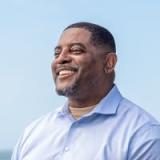
Biographical Information
Campaign Website
http://www.malloryforcouncil.com/
Campaign Email
trevor@malloryforcouncil.com
Whether or not to reduce property taxes is officially a ballot amendment for this November. What services would have to be cut or how would you make up for revenue losses if this goes through? What, in your view, should be done? (750 character limit)
My focus is making city government efficient, spending taxpayer dollars responsibly, and ensuring any tax changes don't come at the expense of public safety, infrastructure, or neighborhood quality of life. I will vote against the property tax proposal but, if it passes, I will evaluate our city’s next steps based on these values.
Hurricanes Helene and Milton placed an unprecedented burden on municipalities and residents. What steps would you take to improve city capacity for future storm resilience and response? What can be done to better help residents recover and rebuild, including the issuance of building permits in a timely manner and difficulties stemming from the FEMA 49/50% rule. What changes are needed to improve this process? (750 character limit)
The storms showed us that resilience has to be a year-round priority. We need to invest in infrastructure, improve communication with residents, and make rebuilding easier through permitting reforms and helping families navigate recovery. I've heard from homeowners frustrated by the FEMA 49/50% rule because a single contractor's estimate can dramatically affect the future of their home. Residents should be encouraged to get second opinions and multiple quotes, and the city should do everything possible to make the process fair, transparent, and easy to understand.
The Historic Gas Plant District represents 86 acres of land. Should the City sell the property as a single block to one developer, or should it retain ownership subdividing the land to maximize long-term public return? If you support a sale, do you believe the price should be set by a current fair-market appraisal? (750 character limit)
This site is one of the most important public assets in our city, and any decision should maximize long-term benefits while listening to the residents in the development process. My priority is ensuring redevelopment creates opportunity, honors the history of the community, and delivers lasting value for St. Petersburg rather than focusing solely on a short-term transaction. Proposed plans have to be evaluated case-by-case on that basis.
The Governor and State Legislature recently banned local governments from participating in or promoting initiatives considered DEI. How will you ensure that all residents, regardless of race, gender or sexual orientation, feel welcomed, celebrated and their voices heard? (750 character limit)
Every resident deserves to feel respected and heard. While state law may change how programs are structured, it does not change my commitment to listening to all communities, ensuring broad representation in decision-making, and making City Hall accessible to everyone. Tallahassee can ban certain programs, but they can’t ban good values.
Approximately $440 million in Tax Increment Financing (TIF) had been earmarked for a new stadium and related infrastructure. TIF expenditures currently do not require a referendum. Should voters have the opportunity to approve or reject that spending via a ballot referendum? (750 character limit)
Major public investments require transparency and public trust. Residents deserve a meaningful voice in decisions that will shape our city's future, and I support strong public engagement and accountability whenever significant taxpayer resources are involved.
The cost of some electricity in the county is expected to increase in the next few years. Clearwater and Saint Petersburg are looking into creating a public utility. Do you support this effort? Why or why not? (750 character limit)
Residents and small businesses deserve affordable, reliable energy. I support studying all available options and choosing the approach that provides the best long-term value, reliability, and accountability for the people of St. Petersburg. A public utility in St Petersburg is a promising idea for lowering costs – we need to gather the necessary data to determine if that idea will bear fruit.