Member of the State Assembly, District 18 Choose 1
🏛️ California State Assembly Members represent their districts by crafting, amending, and voting on state legislation, creating a biennial budget, and performing oversight of state agencies. They hold committee hearings on policy, manage constituent services through local offices, and secure funding for local projects. Assembly Members are elected for two-year terms and manage both a Capitol office and a district office to serve their constituents.


Biographical Information
If elected, what are your top 3 priorities?
Candidate has not yet responded.
What background, experience and/or education qualify you for this office? (You may use your candidate statement here if desired.)
Candidate has not yet responded.
Do you support the laws that seek to alleviate the shortage of affordable housing for middle- and low-income people in California? If not, what would you propose to achieve the same goals?
Candidate has not yet responded.
What programs or strategies would you suggest support the educational needs of young, low-income Californians?
Candidate has not yet responded.
What programs, proposals, projects, or legislation would you support to meet the water needs of all Californians?
Candidate has not yet responded.

Biographical Information
Ballot Designation
Author/Political Commentator
Candidate's Political Party
Green
Campaign Website
http://leftunityslate.org/Michael-Goldstein
Campaign Email
michael@michaelgoldstein.us
Campaign YouTube URL
Endorsement List URL
http://leftunityslate.org/left-unity-slate-2026
If elected, what are your top 3 priorities?
1) Informing the public as to every contact and pressure I face to toe the line of what is acceptable to the ultra-wealthy, their corporations, and their political parties.
2) Using the platform to deliver the good news: that it is possible to build a massive, nonviolent movement to fulfill the principle articulated in the Declaration of Independence: "When Government becomes destructive of these ends, it is the right of the people to alter or abolish it."
3) Keeping a commitment to serve only one term. It is too easy for well-meaning people to compromise their principles, going along to get along, because "I can do more good here than if I am voted out in two years." Freed from fundraising and introducing bills that will go nowhere so I can tell the electorate I fought for this and that, I will also be more able to get my information on how to vote on important measures from groups that truly have the interests of "the 99 percent" in mind.
What background, experience and/or education qualify you for this office? (You may use your candidate statement here if desired.)
I grew up in Fort Wayne, Indiana, graduated with High Honors from Princeton’s School of Public and International Affairs and from Stanford Law, and am a trained mediator. I represented death-row and other indigent prisoners on appeal for 25 years, has worked in factories and on highways, joined water protectors at Standing Rock in 2016, and wrote the books "Return of the Light: A Political Fable in Which the American People Retake Their Country" and "Blessed Disillusionment: Letting Go of What Cannot Save Us, Turning to What Can."
We can have economic and health security, social justice, peace, sustainability, and a caring society . . . if we take charge of our own destinies by building a massive, nonviolent movement for a Second American Revolution.
Electing third-party candidates (like me) cannot itself bring us what we need. Nor can relying on the neofascist-dominated party (Republicans) or Corporate Party Lite (Democrats). So I’m not claiming I can lower the cost of living under corporate capitalism, or exaggerating the (declining) crime rate and promising to make you safer than someone else could. And I’m not supported by an independent expenditure PAC.
But I argue in my books that there is hope. People must first learn, however, that the system absorbs all conventional reform efforts without really changing. If elected, I would support that as a not-so-undercover agent, reporting back to you on everything I see about the dynamics of governmental decision making. I will describe the pressures that confuse, co-opt, and corrupt those who enter politics. (AOC: “When you’re on the inside, the word is always ‘compromise.’”) —The truth shall set you free.
Do you support the laws that seek to alleviate the shortage of affordable housing for middle- and low-income people in California? If not, what would you propose to achieve the same goals?
I am not familiar with those but would learn about them from true housing advocates (vs. developers and construction unions) if any issue regarding them came up during my turn. I don't believe in taxpayer subsidies for "affordable" housing that most people cannot afford, nor in state legislation requiring cities to support the development of such housing,
What programs or strategies would you suggest support the educational needs of young, low-income Californians?
Taxing the rich so we can reduce classroom size, restore enrichment activities, and completely sever the link between school funding and the prosperity and tax base of individual school districts.
What programs, proposals, projects, or legislation would you support to meet the water needs of all Californians?
I am not familiar with the issues here but would be willing to learn. Everyone claims to be against "special interests" -- I would pretty much ignore those with a profit-making financial stake in the solutions and listen to those representing people in need.

Biographical Information
If elected, what are your top 3 priorities?
Candidate has not yet responded.
What background, experience and/or education qualify you for this office? (You may use your candidate statement here if desired.)
Candidate has not yet responded.
Do you support the laws that seek to alleviate the shortage of affordable housing for middle- and low-income people in California? If not, what would you propose to achieve the same goals?
Candidate has not yet responded.
What programs or strategies would you suggest support the educational needs of young, low-income Californians?
Candidate has not yet responded.
What programs, proposals, projects, or legislation would you support to meet the water needs of all Californians?
Candidate has not yet responded.
Biographical Information
Ballot Designation
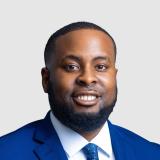
Housing Program Director
Candidate's Political Party
Democrat Party
Campaign Website
http://www.andresandfordforassembly.com
Campaign Email
andresandfordforassembly@gmail.com
Campaign Instagram URL
http://www.instagram.com/andre_l._sandford/
If elected, what are your top 3 priorities?
If elected, my top three priorities will be:
1. Lower the cost of living for working families
Too many families are being pushed out of California. I will focus on:
Expanding affordable housing and preventing displacement
Implementing universal childcare to reduce financial strain
Lowering everyday costs like healthcare and utilities
Families should be able to live, work, and raise their children without being priced out.
2. Deliver universal healthcare through a single-payer system
Healthcare should be a right — not something tied to your job or income.
I will fight for a single-payer system that guarantees:
No premiums, deductibles, or copays
Access to primary care, mental health, dental, and vision services
A system focused on prevention and long-term health outcomes
3. Strengthen education and invest in our children
We must invest directly in the success of our kids and educators. I will:
Pass the Small Class Size Act to reduce overcrowded classrooms
Support educators through my Educator Income Tax Relief Act
Expand access to early childhood education and student support services
These priorities are about one thing: creating a California where families can afford to stay, children can thrive, and communities are safe and supported.
What background, experience and/or education qualify you for this office? (You may use your candidate statement here if desired.)
I bring both lived experience and professional leadership to this role.
I was born and raised in Detroit, where I saw firsthand the impact that economic instability, under-resourced schools, and limited access to opportunity can have on families. Those experiences shaped my commitment to public service and to building systems that actually work for people.
I earned both my Bachelor’s degree and Master’s degree in Behavioral Sciences from Jacksonville State University, and I’ve spent over a decade working on the front lines of social services. My career has included roles in child protective services, foster care, mental health, and housing — giving me a deep understanding of how systems impact families at every stage.
Today, I serve as a Program Director, leading housing and homelessness programs and building cross-sector partnerships to deliver real solutions. I’ve worked directly with families navigating homelessness, youth transitioning out of foster care, and individuals in need of mental health support. I understand both the challenges and the opportunities to improve outcomes.
I’m also a husband to my wife Victoria, a public-school teacher in Oakland, and a father of two young boys. Like many families, we are navigating the rising cost of living, childcare, and housing in the Bay Area. That perspective grounds my work and keeps me focused on real, practical solutions.
In addition to my professional experience, I’ve held leadership roles in community and service organizations, including serving as a chapter president and in regional leadership positions.
I’m running for State Assembly to bring that experience — across systems, communities, and lived reality — into public office to deliver solutions that improve affordability, strengthen education, and expand access to opportunity for all Californians.
Do you support the laws that seek to alleviate the shortage of affordable housing for middle- and low-income people in California? If not, what would you propose to achieve the same goals?
Yes — I support laws that expand the supply of affordable housing for middle- and low-income Californians. We cannot address the cost-of-living crisis without building more housing.
But supply alone is not enough. We must ensure that the housing being built is truly affordable and that we are protecting the people who already live in our communities.
My approach focuses on both production and protection:
1. Build more affordable housing at scale
I support policies that:
Increase housing production, especially near transit and job centers
Streamline approvals for projects that meet affordability requirements
Expand funding for affordable and workforce housing
2. Ensure housing is actually affordable
We need stronger requirements so new developments include:
Meaningful affordability levels for low- and middle-income families
Pathways to homeownership
Long-term affordability protections
3. Prevent displacement and stabilize communities
Building housing should not come at the cost of pushing families out. I support:
Tenant protections and anti-displacement policies
Rental assistance and eviction prevention programs
Preservation of existing affordable housing
4. Use vacant and underutilized housing
We have housing sitting empty while people are struggling. I will push for:
Policies that bring vacant units back into use
Incentives and accountability for property owners
5. Connect housing to broader affordability solutions
Housing policy must be aligned with:
Lowering construction costs where possible
Expanding access to financing and subsidies
Addressing homelessness through permanent housing solutions
What matters most:
We need a balanced approach that builds more, protects residents, and ensures affordability is real — not just promised.
California has the resources to solve this, but it requires urgency, coordination, and a commitment to keeping families in the communities they call home.
What programs or strategies would you suggest support the educational needs of young, low-income Californians?
Supporting the educational success of low-income students requires a comprehensive approach that addresses both in-school resources and the out-of-school challenges that impact learning.
First, we must invest directly in classrooms.
I will fight to reduce overcrowding through my Small Class Size Act, ensuring students receive more individualized attention. Smaller class sizes are especially critical for students who need additional academic support.
Second, we need to strengthen the educator workforce.
Through my Educator Income Tax Relief Act, I will work to retain and recruit teachers, counselors, and school nurses — particularly in underserved communities. Students succeed when they have stable, supported educators.
Third, we must expand early childhood education.
Access to high-quality preschool and universal childcare ensures children start school ready to learn, helping close achievement gaps before they widen.
Fourth, we need to increase student support services.
Low-income students often face barriers outside the classroom. I will support:
More school counselors, nurses, and mental health professionals
After-school and summer learning programs
Tutoring and academic intervention services
Fifth, we must address basic needs that impact learning.
Students cannot focus if they are dealing with housing instability, hunger, or lack of healthcare. I support stronger coordination between schools and social services to ensure students and families receive the support they need.
Finally, we must ensure equitable funding and accountability.
Schools serving low-income communities should receive targeted resources, with clear goals to improve outcomes and close achievement gaps.
California has the resources to lead, but we must prioritize investments that ensure every student — regardless of income — has the opportunity to succeed.
What programs, proposals, projects, or legislation would you support to meet the water needs of all Californians?
California’s water challenges require a comprehensive, long-term strategy that ensures reliability, affordability, and sustainability for all communities.
First, we must invest in water supply resilience.
I support expanding:
Water recycling and reuse projects
Stormwater capture and groundwater recharge
Regional storage solutions that make better use of existing resources
We need to maximize the water we already have.
Second, we must modernize aging infrastructure.
Many communities — especially low-income areas — face failing systems, leaks, and contamination risks. I will support:
State funding to upgrade water systems
Replacing aging pipes and treatment facilities
Ensuring safe, clean drinking water in every community
Third, we must prioritize equity and affordability.
Access to clean water is a basic right. I will push for:
Affordability programs for low-income households
Targeted investments in disadvantaged communities
Stronger oversight to ensure safe drinking water standards are met
Fourth, we need smarter water management.
I support:
Incentives for water efficiency in homes, agriculture, and industry
Drought preparedness and long-term conservation strategies
Better coordination across regions and agencies
Fifth, we must support climate resilience.
Climate change is intensifying droughts and extreme weather. I will advocate for:
Investments that protect against both drought and flooding
Nature-based solutions like watershed restoration
Policies that align water management with climate goals
What matters most:
California has the resources and innovation to lead — but we must act with urgency and coordination.
We need a system that protects our water supply, ensures affordability, and guarantees that every community — regardless of income or location — has access to safe, reliable water.