Michigan Secretary of State Choose 1
Duties: Secretary of State serves as chief motor vehicle administrator and chief election officer for Michigan and also maintains the state's official repository of records and certifies documents as Keeper of the Great Seal.Qualifications: Candidate for Secretary of State must be a registered voter in Michigan on the date he or she is nominated for the office. He/she may serve a maximum of two full terms.Term: 4 yearsMichigan Secretary of State candidate forum recording, September 29, 2026

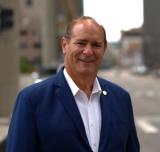




Biographical Information
Website
http://garlingilchrist.com/
Occupation / Current Position
Lt. Governor of Michigan
Education
University of Michigan
Describe the background, skills, and experience that have prepared you for this role, and why do you want to serve as Secretary of State?
As the country's only statewide elected software engineer, I've made government work for people. It's time for bold leadership against a President who acts like a king — if democracy fails, we lose our best tool to fix real problems: unaffordable childcare, housing, healthcare.
I'm running for Secretary of State because Michigan is ground zero for free and fair elections. Unlike typical politicians, I refuse corporate PAC money; dark money has had too much influence over our elections for too long. I'll stand tall against Big Tech abusing Michiganders' personal data, and modernize licensing and registration to work better and smarter.
What actions or initiatives, if any, would you take to strengthen resources, training, and support for county, city, and local clerks?
Michigan's clerks are the backbone of our elections and deserve a Secretary of State who treats them as partners. I'd expand training on cybersecurity, audits, and absentee/same-day registration on a consistent, year-round cadence instead of last-minute rushes, and push for funding and grants to help under-resourced offices upgrade equipment and secure systems. Clerks also need an SOS office that listens, not just directs. I'd create feedback channels across all 83 counties. Having visited every county as Lt. Governor, I know a small UP clerk faces different challenges than one in a major city, and our support has to reflect that.
Please describe how you would safeguard voter data and maintain the integrity and security of Michigan’s elections.
The Secretary of State holds Michiganders' most sensitive data. I'll act as Chief Privacy Officer, keeping people protected and informed. As a software engineer who built and secured systems used by millions, I know cybersecurity demands vigilance: continuous investment in the voter database, regular audits, and rapid patching with clerks statewide. I'd strengthen post-election audits with verifiable paper trails. Transparency builds trust and blunts disinformation. On privacy, I'd enforce strict access controls and encryption for voter data, train clerks against phishing, and work with law enforcement to counter disinformation.
Describe your position on requiring documentary proof of citizenship for people to register and vote.
Michigan already safeguards its elections: only citizens may register or vote, voting while ineligible is a federal crime, and every voter attests to citizenship under penalty of perjury, with rolls cross-checked against state and federal databases. These laws work, there's no gap needing new bureaucracy. Proof-of-citizenship mandates aren't about security; they're disenfranchisement, burdening women whose documents don't match post-marriage names and rural residents far from offices to replace lost papers.
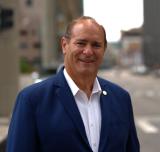
Biographical Information
Website
http://www.anthonyforlini.com
Campaign Twitter Handle
@@tonyforlini1
Occupation / Current Position
Macomb County Clerk/ Register of Deeds
Education
Business Degree from Western Michigan University
Qualifications and Experience
Six years running elections in the 3rd largest County in the State winning two National Awards, Legislator for the State of Michigan, Harrison Township Supervisor, Self employed Business Owner
Describe the background, skills, and experience that have prepared you for this role, and why do you want to serve as Secretary of State?
I have been a lifetime business owner. I served the public at the local level as Harrison Township Supervisor, Michigan Legislator, District Director for a Michigan Congressman, Macomb County Clerk and Register of Deeds. As the Macomb County Clerk I have successfully reformed election processes and won National awards for Operational Efficiancy and Innovation. These skills make me uniqually qualified to be successful in the role of Secretary of State.
What actions or initiatives, if any, would you take to strengthen resources, training, and support for county, city, and local clerks?
I am the only candidate on the ballot who has served as a clerk. Too many times, I have watched lawmakers and even the Governor make decisions that adversely affect the day-to-day operations of local clerks. As Secretary of State, I will advocate for the resources clerks need so that burdens handed down from Lansing do not become constitutionally unfunded mandates. I will also pursue legislative changes to campaign finance laws that streamline the bureaucracy and make compliance easier for local clerks.
Please describe how you would safeguard voter data and maintain the integrity and security of Michigan’s elections.
As Macomb County Clerk, I have demonstrated my commitment to safeguarding elections and voter data. I was the first county to shut off tabulator modems. We created transparency so the public can see how elections work while protecting voter confidentiality. We trained clerks in HASH validation to detect system infiltration, required secondary authentication for server-room access, and conducted a forensic audit of our election server in 2021. Under my administration, these safeguards and more will be strengthened statewide.
Describe your position on requiring documentary proof of citizenship for people to register and vote.
Our jury-pool review identified non-citizens who were registered to vote, including individuals with voting histories. That raises a fundamental question of election integrity: every eligible American citizen should have confidence that their vote counts and is not diluted by an ineligible ballot. We need accurate voter rolls, strong verification, and a system that makes sure only those legally eligible to vote can cast a ballot. American-citizen-only voting is a principle shared by many Americans.

Biographical Information
Describe the background, skills, and experience that have prepared you for this role, and why do you want to serve as Secretary of State?
Candidate has not yet responded.
What actions or initiatives, if any, would you take to strengthen resources, training, and support for county, city, and local clerks?
Candidate has not yet responded.
Please describe how you would safeguard voter data and maintain the integrity and security of Michigan’s elections.
Candidate has not yet responded.
Describe your position on requiring documentary proof of citizenship for people to register and vote.
Candidate has not yet responded.

Biographical Information
Website
http://ustpm.org
Campaign Twitter Handle
@scott4misos
Occupation / Current Position
Residential Contractor/Musician
Education
1983 graduate Morenci Area HS; 3 years post-secondary studies in biology, chemistry and data technology
Qualifications and Experience
For the past five and a half years, investigated and researched election system transgressions impacting election integrity, audit capabilities, and lawful execution of election processes.
Describe the background, skills, and experience that have prepared you for this role, and why do you want to serve as Secretary of State?
Working closely with Barry County Sheriff Dar Leaf, Election Integrity Force and the Locus Standy Whistleblowers, I have investigated and researched election system transgressions impacting election integrity, audit capabilities, and lawful execution of election processes. I have committed over 5 1/2 years of my life to these efforts. Due to the complex nature of the election technology in place, and the lack of statutory understanding on the part of law enforcement and prosecutorial efforts, the results of efforts by myself and others have had mixed results. As such, I found it necessary to file my candidacy for Michigan Secretary of State.
What actions or initiatives, if any, would you take to strengthen resources, training, and support for county, city, and local clerks?
I have discovered during my election integrity efforts that there is a broad lack of understanding amongst clerks statewide regarding electronic records in the electronic pollbook file, the clerks qvf access portal, and the data from by public FOIA request to the Bureau of Elections. I will implement the following:
1. Elimination of Electronic Sytems (tabulator and pollbooks.)
2. De-Centralize the Voter Roll - While HAVA does require a centralized voter-roll, Sec. of State cannot be compelled to commit civil or criminal violations if actions violate other statutes.
3. Assess all promulgated rules for statutory compliance.
4. DMV full walk-in
Please describe how you would safeguard voter data and maintain the integrity and security of Michigan’s elections.
Election integrity in the current system is lacking significantly and has been undermined by efforts from the incumbant Secretary of State and Public Officials at the Bureau of Elections to obscure or obstruct transperancy. There are multiple reasons why the current system under J. Benson, and the former Sec. Ruth Johnson, does not meet basic standards. These include, but not limited to, unlawful destruction and alterations of electronic voting records in violation of 52 USC §21081, 52 USC §20702, and MCL 168.932.
Under my direction, Voting system in Michigan will be changed to a manual system and constitutional authority to the clerks.
Describe your position on requiring documentary proof of citizenship for people to register and vote.
The US Constitution Amdt 14.S1.8.6.2 and Michigan Constitution Article 2, sections 1 and 4 stipulate that US Citizenship is required to vote in Michigan. In order to ensure that this requirement is fulfilled, proper verification, including photo, is necessitated. While I perceive the SAVE Act as unconstitutional legislation, I will address verification vulnerabilities by implementing legal action against the codified laws to Proposal 3 from 2018. Legal challenge should have been implemented at that time and the legislature ignored the vulnerabilities when codifying the passage of Proposal 3, which did not lawfully address verification.

Biographical Information
Facebook
http://www.facebook.com/migreens
Occupation / Current Position
Retired Graphics Artist and Teacher
Education
Bachelors in Broadcasting & Cinema Arts from Madonna University, Associates in Apply Science OCC
Qualifications and Experience
President of Artech Inc. an automotive publications company in Livonia, owner of a multi-media company EB Graphics LLC for 20 years and taught in the Ann Arbor Public Schools for 12 years
Describe the background, skills, and experience that have prepared you for this role, and why do you want to serve as Secretary of State?
Candidate has not yet responded.
What actions or initiatives, if any, would you take to strengthen resources, training, and support for county, city, and local clerks?
Candidate has not yet responded.
Please describe how you would safeguard voter data and maintain the integrity and security of Michigan’s elections.
Candidate has not yet responded.
Describe your position on requiring documentary proof of citizenship for people to register and vote.
Candidate has not yet responded.