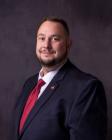
Professional Experience
Public Defender’s Office, Assistant Public Defendant, June 2019 – present; Fant Law, LLC, Owner, October 2011 – June 2019; Law Offices of Hernan Castro, P.A., Department of Revenue Counsel, September 2014 – September 2016; Knight & Dwyer, LLC, Associate Attorney, September 2009 – March 2011
Public Service
Wreaths Across America, Honor Flight, the Daily Bread, The Children's Hunger Project, among others.
Education
Florida A&M University, Juris Doctor, August 2006 – May 2009; Florida State University, Bachelor of Arts in Psychology, June 1997 – April 2001
Campaign Phone
(321)294-3701
Campaign Mailing Address
PO Box 24, Melbourne, Florida 32902
Financial hardship is one obstacle to justice since the expense of litigation can be costly (i.e. court reporters, expert witnesses, an investigator, deposition transcripts, medical records, etc.). In circumstances where the costs are imputed to the client, some may find it difficult to properly litigate their case. Another obstacle to justice involves the challenges of navigating through our legal system for litigants who represent themselves. Additionally, unreasonable delays in proceedings and/or unreasonably accelerating cases through the system may cause obstacles to justice.
On Friday, April 17, 2026, I was informed that the previous judicial race I had been campaigning for during the course of a year was canceled. Upon hearing the news, I was upset for a number of reasons. I took the evening to be alone and used the next few days to process everything and weigh my options. On Monday morning, I woke up with a renewed sense of purpose in my decision to run for Circuit Judge. Since time was of the essence, I drove to Tallahassee on Tuesday morning and waited patiently for three hours before I officially qualified for Circuit Judge. Instead of allowing my feelings to consume me, I reassessed the circumstances and forged ahead.
My philosophy is that judges must make decisions based on the law and without regard to personal preferences or political influences. Additionally, judges must remain fair and impartial and preserve the integrity of the judicial system. One of the greatest challenges for a judge is managing a high-volume docket. I am confident I can overcome the challenges through preparation, organization, status hearings and proper deadlines, and the assistance of support staff.
Setting reasonable timeframes for trials/hearings would preserve defendants’ constitutional right to effective representation and ensure cases are moving through the system efficiently. Additionally, judges can avoid scheduling numerous cases for trial at one time for an Assistant Public Defender so he/she can dedicate more time to each case. Moreover, instead of scheduling multiple short proceedings throughout the week, judges can designate a couple of days a month to address these hearings which would give Assistant Public Defenders additional uninterrupted office time to focus on work.
I have tried approximately twenty trials before a jury and roughly eighty trials before a judge.
Since the U.S. Supreme Court is the highest court in our country and the final say regarding any legal issue, every decision it makes is most important.
Technology has been the most effective method for improving court procedure and efficiency. For example, certain electronic programs provide a means to share pleadings and evidence in a digital format. Having easier and quicker access to evidence in a case reduces delays in court. I would suggest additional training on the current programs used for court to help reduce delays in proceedings.
Professional Experience
I practiced law as an Assistant State Attorney for just shy of seven years (February 2014-October 2020). During that period, my practice was exclusively criminal prosecution—which touched on multiple areas of law including: criminal law, property law, constitutional law, juvenile delinquency, and appellate practice. From October 2020 to present, my legal practice has grown significantly in its variety. As Legal Counsel for the Brevard County Sheriff's Office, I interact with issues that arise in multiple fields, including, but not limited to: criminal law, constitutional law, appellate practice, civil law, civil asset forfeitures, Risk Protection Orders, Baker and Marchman Acts, & family law
Public Service
I am a Past Worshipful Master of Merritt Island Lodge, No. 353, F&AM (2025). Prior to being Worshipful Master (president) of the lodge, I held other leadership roles including Senior Warden (vice president). I am the current sitting President of the Masters and Wardens Association of the 17th Masonic District. I am a Shriner of the Azan Shrine Temple. In 2021, I was appointed by the President of the Florida Bar to serve as a committeeman on the Student Education and Admission to the Bar Committee (SEABC) and appointed to the Professionalism sub-committee. I have also participated in several "welcome home" ceremonies for veterans returning from honor flights. I have also volunteered to remove flags after Memorial Day at a national cemetery.
Education
I earned my Associate of Arts Degree from Palm Beach State College (formerly Palm Beach Community College), Lake Worth, Florida; Bachelor of Science in Legal Studies with a Certificate in Trial Advocacy from the University of Central Florida, Orlando, Florida; and Juris Doctor with a Certificate in Children and Family Law and Book Awards in Trial Advocacy and Legal History from the Barry University Dwayne O. Andreas School of Law, Orlando, Florida.
Campaign Mailing Address
P.O. Box 560322, Rockledge, FL 32956-0322
The greatest challenge facing our courts is keeping pace with growing caseloads while ensuring every person receives a fair hearing. As Brevard and Seminole Counties continue to grow, so does the demand on our judges. Justice must be timely without sacrificing due process. Every case deserves careful attention, and every person should leave the courtroom knowing they were heard with fairness, respect, and impartiality. Meeting that responsibility requires efficiency, preparation, and an unwavering commitment to the rule of law.
I generally remain even-tempered and rarely get angry. One exception involved my elderly mother, who was the victim of a burglary in which individuals lured her outside and entered her home, stealing irreplaceable family heirlooms. The most difficult part was the impact on her; she felt responsible despite having taken reasonable precautions.
When I received the call, I was angry. It was personal. I redirected that energy into working with law enforcement and supporting their investigation. The anger also shifted quickly to concern for my mother, who had lost more than objects; she lost tangible connections to her family history. The experience reinforced the importance of responding calmly and constructively when others are relying on you.
The role of a judge is to apply the law fairly and impartially, protect constitutional rights, and decide cases based on facts as applied to the law. After more than a decade of practice, I’ve learned most cases are more complex than they first appear, requiring careful attention. Judges must remain open-minded and respectful, ensuring every person is heard and treated fairly.
A judge must apply the law as it is written. Integrity, diligence, and humility are essential to characteristics. In a growing community, courts face increasing caseloads and more self-represented litigants. These challenges require efficiency without sacrificing due process. The goal is fair and timely justice that maintains confidence in the judicial system.
Every defendant has a constitutional right to effective counsel, regardless of means. Public defenders often carry heavy caseloads, but that does not diminish each individual's right. Judges cannot fix staffing or funding issues, nor can they try to manage another constitutional office, but judges can manage their courtrooms to ensure fairness and efficiency. That includes being prepared, organizing dockets, and evaluating continuance requests based on the facts, not calendar pressure. Judges must remain alert to any risk of ineffective counsel and address concerns promptly.
I have tried thirty-one (31) jury trials and forty-seven (47) bench trials.
It is difficult to identify a single most important Supreme Court decision. Marbury v. Madison established judicial review and the courts’ role in ensuring no branch exceeds constitutional limits. Gideon v. Wainwright, however, is especially significant in criminal justice, holding that the right to counsel is fundamental and cannot depend on ability to pay.
Effective defense counsel is essential to protecting rights, testing evidence and ensuring fair outcomes. Public confidence depends on equal justice under law; not financial means.
Gideon reinforces a core principle: constitutional rights belong to everyone, and equal justice is a constitutional promise, not merely an aspiration.
Over the past 5 years, courts have improved through practical changes, especially technology. Remote hearings for routine matters, e-filing, and faster access to records have improved efficiency. Trials and evidentiary hearings remain in person, but technology reduces delay when used appropriately.
Active case management also helps. When judges set expectations early, track deadlines, and stay engaged, cases move more smoothly and avoid unnecessary delay.
Specialty courts:drug, mental health, and veterans’,address underlying issues and can reduce recidivism.
Greater consistency in scheduling can reduce confusion and unnecessary continuances.