Training and Experience
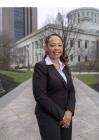
I have more than 20 years of experience in education, spanning from the classroom to higher education. My background includes nonprofit program management, workforce development, and finance. I currently serve as a Financial Aid Director at Cuyahoga Community College.
Volunteer/Community Service
I am an active member at Bethany Baptist Church and have served on several ministries.
I support commonsense reforms that expand access to the ballot, including extending the grace period for mail-in ballots to ensure every valid vote is counted. We should also simplify the voting process, increase access to early voting, and remove barriers that make it harder for working families, seniors, and young people to participate.
Ohio’s tax system should be fair, transparent, and focused on working families. I support tax reform that provides relief to middle- and low-income households while ensuring the wealthiest individuals and large corporations pay their fair share. We should also evaluate tax incentives to ensure they are delivering real economic benefits and reinvest those dollars into public education, infrastructure, and community development.
Families are doing everything right and still struggling to keep up. I would focus on lowering housing costs, expanding access to good-paying jobs, and making essentials like childcare, healthcare, and education more affordable. We also need to ensure wages are keeping pace with the cost of living so people can build stable, secure futures.
My top priority is ensuring our public schools are fully and fairly funded so every student—no matter their zip code—has access to a high-quality education. I also want to strengthen pathways that connect K–12 education to higher education and careers, so students can transition seamlessly into college, training programs, or the workforce.
Reducing hyperpartisanship starts with focusing on people, not politics. As a leader, I believe in listening first, building relationships across differences, and finding common ground on issues that matter—like education, economic opportunity, and public safety. Civility begins with respect, and while we won’t agree on everything, we can disagree without being disagreeable. I’m committed to working across the aisle and staying focused on delivering real results for our communities.
Training and Experience
Aide to the Mayor of Shaker Heights, Government Affairs Assistant for G2G, Researcher for Honesty for Ohio Education
Volunteer/Community Service
Volunteer at the Nature Center at Shaker Lakes, volunteer at High Jump (Education Non Profit)
I will protect and expand voting rights in Ohio. That means stopping rollbacks of mail-in voting and shielding Ohio from the SAVE America Act. I support automatic voter registration, making Election Day a holiday, and expanding drop boxes and early voting locations beyond just the Board of Elections. Every eligible voter should have equal access to the IDs and documents they need to participate. I would lower the barrier for citizens petitions so Ohioans can pass laws the legislature won’t. And I would remove the Secretary of State’s ability to write misleading ballot language. Every eligible Ohioan deserves a fair path to the ballot box.
Ohio’s tax system should work for everyone, not just those at the top. I would increase the top income tax bracket, close loopholes that allow the wealthy to avoid paying their fair share, and end the practice of giving tax breaks to the rich while working families struggle to get by. That revenue should be invested in the people who need it most.
On property taxes, I understand the burden they place on homeowners, and I take that seriously. But I won’t support a property tax ban without a real, concrete plan to replace that revenue. Our schools depend on it. You can’t just eliminate a funding source and hope for the best.
The cost of living crisis demands bold action. I support expanding Medicaid and Medicare, universal pre-K, and protecting social safety nets so families aren’t choosing between bills and basic needs. I would ban bulk home buying by corporations, overhaul zoning laws to increase housing supply, and push for community grocery stores in underserved areas. I support re-examining whether public utility ownership could lower costs for Ohioans. And I would raise taxes on the wealthy to fund the investments that actually make life more affordable for working families.
Every Ohio child deserves a strong public education. I support universal pre-K, fully implementing the Fair School Funding Plan, and exploring new funding models so schools aren’t solely dependent on local property taxes. I would ban private school vouchers that drain resources from public schools, repeal SB 1, and make higher education and trade school free for Ohioans. Public schools should not be required to bus students to private institutions.
I will always seek common ground across the aisle, but never at the cost of my values. Real civility starts with a fair system. That means ending gerrymandering through a truly independent redistricting commission, and stripping the Secretary of State’s ability to obscure ballot language. When we expand voting access and draw fair maps, we elect representatives who actually reflect their communities instead of party insiders, and that naturally erodes the hyperpartisanship Ohio is stuck in.
Candidate has not yet responded.
Candidate has not yet responded.
Candidate has not yet responded.
Candidate has not yet responded.
Candidate has not yet responded.
Training and Experience
As a six-year Cleveland Heights City Councilwoman and Vice President, I have received training in legislative processes, public policy, budgeting, and municipal governance. In addition, to my more than 30 years as a statewide elected labor leader and advocate with extensive training in negotiations, contact administration, leadership development, and representing constituents' interests. Together, these experiences have prepared me to effectively serve as State Rep.
Volunteer/Community Service
EBM Gateway Economic Development Corporation of Greater Cleveland, Vice Chair first County Charter Review Comm'n, EBM of the 2nd Charter Review Comm'n, State EBM of MR/DD’s Futures Study Comm., Biden's transition team. Just to name a few
Expand Voter Registration:
By implementing automatic and online voter registration as well as same-day registration, so that all eligible residents can easily register or update their information.
Increase access to early and absentee voting:
Extending voting period and simplifying absentee voting procedures to ensure voters can participate on their own schedule. Modernizing voting guidelines: providing clear guidance on how and where to vote, ensuring accessibility for people with disabilities, and using technology to streamline the process while maintaining security. Community outreach and education: Partnering with local organizations to educate residents. These changes would help ensure that every eligible voter has a fair and equitable opportunity to participate in our democracy.
Making the tax system fairer ensuring higher earners pay their fair share, while easing the burden on low-income families.
Simplifying income taxes by reducing the complexity for individuals and small businesses making tax preparation become easier and reduce cost. Supporting Job Creation and Local Businesses: By providing targeted Incentives for small businesses, manufacturing, and green energy initiatives. Reevaluating property and sales taxes
to make sure they don't disproportionately Impact seniors or low-income residents. Closing loopholes to ensure accountability. Make sure large corporations and wealthy individuals contribute appropriately to the state budget.
support policies that reduce the cost of essential needs like housing, health care, and transportation. Expanding affordable housing and improving health care programs can make a big difference. Advocate for fair wages and strong worker protections so that families can keep up with rising prices without sacrificing basic needs. Look into targeted tax relief for low- and middle-income families, while encouraging economic development that brings good union jobs to our community. Ensure that seniors and people on fixed incomes have resources to meet rising costs, such as utility assistance and prescription support. Ultimately, rising prices affect all of us and this requires both immediate relief and long-term solutions that help families thrive.
Fair funding every school should have enough money for teachers, books, technology, and safe buildings. No student should be left behind because of where they live. Teachers need support, including fair pay, training, and assistance to remain in the classroom so students get the best education they need. Support classified workers who support the school system. Schools should provide extra support for students who need it, such as those with learning difficulties or mental health challenges. Moderate learning students should learn technology, STEM, financial skills and critical thinking. Higher education, more mental health services, tutoring, and monitoring to help students finish their degree. Strengthening school are affordable ways to get training and good-paying jobs.
Reducing hyper partisanship and promoting civic engagement I believe this requires deliberate actions at both political and community levels. First Encouraging cross-party dialogue is key. Bipartisan town halls, community forums, and workshops allow people from different political backgrounds to listen, help one another, and find common ground. These conversations help break down stereotypes and humanize opposing viewpoints. In short reducing hyper partisanship is about creating spaces for dialogue, reforming incentives to reward cooperation, fostering informed and critical citizens, modeling civic behavior. By prioritizing collaboration, and community, we can shift our political culture toward problem solving rather than division.