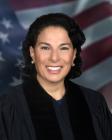
Training and Experience
Ohio Court of Appeals Judge since 2016 ● Attorney nearly 20 years ● Provided legal education and training to attorneys, including prosecutors, criminal defense attorneys, and civil litigators ● Alum of the FBI Citizens Academy ● Procter & Gamble IT Manager
Volunteer/Community Service
Creator and program manager for “Educating Tomorrow’s Leaders” student program ● U.C. College of Law Dean’s Advisory Board ● Past Board member of Beech Acres Parenting Center ● Past Board member of Catholic Charities of Southwest Ohio
Ohio Court of Appeals Judge, First Appellate District, 2016–present, deciding more than 2,000 cases throughout Ohio. In 2025, I was selected by the Chief Justice of the Ohio Supreme Court three times within 40 days to sit by designation on the Ohio Supreme Court in place of a recused justice. I have also been previously appointed by the Chief Justice to sit by designation on the Ohio Supreme Court and on the Second, Sixth, Eighth, and Tenth District Courts of Appeals.
My non-judicial experience is shaped by both my personal journey and my legal career. I overcame growing up in a neighborhood devastated by drugs and crime and was raised by a mother with a seventh-grade education who worked as a factory seamstress. From her, I learned the values of hard work, perseverance, and integrity. I later earned a degree in computer science and worked as an IT manager at Procter & Gamble, where I developed strong analytical and problem-solving skills. After working my way through law school, I spent nearly 20 years as an attorney, litigating cases and representing individuals, families, and businesses. These experiences help me understand how the law affects people’s lives and prepare me to make thoughtful, fair, and independent judicial decisions.
I am running for our Ohio Supreme Court because our highest court must be a beacon of integrity and impartiality—free from politics and guided by the Constitution, law, and facts that protect all Ohioans. After nearly a decade on the Court of Appeals and appointments by the Chief Justice to the Supreme Court, I’ve built a record of fair, ethical decisions that earn trust across party lines. As a political outsider who has represented Ohioans from all walks of life, I understand how the law affects families. Seven justices decide cases we all must follow and set ethical standards for attorneys. Different perspectives lead to better solutions. As confidence in our courts declines, I will leave politics at the door and deliver common-sense rulings that uphold public safety and accountability.
Courts today face a critical challenge: restoring public trust. Politics have no place in the courtroom and should never influence judicial decisions. Cases must be decided based on the Constitution, the law, and the facts. The Ohio Supreme Court is uniquely positioned to help address this challenge. It has the authority to expand specialized dockets—such as those for mental health, veterans, human trafficking survivors, drug recovery, and complex commercial disputes—which provide accountable, problem-solving alternatives that help break cycles of crime. The Court also sets ethical standards for Ohio’s judges and attorneys and must ensure integrity and consistency in its decisions. By emphasizing fairness, transparency, and practical solutions, we can strengthen confidence in our courts.
The greatest obstacle to justice is unequal resources: wealth provides advantages that hard-working Americans often lack.
This affects cases from the outset. Public defenders face heavy caseloads with limited support. In civil matters—such as custody and family disputes—many cannot afford attorneys, preventing them from pursuing cases or forcing them to represent themselves at a major disadvantage.
Even small fines or fees can lead to escalating barriers.
This challenges our ideal of equal treatment under the law. Practical, bipartisan initiatives—such as better funding for legal aid, greater access to information about court proceedings, and streamlined processes—can level the playing field while maintaining public safety and accountability for all.