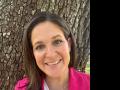
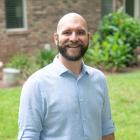
Age
49
Education
Tulane University, Bachelor of Science; Florida State University, Juris Doctorate
Hometown
Tallahassee
County
Leon
Instagram
https://www.instagram.com/yenforcongress
Campaign Phone
850-510-4466
Our immigration system is broken and Congress has failed to fix it for decades. I support comprehensive immigration reform that creates a pathway to citizenship for law-abiding undocumented immigrants, protects Dreamers, farmworkers, and essential workers, and makes legal immigration faster, fairer, and more efficient by reducing court backlogs. We should secure the border with modern technology and well-trained personnel while treating people with dignity. I also support replacing the current immigration enforcement system with accountable, transparent structures that protect civil rights, keep communities safe and families together, and ensure no immigrant lives in fear or worker is exploited.
Yes. Whether you call it climate change or simply the reality we're living through, stronger storms, flooding, extreme heat, and rising insurance costs are already affecting families across Florida. Ignoring those financial impacts won't make them go away.
We should focus on practical solutions that strengthen our communities and our economy, including more resilient infrastructure, cleaner energy technologies, climate-smart agriculture like regenerative farming, and protecting the natural resources that support Florida's tourism, agriculture, and coastal communities. Preparing today will save taxpayers money, create jobs, and make our state more resilient.
My first priority is making life more affordable for working families. That means lowering healthcare and prescription drug costs, addressing Florida's property insurance crisis, expanding affordable housing, and creating good-paying jobs.
My second priority is strengthening our democracy. I want to protect voting rights, improve government accountability, and restore trust by strengthening ethics laws, reducing the influence of special interests and corporate money, and ensuring government works for ordinary people.
Freedom of speech means every American has the right to speak their mind, criticize their government, practice their faith, and peacefully advocate for change without fear of government punishment. That protection applies even when we disagree with what's being said.
Like every constitutional right, there are narrow legal limits, such as true threats or incitement to violence. But those exceptions should remain just that, exceptions. I'll always defend the First Amendment because open debate and the free exchange of ideas are essential to a healthy democracy.
The President manages the executive branch, but Congress has the constitutional duty to oversee federal agencies. Congress writes the laws, controls funding, confirms many agency leaders, and makes sure agencies are carrying out the law as intended.
Our system works best when no branch has unchecked power. Strong congressional oversight protects taxpayers, prevents abuses, and helps ensure agencies remain accountable to the American people instead of any one administration.
If proof of citizenship becomes a requirement to register to vote, then every eligible citizen must have a practical and affordable way to meet that requirement. No one should lose their right to vote because they can't afford a birth certificate or have changed their name after marriage or divorce.
I would support reducing or eliminating fees for documents needed to register, accepting multiple forms of reliable proof of citizenship, expanding assistance for seniors, rural residents, military families, people with disabilities, and others who face barriers, expanding online and in-person access, funding assistance programs, and coordinating with states to verify citizenship through existing government records whenever possible. No eligible American should lose their right to vote simply because they cannot afford or easily obtain paperwork.. We can protect election integrity without making it harder for eligible Americans to vote.
Education works best when decisions are made as close to students and families as possible, so states and local communities should continue leading our schools. The federal government still has an important role in expanding opportunity and supporting student success.
That means increasing access to quality early childhood education, investing in teachers, protecting students' civil rights, supporting career and technical education, and helping schools serve their students well. For higher education, we should make college, apprenticeships, technical training, and workforce programs more affordable so more Americans can build successful careers without being buried in debt.
Age
44
Education
B.A. Sociology
Hometown
Tallahassee, FL
County
Leon
Instagram
Bricebarnes
LinkedIn
Bricebarnes
Campaign Phone
919-522-2246
I support comprehensive immigration reform that secures our borders while creating a fair, orderly, and humane immigration system that reflects America's values and economic needs. Our current system is outdated, overly bureaucratic, and leaves families, employers, and communities in limbo.
A comprehensive approach should include modernizing border security through technology, personnel, and efforts to combat human trafficking and fentanyl smuggling, while also expanding legal pathways for people to immigrate, work, and reunite with their families. We should reduce years-long backlogs for visas and asylum cases by investing in immigration courts and processing systems so claims are resolved quickly and fairly.
Yes. Climate change is already a financial threat to our economy, and nowhere is that more evident than in North Florida. We are seeing the costs through stronger hurricanes, rising insurance premiums, flooding, droughts, declining fisheries, agricultural losses, and damage to the natural resources that power our local economy.
In Florida's 2nd Congressional District, protecting our environment isn't just about conservation—it's about protecting jobs, families, and our way of life. Our farmers depend on healthy soil and reliable water. Our oyster harvesters, commercial fishermen, and coastal communities depend on clean bays and resilient estuaries. Our forests, rivers, state parks, and the Forgotten Coast are economic engines that support tourism, outdoor recreation, and small businesses across rural North Florida.
I will fight to protect and strengthen the Affordable Care Act, expand access to Medicaid so more working families can receive affordable coverage, lower prescription drug costs, protect Medicare, and invest in rural hospitals and healthcare providers. I believe healthcare is a right, not a privilege, and every American should have access to affordable, high-quality care regardless of where they live. I support moving our healthcare system toward universal coverage so no family has to choose between paying for medicine and paying their bills.
As someone who built affordable housing in Tallahassee, I understand firsthand that housing is the foundation of economic stability. I will work to expand the federal Low-Income Housing Tax Credit, increase investments in affordable housing construction and preservation, support first-time homebuyers, strengthen rental assistance, and invest in infrastructure that allows communities to build more housing.
From my perspective, freedom of speech is one of the cornerstones of American democracy. It protects every person's right to express their opinions, criticize their government, advocate for change, practice their faith, assemble peacefully, and petition elected officials without fear of censorship or retaliation. That freedom belongs to everyone and not just those we agree with.
I believe strong congressional oversight is essential to democracy. Federal agencies manage healthcare, environmental protection, Social Security, veterans’ benefits, labor protections, food safety, disaster recovery, and civil rights enforcement. Those agencies should be accountable to the law and to the people and not captured by corporate interests or weaponized by any administration.
I support automatic voter registration. I also support same-day voter registration so eligible voters who have the required documentation can register and vote during early voting or on Election Day.
Election integrity and voting access are not competing goals and they can and should work together. We can maintain secure elections while removing unnecessary barriers that disproportionately affect women, seniors, rural communities, people with disabilities, veterans, and working families.
No eligible American should lose their voice because they changed their name after marriage, cannot afford a certified document, or they changed their name after marriage, cannot afford a certified document, or face unnecessary bureaucratic obstacles.
Our democracy is strongest when every eligible citizen can register, vote, and have their voice heard.
The federal government should ensure every child has access to a high-quality public education. In Florida's 2nd Congressional District, many rural schools depend on Title I funding for low-income students and IDEA funding for students with disabilities. I will fight to increase both so every child has the opportunity to succeed.
I also support expanding access to affordable preschool through Head Start and pre-K because early learning leads to better long-term outcomes.
Florida ranks 50th in the nation in average teacher pay, and we cannot expect excellent schools without investing in educators. I will work to increase federal investments that help states raise teacher pay, recruit and retain teachers, expand career and technical education, improve school infrastructure, and strengthen mental health services.
For higher education, I support expanding Pell Grants, investing in community colleges, HBCUs, apprenticeships, and workforce training.
Age
32
Education
Masters Degree
Hometown
St. Petersburg
County
Leon
Instagram
@amgforcongress
Campaign Phone
(850)2609066
I support intensive and comprehensive immigration reform that creates a fair, orderly, and humane system. That means modernizing legal immigration pathways, protecting asylum rights, reducing backlogs, shutting down detention centers, and providing a path to legal status for longtime undocumented residents who are members of our communities and contribute to our economy. Our current system is broken, exploitative, and creates uncertainty for families, employers, and communities. America is a country of immigrants that needs to return to valuing and celebrating diversity instead of criminalizing it.
Yes. Climate change poses a significant financial threat to our economy. We see the costs every day in Florida through stronger storms, rising insurance rates, damage to infrastructure, threats to agriculture, and subsequently, increased healthcare expenses. In my district, our farmers, timber industry, coastal communities, and military installations are already feeling these impacts. We have houses that still have tarps serving as their roof from Hurricane Michael in 2018, we have wildfires being fed with the debris that never gets cleared after a storm, and we have the Apalachicola River suffering at the hands of extreme drought and threatening the livelihoods of our fishers and oystermen. Addressing climate change is not just an environmental issue, it’s an economic issue that requires investments in resilience, clean energy, and modern infrastructure.
My first priority is addressing hunger in my district. We must strengthen our food and agricultural systems by ensuring North Florida has a seat at the table. I plan to serve on the House Agriculture Committee so I can advocate for the farmers, ranchers, foresters, and rural communities that power our region. That includes passing a strong Farm Bill that supports producers and addresses the pervasive underfunding of SNAP. Nutrition assistance and agriculture are deeply interconnected, and strengthening both is essential to reducing hunger, supporting local economies, and ensuring federal programs deliver for the people they were created to serve.
My other top priority is lowering costs and strengthening economic security for working families. I plan to do this by expanding access to affordable healthcare, especially for those in our most rural areas, tackling the housing crisis to ensure we are building adequate supplies of affordable housing and to stop corporations from owning unuse
Freedom of speech means every American has the right to express their views, criticize those in power, organize, advocate, worship, and participate in public debate without fear of government censorship or retaliation. It has always and should continue to protect speech we agree with AND speech we disagree with. A healthy democracy relies on earnest, open debate and difference of opinion.
Congress has the constitutional responsibility to provide oversight of federal agencies on behalf of the American people. Federal agencies operate under laws that are passed by Congress, and oversight is essential to ensuring transparency, accountability, and responsible use of taxpayer dollars. No administration, no president, regardless of party, should be exempt from congressional oversight and proper checks and balances. As a former USAID contractor, I take particular issue with the current administration running roughshod over our federal agencies.
Voting should be accessible, not burdensome. If documentary proof requirements were imposed, I would support federal funding and partnerships with states to ensure citizens can obtain necessary documents quickly and at no cost. Special attention should be paid to women whose names may have changed through marriage or divorce, seniors, rural residents, and low-income Americans who often face the greatest barriers from financial barriers, to language barriers, and even to transportation barriers. No eligible citizen should lose their voice because obtaining paperwork is expensive or hard to understand, or because they simply can’t get to the proper office to file it.
The federal government should be a partner in expanding opportunity. At the preschool level, we should support access to affordable, high-quality early childhood education because early learning improves outcomes throughout life. Headstart was a huge difference maker for members of my family and must be expanded. At the K-12 level, the federal government should ensure equal access to quality education, support students with disabilities, and invest in teachers and school infrastructure. In higher education, the federal government should make college, technical training, and workforce development more affordable and accessible so students can pursue careers without being overwhelmed by debt. Education is one of the strongest investments we can make in our country's future.
Age
39
Education
Bachelors
Hometown
Tallahassee
County
Leon
Campaign Phone
8502424166
The dysfunction is architectural. We've let legal immigration drift out of sync with real labor demand while concentrating enforcement discretion in the executive, so every administration governs by improvisation and the statute never changes. I support rebuilding the legal channels: pathways scaled to actual workforce needs — agriculture, construction, care work, the backbone of FL-02 — a stable earned-status process for long-settled workers and Dreamers, and clearing the backlogs that manufacture an underground economy. But reform now has to include accountability. When Congress funds an enforcement agency so heavily it no longer has to return for appropriations, it has surrendered the power of the purse — the core Article I check — and we get agents operating without warrant, oversight, or use-of-force limits. That's not strength; it's abdication. Enforcement and legality aren't opposites: a functioning legal system, answerable to Congress, is the enforcement.
Yes, and the mechanism matters more than it seems. Climate risk in Florida is being socialized through insurance: private carriers retreat, reinsurance reprices, and exposure piles onto Citizens Property Insurance — a state backstop that in a severe storm year can assess nearly every policyholder in Florida. That's a hidden, statewide tax on climate risk, levied without a vote. Add stranded coastal property, downgrade pressure on exposed municipal credit, and agricultural and timber losses, and it's a slow balance-sheet crisis, not a distant one. I read it through North Florida's own history — five waves of extraction, turpentine to timber to paper to data centers, each pulling value out and leaving the cleanup to whoever came next. Pricing risk honestly and hardening infrastructure isn't ideology; it's actuarial arithmetic. The economic question isn't whether we pay, but whether we price the risk now or absorb it later, uninsured, as a shock.
One: the cost structure crushing families — insurance, housing, healthcare — including stopping Medicare Advantage from denying earned care, and the insurance-market failures pushing Floridians from their homes.
Two: govern the AI and data-center buildout so its gains reach the people whose land, power, and water underwrite it — the extraction pattern repeating, infrastructure sited here and value captured elsewhere.
The two are one argument at different scales: whoever controls the infrastructure a society runs on — compute, risk pools, care systems — sets the terms everyone else lives under. Making that layer accountable is the through-line of both.
The core is clean state-action doctrine: government can't punish or compel speech, and that must stay absolute against every temptation to carve out speech we dislike. But the governance-relevant frontier has moved. When the First Amendment was written, the scarce resource was speakers; today it's control of the layer speech runs through. A handful of firms own the infrastructure — platforms, payment rails, hosting, the AI models — that determines what can be published, found, or funded. That isn't a First Amendment violation, because it isn't the state; but it's the same governance problem the Amendment was built for: concentrated, unaccountable power over what can be said. So I hold two commitments — no government censorship, and structural openness at the infrastructure layer, so a few private chokepoints don't bound the public square.
Congress holds the superior claim, by design: it creates agencies, writes the statutes they enforce, funds them, and oversees them. The President's duty is to take care the laws are faithfully executed — execution, not authorship. The core check is the purse, and it's failing from both sides. When the executive refuses to spend money Congress appropriated, it rewrites the budget by inaction — what the Impoundment Control Act forbids. When Congress front-loads an agency for years through reconciliation — as with $75 billion for ICE, enough to run outside the annual appropriations cycle — it hands away its own recurring leverage, and the check disappears. One is an executive grab, the other a legislative surrender; both hollow out Article I. Removal and delegation follow the same logic: a unitary executive answerable to no one, and vague statutes that let it fill the space Congress vacated. After 25 years in these systems, I've learned structure, not intention, governs.
This is my field — 25 years on voter files and registration systems. Documentary-proof laws fail on their mechanics. Eligibility is already verified: registrations run against DMV and Social Security records under HAVA, so paper adds no accuracy — only false negatives that turn away real citizens. Roughly half of Americans lack a passport; birth certificates cost money and time; and the sharpest failure is name-mismatch — a married woman's ID rarely matches her birth certificate, so the burden falls hardest on women. Kansas ran this experiment and mostly blocked eligible voters, not fraud, before courts struck it down. If imposed regardless, the mitigations are knowable: make every required document free, bring issuance to people through mobile and local service, bar name-change mismatches from disqualifying anyone, and accept broad proof. The honest finding is that the requirement solves a problem the data shows doesn't exist, while creating a large one that does.
The federal role is structural: guarantee opportunity and equity; don't run the classroom — that stays local. Each level has a distinct leverage point. Pre-K is a market failure — quality early education returns more than almost any public dollar, yet working families in FL-02 can't find or afford it, so federal support belongs here. K-12 is targeted-equity money: Title I for low-income and rural districts, IDEA for students with disabilities — a statutory promise Washington has never fully funded and should. That funding is what keeps a child's zip code from setting their ceiling. Higher ed needs a wider definition of success — affordable college, but equal investment in apprenticeships, trade schools, and workforce paths that produce good jobs here. The common thread: the federal government isn't suited to run schools, but it's the only actor that can offset the geographic inequality states won't fix alone.