The financial powers of counties are placed in the County Council, which serves as a check on the Board of Commissioners. For election purposes the county is divided into 4 districts, from each of which 1 council member is elected. In addition, 3 council members are elected from the county at large, making a total of 7. All council members are elected to staggered, 4-year terms.FunctionsThe functions of the County Council include:Exclusive power to fix the tax rate for county purposes and for all other purposes where the rate not fixed by law is required to be uniform, and impose the tax levyExclusive power of making appropriations to be paid out of the county treasuryAdoption of the annual budget after receiving estimates submitted by the various county agencies through the county auditor, subject to the modification by the County Tax Adjustment Board (if applicable) and the State Board of Tax CommissionersAppropriation of additional funds arising after the budget is adoptedReappropriation of surplus funds which might be surrendered by 1 department of county government in order that the funds might be made available to another departmentFixing of salaries of officers, deputies, assistants and employees whose salaries are payable from any county fund, with certain exceptions. County Councils have authority to fix the number of deputies, assistants and other employees whose salaries are payable from County fundsLevying taxes to provide funds for building new jails and repairing, remodeling, and enlarging of old jailsEstimated Current Council Salary: $40,858.94
Candidate Statement
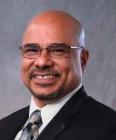
Hi, I'm Jason Frank. I earned my Civil Engineering degree from the University of Illinois ‘95, and a MBA from University of Illinois ‘22. With 30+ years of engineering and project leadership on major aviation and infrastructure projects. Why am running for Hamilton County Councilor? Hamilton County is growing fast—but our infrastructure isn’t keeping up. ·New neighborhoods without matching road or utility improvements ·Loss of green space, trees, and farmland ·State‑level decisions potentially reducing local control ·Development with no guarantee of true affordability. I support growth—but responsible, balanced, sustainable growth. I beleive my decades of experience in infrastructure and working with various governmental agencies can help Hamilton grow in a way that is smart and sustainible for the future.
Education
University of Illinois BSCE 1995, MBA 2022
Occupational background
Registered Professional Engineer
Political Office(s) Held in the Past
None
Campaign Phone (public)
463-325-3592
I’m running because Hamilton County is growing fast—but our planning isn’t keeping pace. As a civil engineer and project leader with more than 30 years of experience delivering large, complex infrastructure projects, I’ve seen what happens when growth outpaces preparation: congestion, strained utilities, loss of farmland, and higher long‑term costs for taxpayers.
I believe growth can be a good thing when it’s done responsibly. I’m seeking office to help ensure Hamilton County grows in a way that is balanced, financially sound, and sustainable—protecting the qualities that make our county a great place to live while preparing responsibly for the future.
The biggest challenges facing the county today include:
Infrastructure lagging behind development, with new neighborhoods built before roads, utilities, and services are ready
Loss of green space and farmland due to uncoordinated growth
Affordability pressures, with development that does not guarantee housing options for working families
Erosion of local control, as state‑level decisions override community priorities.
Funding, as the Infrastruture and Jobs Act expires we will need to be more competive for federal, state and local funding. We also need to keep budgets in line with needs while managing ever increasing costs due to inflation.
Addressing these challenges requires long‑term planning, fiscal discipline, and leadership that understands both engineering realities and public accountability.
A strong and vibrant economy depends on smart infrastructure and predictable, thoughtful planning. I will:
Advocate for infrastructure investments that support business growth, including reliable transportation and utilities
Support farmers and agricultural businesses, protecting access to farmland and reducing unnecessary regulatory burdens
Promote managed development that attracts employers without sacrificing quality of life
Ensure public investments deliver real value and long‑term economic returns
When we plan well, we create the conditions for businesses to thrive, workers to succeed, and communities to prosper.
I bring decades of experience working with government agencies on major public projects, and I believe county government works best when it is:
Transparent, with clear communication about decisions and costs
Collaborative, bringing residents, municipalities, and stakeholders to the table early
Data‑driven, using facts—not short‑term pressure—to guide growth decisions
Accountable, ensuring taxpayer dollars are used efficiently
I will focus on improving coordination between departments, strengthening long‑range planning, and making sure residents’ voices are heard before—not after—decisions are made.
Hamilton County’s rural and urban communities are different—but they are equally important. Serving both means recognizing those differences and planning accordingly.
Urban areas may need congestion relief, utilities, and housing options, while rural areas need farmland protection, infrastructure that fits the land, and respect for agricultural livelihoods. I believe balance is possible when decisions are made locally, thoughtfully, and with genuine input from all residents.
My commitment is simple: every resident deserves a voice, whether they live downtown or down a country road. Growth should strengthen our entire county—not leave parts of it behind.