Education
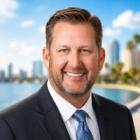
Graduate of Pinellas Park High School, Bachelor’s Degree in Criminology from the University of South Florida, Master’s Degree in Counseling
Professional Experience
Chief Executive Officer, Children’s Network of Hillsborough County, Chief Operating Officer, Gulf Coast Jewish Family and Community Services, Co-Creator, St. Petersburg CALL (Community Assistance and Life Liaison) Program
Public Service
Former Chair of the Florida Coalition for Children. Recognized as a Tampa Bay Lightning Foundation Community Hero and named a Business Woman of the Year by the Tampa Bay Business Journal.
Property tax relief is an important conversation, but we need to be honest about the trade-offs. In St. Petersburg, property taxes help fund public safety, parks, libraries, stormwater infrastructure, affordable housing, homelessness services, and programs for seniors and youth. City leaders have warned that significant cuts to property tax revenue could mean reduced services, higher user fees, and fewer investments in our neighborhoods. Before making major changes, we need a clear plan to protect the services residents depend on while ensuring taxpayers receive value for every dollar.
Hurricanes Helene and Milton demonstrated the need for a stronger, faster, and more coordinated response. We must invest in stormwater infrastructure, flood mitigation, emergency communications, and neighborhood resilience planning. The permitting process should be streamlined through additional staffing, technology improvements, and temporary surge capacity following major disasters. Residents navigating FEMA’s 49/50% rule need clear guidance, case management support, and stronger advocacy from local government. Our goal should be to help residents rebuild safely and efficiently, with as little bureaucracy as possible, while ensuring long-term resilience against future storms.
The Historic Gas Plant District is one of the most significant redevelopment opportunities in our city’s history. Any decision should maximize public benefit, economic opportunity, housing, job creation, and long-term community value. Whether through a single master developer or a phased approach with multiple partners, transparency and accountability must guide the process. If public land is sold, the sale should be based on a current, independent fair-market appraisal and include clear public-benefit requirements. The focus should remain on creating a project that honors the site’s history, delivers lasting community benefits, and protects taxpayers’ interests.
Every resident deserves to feel respected, valued, and heard. While local governments must comply with state law, we can continue engaging residents through open public meetings, neighborhood outreach, community partnerships, and transparent decision-making. My focus is on ensuring every voice has a seat at the table and that city services are accessible to all residents. Strong communities are built when people feel connected, welcomed, and included in shaping their neighborhoods' future. We can achieve that by listening, engaging, and treating every resident with dignity and respect.
The use of significant public funds should always be accompanied by transparency and public engagement. Although TIF expenditures are legally authorized through existing processes, residents deserve clear information on how funds are used and the expected benefits. I support exploring opportunities for greater public input on major expenditures and long-term commitments. Regardless of whether a referendum is required, elected officials have a responsibility to ensure that taxpayers understand the costs, benefits, and risks before major financial decisions are made.
I am open to exploring a municipally owned public utility if it can deliver long-term reliability, affordability, resilience, and local control. Given the challenges residents faced during recent hurricanes and severe weather, we should evaluate all options to strengthen our energy infrastructure. However, this decision requires thorough financial and operational analysis. Residents deserve clear answers on costs, rates, infrastructure, governance, and long-term risks. My priority is protecting residents and businesses from unnecessary financial burdens while balancing any impact on essential services, including youth programs, public safety, and neighborhood services.
Campaign Phone
7274341559
Education
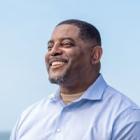
I received my Bachelor of Science in Public Health and Health Education from Central Michigan University in 2010. I earned my Master of Public Health in 2013 and Doctorate in Public Health in 2018 from the University of South Florida.
Professional Experience
Dr. Linsey Grove is a certified public health practitioner, civic leader, and CEO of The Hypatia Collaborative. She has over 10 years of experience in nonprofit capacity building, management, and community development, and has worked with federal, state, and local governments, as well as nonprofit agencies. She also taught at USFSP.
Public Service
She has served as president of the League of Women Voters of the St. Petersburg Area, vice chair of the Pinellas County Charter Review Commission, and was appointed to the Pinellas County Council for Persons with Disabilities by Commissioner Charlie Justice.
The financial pain Floridians are feeling is very real. However, if we wanted to provide financial relief for Floridians, our state legislature would work on reforming property insurance, investing in and expanding affordable housing, and expanding healthcare. If this referendum passes, I will work to ensure that we do not cut any services. There are limited ways for local governments to raise revenue via taxes; therefore, we may have to increase user fees for services to make up for the revenue losses. It is unlikely we could acquire federal and state grant funding and appropriations, given current budget cuts. Residents would likely see an increase in sales tax to raise revenue, which would disproportionately harm lower-income households.
I believe that we need to continue to accelerate upgrades to stormwater infrastructure to reduce flooding, protect residents and property, and mitigate rising sea levels. With a comprehensive resilience plan, we can identify ways residents can help increase our city’s resilience. For instance, the city could better coordinate with neighborhood associations to disseminate information and resources. More can be done to help residents post-storm: educating them about federal, state, and local property damage programs, their criteria (ie. FEMA 49/50% rule), and ways they can prepare ahead of hurricane season (ex., having a proper property appraisal for potential assessments) and making it easier to navigate permits.
Like our waterfront parks, we only get one chance to do this right. After many conversations with residents, some of whom are Gas Plant descendants, we need to ensure there is ample, diverse community input to drive the redevelopment process. Selling the 86 acres to one developer could restrict our ability to have a community-driven development process, maximize long-term public return, and meet the changing needs of our city. I believe other mechanisms can allow for city ownership, benefit residents, and ensure that the needs of our city (current and future) are met. I would like to see more Community Benefits Advisory Board oversight to ensure that this development has specific community benefits with accountability measures included.
We can ensure that all residents feel welcomed, celebrated, and that their voices are heard by including language around gender and sexual orientation in our anti-discrimination language in our city charter. I also think that there will be instances where litigation will be needed to fully exercise our ability to protect and empower residents from different minority groups. I believe that through training, intentional culture, community partnerships, and creative marketing, we can ensure that our city makes everyone feel like they belong, are heard, and that their identities are celebrated.
TIF dollars are tied to mechanisms like Community Redevelopment Areas–examples include the Intown and South St. Petersburg CRAs. The South St. Petersburg CRA has a citizen advisory committee made up of community members, appointed by the city and county, to determine how each year’s budget is spent. I believe that the creation of a citizen advisory committee sets a precedent for other CRAs like Intown. Residents could advocate for an amendment to the Intown CRA that creates this kind of committee to create a community power-sharing mechanism for the long-term rather than only voting on one issue like the stadium via referendum.
I support the effort to study public power in St. Petersburg. We have some of the highest electricity rates in the state, and this may be one of many ways to increase affordability for residents. Thirty-three cities across Florida have created a public utility for their electricity to bring rates down, increase responses to outages, and invest in electrical infrastructure and renewable energy. I believe our residents deserve to have a choice in a service that we all use and need – especially when the contract is coming up for renewal.
Campaign Phone
727-342-0067
Education
University of Arkansas At Little Rock. BBA Finance , The American College.. CLU, ChFC
Professional Experience
Financial Planner
Public Service
Numerous boards and volunteer organizations
I understand why people want property tax relief. Homeowners are being hit hard by insurance, utilities, and everyday costs. But if this amendment passes without a real replacement plan, St. Petersburg could be forced to cut basic services like police, fire, stormwater, roads, parks, libraries, housing, and youth programs. I would protect essential services first, review the budget line by line, go after state and federal funding, and push Tallahassee to provide a fair replacement before taking away local revenue.
Helene and Milton showed that storm recovery cannot be treated as business as usual. On the City Council, I would push for stronger stormwater systems, pumps, debris planning, backup power, and better neighborhood communication before storms hit. After a storm, residents need one clear recovery center, faster inspections, temporary permit staffing, online permit tracking, and help for seniors and families who are overwhelmed. We cannot ignore FEMA rules, but we can make the city process faster, clearer, and more compassionate.
I would not support selling all 86 acres as one block without clear proof it gives residents the best long-term return. This land is too important, and its history is too painful, to rush. I favor keeping public control where possible, using leases or phased/subdivided parcels to protect affordable housing, local jobs, green space, small business opportunities, and real benefits for the Gas Plant community. If any land is sold, the price must be based on a current independent fair-market appraisal before City Council votes, with the full terms made public.
Even with the new state restrictions, every resident deserves to feel respected, welcomed, and heard. As a City Council member, I would focus on equal access to city services, open public meetings, strong neighborhood outreach, fair hiring and contracting practices that follow the law, and clear protections against discrimination. St. Petersburg is stronger when seniors, young people, LGBTQ residents, people of color, immigrants, veterans, small business owners, and families all have a voice. I will follow the law, but I will never stop listening to and serving every part of our city.
Yes. When public financing reaches this scale, voters should have a direct voice. TIF can be a useful redevelopment tool, but hundreds of millions of dollars for a stadium and related infrastructure should not move forward without clear public understanding and consent. I would support requiring a referendum for major TIF commitments above a set threshold, especially when tied to private development. At minimum, residents deserve full disclosure of costs, risks, benefits, bond terms, and alternatives before any final vote. Public land and public dollars require public trust.
Yes, I support fully studying a public utility because residents deserve lower bills, better reliability, and more local accountability. But I would not support moving forward blindly. Before any major decision, the City Council needs an independent financial analysis, clear startup and acquisition costs, projected rates, debt risks, storm response plans, and public input. If a city-owned utility can save residents money and improve service, we should pursue it. If the numbers do not work, we should use the study to negotiate a better deal for St. Petersburg.
My focus is making city government efficient, spending taxpayer dollars responsibly, and ensuring any tax changes don't come at the expense of public safety, infrastructure, or neighborhood quality of life. I will vote against the property tax proposal but, if it passes, I will evaluate our city’s next steps based on these values.
The storms showed us that resilience has to be a year-round priority. We need to invest in infrastructure, improve communication with residents, and make rebuilding easier through permitting reforms and helping families navigate recovery. I've heard from homeowners frustrated by the FEMA 49/50% rule because a single contractor's estimate can dramatically affect the future of their home. Residents should be encouraged to get second opinions and multiple quotes, and the city should do everything possible to make the process fair, transparent, and easy to understand.
This site is one of the most important public assets in our city, and any decision should maximize long-term benefits while listening to the residents in the development process. My priority is ensuring redevelopment creates opportunity, honors the history of the community, and delivers lasting value for St. Petersburg rather than focusing solely on a short-term transaction. Proposed plans have to be evaluated case-by-case on that basis.
Every resident deserves to feel respected and heard. While state law may change how programs are structured, it does not change my commitment to listening to all communities, ensuring broad representation in decision-making, and making City Hall accessible to everyone. Tallahassee can ban certain programs, but they can’t ban good values.
Major public investments require transparency and public trust. Residents deserve a meaningful voice in decisions that will shape our city's future, and I support strong public engagement and accountability whenever significant taxpayer resources are involved.
Residents and small businesses deserve affordable, reliable energy. I support studying all available options and choosing the approach that provides the best long-term value, reliability, and accountability for the people of St. Petersburg. A public utility in St Petersburg is a promising idea for lowering costs – we need to gather the necessary data to determine if that idea will bear fruit.
Campaign Phone
5712177164
Education
Longwood University - B.A. in Mass Communication Studies
Professional Experience
Marketing & Community Engagement
Public Service
Faith in Florida, League of Women Voters (St. Pete), Democratic Socialist of America (Pinellas), Historic Uptown Neighborhood Association
First, I hope this does not go through. Property taxes are essential to funding our public goods, schools, and emergency services and to drastically reduce that income without having an alternate solution is reckless. In the event that it does I would first look at closing tax loopholes for corporations, reassessing developer incentives, and ensure any large scale and "luxury" developers are taxed accordingly. Further, I would aggressively lobby for state and federal dollars and work to ensure our vulnerable residents are not the ones burdened by shortfalls.
I support a proactive approach to resilience and recovery which means investing in modernizing our stormwater infrastructure, upgrading sewer systems, expanding flood mitigation projects, and restoring natural barriers (i.e. native plants, mangroves, and wetlands). I also believe that funding hubs throughout the city that are equipped with backup power, cooling systems, and other essential supplies are non-negotiable.
When it comes to rebuilding, I would champion a faster, clearer, and more transparent permitting process and create a streamlined process that helps residents rebuild without delay and extra costs. I would also include resources for personal mitigation, elevation, and resiliency grants.
I do not believe the city alone can handle the lift and gravity of the redevelopment of the Historic Gas Plant. However, I do think the city should retain some of the land for green space, housing, and other public goods. Further, I would like to see a joint effort take place. Truthfully, I would leave Ark Ellison out altogether and focus on the merits of the others to deliver true restorative justice. We need Foundation’s public land retention model to stop corporate consolidation, Blake’s community wealth-building fund, and a direct partnership with the Housing Authority to execute housing phases under a legally binding "right to return" policy with permanent deed restrictions.
As a black, queer, working-class woman I am running to ensure all residents feel seen and heard in an increasingly oppressive and hostile environment. I will do this by supporting permits and public safety at community events., invest in affordable housing, address mental health gaps, supports arts initiatives, rollout inclusive and affirming messaging, and partner with nonprofits that address systemic issues that overwhelmingly affect youth, our unhoused, minority, and lgbtq communities.
As a person that vehemently opposed the Heinz-Rays deal, I absolutely think voters should have a say on what those funds should go to.
I support the Dump Duke campaign because it is of my opinion that no utility with wealthy shareholders should be able to raise our rates to make-up for losses during natural disasters. Second, the power lines in certain neighborhoods are hazardous. Third, places like Winter Green and Lakeland have much lower utility rates, and where power lines are buried only 2% of residents lost power. Finally, I think Duke and Florida Power in general have a lot of monied interests in our politics and it needs to end.