Education
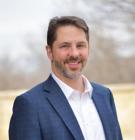
Undergrad in Accounting, Masters in Management Information Systems
Experience
25 years as a project controller financially managing nuclear construction projects with $10B budgets
Campaign YouTube URL
Campaign Phone
4693251990
I’ve managed $8B builds. I don't see growth as a political talking point; I see it as a series of critical-path infrastructure requirements that must be delivered on time and under budget. It will be critical to work with the communities in Precinct 4 to make sure the dollars spent in providing services are managed and spent effectively and efficiently. The Commissioners Court must work within the constraints of the Texas Constitution and the Texas Local Government Code to deliver solutions that leverage sound project management principles to deliver effective solutions.
Plano taxpayers contribute roughly $116 million annually to DART but receive only about $44 million in direct service. The solution needs to be a "Transit by Choice" model to support micro needs rather than a DART style "One Size fits None".
In terms of the infrastructure work being done, we need to support a transparent Estimate at Completion model to manage the work being done on 380 and other projects to mitigate the delays and budget growth that comes with multi-billion dollar projects. I have extensive experience in managing mega-projects to achieve the intended outcomes.
I’ve managed government compliance for near-billion-dollar units. I don't take anyone's word for it; I verify the data. Our elections should be as auditable as a $4B infrastructure project.
I support the strict enforcement of Local Government Code Sec. 81.032, which now prohibits the Commissioners Court from accepting donations over $1,000 for election administration without the express, unanimous consent of the Secretary of State, Governor, and other top state officials.
Finally, with 200,000 new residents moving in, our voter rolls are a logistics challenge. Maintaining that data is key.
Staffing is the central issue for public safety. Officer training and retention, especially in the detention center, are key issues. In line with my experience managing government compliance for an $900M/year business unit, I believe adopting a more comprehensive analysis of the public safety budget is incredibly important. We need to see the budget issues before they create problems in funding.
In 2025, an $800,000 issue in overtime pay came to the court late in the year. Implementing a robust Estimate and Completion process will be vital to continue to provide excellent outcomes.
A public health outbreak is, at its core, an issue of data. Having reliable and unbiased information in managing response is critical. We need secure, interoperable sources of data to see the outbreak ahead of time rather than waiting for the worst to occur.
We are a tech-hub county. Our health response shouldn't rely on 20th-century communication. Linking data collected from health care providers to public health officials should be the first step in managing a growing public health event rather than reacting to an already developing crisis. Public/private partnerships for information key.
In Texas, the Commissioners Court is the backbone of emergency response. While the County Judge is the "Director," the Commissioners must fund and oversee the Emergency Operations Plan (EOP) by testing and auditing it as it exists.
As the Emergency Service District is established, the Commissioners Court must work closely with the board established to ensure the structure will provide an effective response for natural disasters in unincorporated Collin County. We must also work closely with Dallas, Plano and Allen to coordinate County responses in Precinct 4.
It costs significantly less to supervise someone in a treatment program than it does to house them in the county jail at taxpayer expense. From a Project Controls perspective, these programs represent cost-avoidance. Treatment programs shouldn't be views as 'social programs' but as effective project management.
Our growth has driven the County Courts case loads every year. We need to examine the information technology architecture we use to manage our case loads, scheduling and dispositions in the Courts of Collin County. We need to give our judges excellent tools to manage to load.
Currently, the county uses "Incremental Budgeting"—taking last year’s numbers and adding a percentage for growth or a funding wish list. I have seen that model's failure in managing budget growth and inefficiency while I was managing project budgets in the Federal Government environment for nuclear weapons production.
I think the most important role of the Commissioners Court in setting and effectively managing what has become a $579M budget. We must refine the budget process to continue to achieve excellent outcomes at reasonable cost.
Education
MBA from UT Austin, BS in Software Development from Western Governors University
Experience
6 years on Plano City Council, Career as a consultant in Digital Transformation and Marketing
Campaign YouTube URL
Campaign Phone
214-995-6969
We're one of the fastest-growing counties in the country, and we'll more than double in size, to more than 3 million people, in the next few decades. We need to plan the services and infrastructure for all those people before they get here.
I'm already working to help address many of our growth challenges, given my experience and numerous relationships with local elected officials, as well as at the state and federal levels.
As Commissioner, I'll also conduct long-term budget and investment planning and work with community leaders to ensure the need for county services is appropriately met.
With our rapid growth, mobility needs to remain a priority.
I'll work to accelerate completion of the Outer Loop, partner with local officials on important projects that span cities, such as needed north and south alternatives to Hwy 380, and leverage partnerships with TxDOT and state and federal officials to secure needed funding and construction.
Likewise, an area our size needs truly regional transit, to which DART is an obstacle. I'll continue advocating for DART reform and work with the cities and RTC to bring an effective solution that serves our communities.
The ability of the people to choose their elected representatives is fundamental to liberty and a prosperous society. As such, the integrity of those elections is critical.
Opportunities for bad actors to commit voter or election fraud must be eliminated as much as possible while ensuring that those who have the right to vote are able to do so.
Our county election standards and procedures are good, and I see the opportunity to upgrade our technology to preserve dual paper and digital trails, which helps prevent fraud and provides dual traceability to enhance public confidence.
By virtue of I-75, Collin County is already a nexus for drug, human, and sex trafficking heading north, and law enforcement is working hard. The larger and more prosperous we grow, the more opportunities criminals will have.
We can promote even greater interlocal coordination and information sharing. As smaller areas grow, they'll need more sophisticated prevention and response capabilities for more sophisticated crimes.
Likewise, the new Emergency Services District will fund fire and EMS, but we'll need satellite operations for areas far outside city limits to protect lives and property.
The greatest responsibilities of local government in the event of public health outbreaks are:
1) Ensure people have access to timely, accurate information and know where to find it.
2) Direct the public to available resources for prevention and treatment, coordinating and facilitating where necessary.
3) Protect residents and businesses from scams that invariably arise during public emergencies.
4) Keep public order in times of uncertainty and fear.
5) On an ongoing basis, build and maintain the public trust needed for the prior four things to work.
1) More multi-jurisdictional simulation exercises modeling a variety of natural and human emergencies, including 1,000 year events, rather than simply 100 year events.
2) Greater involvement of community partners in emergency preparedness and response planning (e.g., businesses and non-profits who can provide emergency shelter, so we already know where people can go).
3) Promote more local energy production so we are less reliant on the state. Likewise, transition to connected microgrids to reduce reliance on external energy transfer.
4) Enhance emergency water storage and distribution.
We can address three main areas:
1) Increase funding, training, and support of law enforcement to enable both better crime prevention and response, and to ease strain on our jail.
2) Recognize the unique needs of some groups and invest in more specialized programs and alternatives to incarceration, such as the Veterans Treatment Court, Teen Court, Mental Health Court, and others.
3) Promote greater community partnerships for things like job training and treatment for substance use disorder to improve the likelihood of rehabilitation and avoid recidivism.
We will face both water and energy shortages within the next decade. We aren't building water and energy infrastructure as fast as we're growing, and our security and prosperity depend on them.
I'm already working with government officials at every level on the issue. Ultimately, we need to promote greater awareness in the community and to thoughtfully take action.
The solution to the issue will have to address both supply and demand. We must invest more in water and energy production and transfer infrastructure, while promoting sustainable conservation measures to reduce reliance and usage.