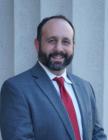
fullname
Mike
lastname
Colombo
Background
Attorney
Education
Quinnipiac University School of Law
contactemail
Michael@bsrlegal.com
Campaign Phone
239-821-9678
Incumbent (Yes or No)
No
For more than twenty-five years, I have dedicated my career to public service and the practice of law in a variety of roles that have provided me with a broad and balanced perspective of our justice system.
My experience as a prosecutor, criminal defense attorney, civil litigator, federal law enforcement agent, and private practitioner has prepared me to serve as a fair, impartial, and knowledgeable judge.
Over two decades of trial litigation has given me a balanced approach for office.
My judicial philosophy is to apply the law as written, with fairness, impartiality, and integrity. A judge should not legislate from the bench. The judiciary's responsibility is not to make policy or advance personal preferences, but to ensure that every person receives equal justice under the law while safeguarding constitutional rights.
The most important qualities in a judge are integrity, impartiality, sound judgment, legal competence, patience, respect for all individuals, and the ability to listen carefully. A judge should approach every case with an open mind, treat all parties with dignity and respect, and issue decisions that are well-reasoned, transparent, and firmly grounded in the law and the facts.
The greatest challenges facing the judiciary is balancing efficiency and a litigant's due process rights, amid growing caseloads, as well as mastering evolving legal and technological advancements, while remaining grounded to our established legal principles.
One of the most effective improvements for families dealing with mental health crises and substance use disorders usually come from shifting the court’s role from primarily punitive, toward more problem-solving and treatment-linked responses.
We have that system in place in Lee County. Our legislature has authorized specific law designed for treatment-based Courts, which we refer to them as "problem solving Courts". We have mental health court, drug court, and Veteran's court, in Lee County. We have team of dedicated members of our community that assist through a problem-solving, treatment model approach.
It runs effectively. There are many success stories that come out of our problem-solving Courts. I wholeheartedly support it.
The legislature's primary goal for the juvenile system in Florida is rehabilitative. Therefore, it is imperative to hear from all relevant parties.
A necessary approach is to afford every person or entity, who has a legal interest in the juvenile proceeding, the right to be heard in accordance with the law.
A team approach, which will meet the needs of each juvenile, develop individual abilities, educate, and rehabilitate, are all crucial to further the legislative intent of our juvenile justice system.
A solid support system and good role models play an integral role in preventing escalation.
Yes. Additionally, the Florida Judicial Branch released a strategic plan (2022-2027) which includes enhancing access to justice and court services. For example, one of the goals is to minimize economic barriers to court access and services.
The Florida Bar has a pro bono & legal aid page (online) to provide additional information for residents who cannot afford an attorney, in addition to a link to the "Florida Courts Help" website.
In my experience, justice takes time and its greatest obstacle is usually the length of time it could take to bring a matter to resolution.
I believe that justice is often better understood as an ongoing process than a fixed destination. Justice is improved by strengthening the rule of law, protecting due process, increasing transparency, reducing unnecessary barriers to participation, efficiency, and remaining willing to revise a court system process infrastructure when evidence shows it produces unreasonable or unwarranted outcomes.
There might be different philosophical approaches, however, the end goal must be to follow the guiding principles and law set out in our Constitution.
A defendant with a court appointed attorney has the right to effective representation by such counsel. When a defendant requests that the trial court discharge his/her court-appointed attorney for ineffective assistance, the court is obligated to determine whether adequate grounds exist for the attorney's discharge. This is called a "Nelson" hearing.
In Florida, it is reversible error for a trial court to fail to conduct a preliminary "Nelson" inquiry when a defendant makes an unequivocal request to discharge court-appointed counsel based on allegations of incompetence or ineffective representation. Judges must conduct this inquiry to determine whether there is reasonable cause to believe counsel is not rendering effective assistance.
Communication and technology are essential to the efficient administration of justice. One of the long-range priorities identified in the Florida Judicial Branch Strategic Plan (2022–2027) is the modernization of court operations and the administration of justice.
Continued investment in communication and technology supports this obligation by improving access to information, streamlining court processes, and reducing unnecessary delays.
For example, the use of remote Zoom proceedings can be efficient, however, it must not interfere with due process rights.
I would continue to support these advancements to promote a more efficient, responsive, and accessible court system while ensuring that fairness and due process remain unaffected.
I have tried over 100+ cases to a jury verdict as a lawyer. As for bench trials, I have tried over 25 cases, probably much more. These trials include civil and criminal litigation, as well as complex cases (i.e. multiple days). Also, when I was a young lawyer in Connecticut, I tried hundreds of traffic cases to a Judge (i.e. bench trial). In Connecticut, prosecutors handled traffic tickets, which does not happen in Florida. The majority of my jury trials occurred in Florida.
One case I am particularly proud of involved representing a firefighter in a complex employment discrimination matter against a municipal employer regarding promotional testing practices.
The case centered on whether the city’s promotional exam process unfairly disadvantaged certain candidates and failed to comply with applicable legal standards governing equal employment opportunity and fair selection procedures. It required careful analysis of testing methodology, employment records, and the legal framework surrounding municipal promotional practices.
In that jurisdiction, it had broad impact and changed promotional testing for first responders to be treated fairly and in accordance with the Federal law passed by our legislature.
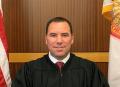
fullname
Judge Javier
lastname
Pacheco
Education
J.D. Magna Cum Laude - Case Western Reserve University School of Law; B.A. Magna Cum Laude - The Ohio State University
contactemail
Info@KeepJudgePacheco.com
Campaign Phone
239-980-2224
Incumbent (Yes or No)
Yes
Endorsements
Amira Fox, State Attorney for 20th Judicial Circuit; Kathy Smith, Public Defender for 20th Judicial Circuit; Ita Nemotin, Regional Counsel - Office of Criminal Conflict and Civil Regional Counsel; Carmine Marceno, Lee County Sheriff; Mike Gibson - Mayor of Bonita Springs; Mike Scott - Former Sheriff of Lee County; Steve Russell - Former State Attorney for the 20th Judicial Circuit; Dr. Denise Carlin, Superintendent for The School District of Lee County
first name
Javier
As a Board Certified Specialist in Business Litigation and partner at a large firm handling civil cases for 20 years, I am a subject matter expert for the office of County Court Judge, Civil Division. My court has the highest volume and the fastest-moving cases. My background gave me the expertise and work ethic to make accurate and prompt decisions on over 600 civil cases a month.
Being from humble beginnings and youth sports coach, I relate to folks of all backgrounds with empathy and respect.
The greatest challenge to the role is volume and speed. In County Civil, we process over 21,000 cases annually, many being small claims cases, eviction cases, and unlawful detainer cases that by statute must be advanced on our calendars. Our cases almost exclusively have bench trials where the judge decides both the legal and the factual disputes, and parties usually don't have lawyers.
My philosophy of the required qualities for this judicial role is that it requires subject-matter expertise so the judge knows and follows the substantive law and civil rules of procedure as written and without legislating from the bench, a strong work ethic, and the proper demeanor. This is necessary so parties have prompt hearing time, their cases are timely resolved, and all are treated with dignity, patience, and respect, while the law is followed.
In the year I have served as judge I have consistently proven I possess all of those qualities and I use them every day to serve our community.
As a County Civil Judge, I mostly see folks with mental health or drug and poverty issues in residential eviction cases. An improvement my colleagues and I started in July 2026 is the new Lee County Eviction Docket. We have worked on this new specialty court for months to benefit landlords and tenants by managing cases more efficiently through early intervention while providing parties with access to legal aid and community resources that both save landlords time and money and prevent homelessness and families from falling into crisis, while at the same time keeping the court neutral and our role limited to applying the law and resolving the cases quickly and in accordance with the Florida Rules of Procedure and Fla. Stat. Chs. 82 and 83.
As a County Judge, I do not have jurisdiction or authority over any juvenile offenders. The Circuit Court judges have exclusive jurisdiction over those cases, and their role is defined by F. S. 985.01, which clearly states the role of the court system with respect to juvenile justice. This role includes increasing public safety, assuring due process for children and victims, providing an environment that fosters healthy social, emotional, intellectual, educational, and physical development, preserving and strengthening the child's family ties, ensure the protection of society, to provide children in the system with training in life skills, and care for children in the least restrictive and most appropriate service environment.
They do not. That is why I believe it's the duty of the legal community to work on this problem. Before I became a judge, I handled a pro bono civil rights jury trial in Federal court on behalf of an inmate for which I was awarded the 2016 Southwest Florida Federal Court Bar Association, Extraordinary Pro Bono Service Award. I also handled multiple pro bono matters for the Florida Bar's Disaster Legal Services after both Hurricane Irma and Ian. I am also a member of the 20th Judicial Circuit Pro Bono Committee where we work to promote and facilitate the recruitment of attorneys to provide free legal services to qualified indigent clients in civil matters. Finally, in our new Eviction Docket, qualified parties have access to pro bono help.
The loss of trust in the rule of law and courts. The American legal system is the greatest in the world and it ensures our safety, freedom, economic prosperity, and our individual rights. It is a space where facts, evidence, and credibility prevail over rumor, opinion, and propaganda. The erosion of trust and respect for this system is not just an obstacle but an existential threat to justice. To keep the people's trust and belief in the system and the rule of law strong, the courts must remain independent, must not be partisan, and must at all times be and appear to be fair and impartial to all, with the strictest ethical and professional requirements for lawyers and judges and an increased standard for all officers of the court.
Judges are required to have formal, on-the-record conversations with criminal defendants called colloquies to ensure defendants' constitutional rights are protected, including on guilty pleas, self-representation, testifying or remaining silent, and waiving a jury trial. Judges should take adequate time during colloquies so the defendant understands, especially if a language interpreter is required. In our community, Spanish language proficiency can help a judge identify instances when translations are erroneous and defendants may be inadvertently waiving rights. Also, judges must guard against fundamental errors by listening closely during trial and anticipating and curing improper statements or arguments that affect the trial's validity.
The recent changes to expert testimony and to civil rules to require active case management by judges under R. 1.200 and R. 2.545; require initial disclosures under R. 1.280; liberalize the use of summary judgment under R. 1.510; incorporate the Federal proportionality in discovery rule into Rule 1.280; require parties to confer in good faith before filing certain motions under Rule 1.202; and make more strict the rule on continuances under Rule 1.460. These changes allow courts to resolve cases more quickly and at less expense to parties. I would suggest changes to the Small Claims Rules on setting aside defaults and judgments, continuances, and summary disposition to make the process faster, cheaper, and more simple.
I tried 17 civil trials as an attorney: 2 with juries and 15 non-jury (10 tried to verdict). Jury trials are rare in civil. For example, in the latest five years for which the Courts have published statistics there have been approximately 100,000 civil cases filed in County Civil, and only 5 were resolved by jury trial (0.005%). Since I've been a judge, I'm the only County Judge who has tried a civil jury trial (2), one of which was actually a Circuit Court case I covered for another judge.
Slade v. Simpson, Pinellas County Circuit Court, Case No. 20-ES-8796. I represented an elderly woman who was the subject of exploitation and elder abuse by a trustee of her trust. We obtained a judgment in favor of our client after a two-day non-jury trial on claims for exploitation of vulnerable adult, breach of trust, and removal of trustee. Any time one represents a vulnerable person and is able to right a wrong and undo some abusive and exploitative activities, it is very impactful to the victims and the families involved. I handled many elder abuse and exploitation cases before becoming a judge, and they were all very impactful in similar respects.