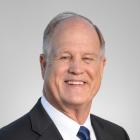
Age
75
Education
Bachelor of Arts & Science University of Missouri
Hometown
Naples, FL
County
Collier
Campaign Phone
2392939797
The two most important challenges facing Florida are affordability for working families and managing growth so our infrastructure and natural resources keep pace with development. In November, Floridians will vote on a constitutional amendment increasing homestead exemptions. If it passes, homesteaded properties will welcome relief, but we cannot simply shift the cost of core services onto non‑homestead properties driving up the cost of residential and commercial rentals and hurting small businesses and working families. I support lower taxes, but we must be honest about how we pay for essential services. We need to look at options that broaden the base with targeted sales‑tax adjustments, recognizing that a significant share of sales‑tax revenue comes from tourists. Per transportation, infrastructure, and growth. Florida’s growth strains our roads, utilities, and water resources. I will work to identify additional state transportation dollars and champion resilient infrastructure.
Protecting the integrity of our elections is essential to maintaining fair and honest elections. Asking for proof of citizenship is a logical step, because if citizens cannot trust our election system, our democracy will weaken over time—it is too important not to protect.
At the same time, we must make sure every eligible citizen can meet these requirements without unreasonable cost or bureaucracy. I support allowing multiple common‑sense options for proving citizenship so people are not limited to a single document that may be difficult or expensive to obtain. I understand that many women, particularly older women, may have name changes through marriage or adoption and may not have ready access to certified records, and I am absolutely open to listening and addressing those specific challenges.
Ultimately, our citizens must have faith in our election system if our democracy is to continue as the shining example for the world.
Insufficient affordable housing is hurting Florida families and holding back our economy, and the state has to do more than just adjust taxes and insurance. As a member of Florida Realtors’ Public Policy Committee, I have worked in a housing coalition to address this crisis, advocating for programs like the Sadowski Fund, Live Local, Hometown Heroes, My Safe Florida Home, SHIP, and SAIL. These are essential tools for affordable housing, but alone will not solve the problem.
Florida’s core challenge is a shortage of homes. The real long‑term solution is to build more housing across a range of price points and product types. I support streamlining permitting and development review so that good projects are approved faster and more predictably, which lowers carrying costs. I support a wider variety of housing options—different sizes, styles, and formats. Many young people may not need a 1,200‑square‑foot unit and would start in a smaller studio or micro‑unit if it is safe, well‑located.
I am a Roman Catholic and I follow the teachings of the Church, which hold that life begins at conception and that every unborn child has a fundamental right to protection. That means I do not support laws that allow abortion as a matter of convenience or elective choice. The Church makes an important moral distinction between a direct, intentional abortion and a medical treatment aimed at saving the mother’s life that may unintentionally result in the loss of the child. In life‑threatening situations, I support giving doctors the ability to provide necessary treatment to save the mother, even if, tragically, the baby cannot be saved as an indirect result. My goal is to protect both mother and child as far as possible, support women in crisis with real resources and compassion, and reduce the number of abortions. My position may not be politically advantageous, and may cost me an election, so be it. For me, the life of even one child is more important than holding any elected office.
Per the use of preemption by the State, I believe the state should set clear, consistent guardrails on matters of truly statewide concern, but within those guardrails, local communities should have meaningful flexibility to solve local problems. At the same time, we must recognize that local decision‑making can be undermined by “not in my backyard” opposition that blocks reasonable housing solutions even when there is a clear community need. I would support revisiting and narrowing some preemptions so that cities and counties can respond to their residents without unnecessary interference, while still respecting the state’s role in protecting constitutional rights and maintaining a stable business and legal environment. I also believe the state can help local governments overcome excessive NIMBYism by tying certain incentives and resources to evidence‑based plans for housing and infrastructure, so that local control is paired with responsibility to meet real community needs.
Equitable and affordable healthcare is a growing challenge, especially as federal support changes and more Medicaid costs shift to the states. Healthcare already makes up a large share of Florida’s budget, so any new spending must be tied to savings or better outcomes. Instead of simply spending more, we should first reduce waste, fraud, and unnecessary administrative costs and redirect those dollars into higher‑value care. One way to control costs and improve access is to keep people out of emergency rooms for routine care. I support expanding and better funding community health clinics, especially in rural and underserved areas, so low‑income and uninsured residents can get primary and preventive care close to home. Florida must also strengthen its healthcare workforce by expanding residency slots in high‑need specialties like primary care and psychiatry, so more Florida‑trained doctors stay here. Finally, the state should make insurance work better for patients by use of technology.
I share the public’s concern that the cost of property insurance is a more urgent pressure point than property taxes, because premiums are volatile and often unsustainably high for homeowners and small landlords. Insurance premiums can spike or coverage can disappear, threatening homeownership and destabilizing neighborhoods. Two years ago, Florida had the highest volume of property insurance lawsuits in the US, and a broad coalition of insurers, chambers, Realtors, and business groups supported tort reform. The Legislature responded, and we are seeing signs of improvement: premiums are beginning to level off, 20 new insurers have entered the market, and Citizens’ policy count has dramatically declined. We must continue strengthening storm‑hardening incentives and fully fund programs like My Safe Florida Home so homeowners can invest in mitigation and earn real premium reductions. Florida must also maintain a competitive predictable regulatory climate to attract more insurers.
Age
68
Education
BBA in Finance from Georgia Southern University; BA in Environmental Studies with a minor in Biology from Florida Gulf coast University
Hometown
Immokalee, FL
County
Collier
Instagram
N/A
LinkedIn
N/A
Campaign Phone
239-237-7436
As a freshman representative, it is more challenging to push your bills forward for approval, especially in the first six months. I would lobby my bills with the appropriate committees and committee chairs to give them the best chance.
There are two issues which I hear about most often. The first issue is water, and this encompasses quality and quantity. I want to support legislation that addresses continued Everglades restoration as well as the improvement of Lake Okeechobee. I also want to support efforts to convert septic tanks to sewer systems where feasible. For areas where it’s not feasible, incentives should be implemented to encourage homeowners to install septic systems which have less impact on contributing to poor water quality.
The second issue pertains to excessive government rules which drive up the cost of living and doing business. Free enterprise is the key to allowing families, businesses and agriculture to prosper.
Secure elections and access to the ballot aren't at odds. When I registered to vote in Florida, I did not find the process onerous at all, and I am a woman. People registering today should find it no more difficult to register than I did back in 1984. We were required to prove who we were before registering, and we had to show our voter registration card at the polls. Only those who had a special need were allowed to obtain absentee ballots. And still voters showed up at the polls. Agencies in Florida that provide identification documentation for voter registration purposes must do so in a prompt, easy and friendly manner, and as an option, requests must be able to be handled via the internet for remote access. Making sure that only those legally qualified to vote is a basic requirement for ballot integrity. Other services require valid identification and voter registration should be no different.
Florida's housing crunch comes down to one thing: Supply and demand are out of balance. The fastest, lasting fix is to grow the supply — and that means clearing the government barriers that make building slow and expensive. That doesn’t mean that I’m for rampant development. Florida needs to build smarter. Things like more multi-story buildings, higher density and clustered subdivisions. Building on infill lots will help, also.
Since counties play such a large part in permitting and fees, have the state consider incentives to counties to encourage them to ensure faster permitting and fewer duplicate reviews. Work with counties to lower impact fees that quietly add thousands to the price of a house. Evaluate programs like Habitat for Humanity to determine if there are ways to make it easier to buy low-cost homes. Develop programs targeting large employers that incentivize them to assist with worker housing.
For renters, the answer is the same: more supply means lower rents.
I am pro-life but support access to abortion in cases of rape, incest or when the mother’s life is in danger, after all other options are exhausted.
An unplanned pregnancy is never an easy situation. I strongly believe in standing with mothers and families — through better prenatal care, support for pregnancy resource centers, and a simpler, more robust adoption system — so women facing hard choices have viable options and real support around them.
The right question isn't simply "state power versus local power". It's: Which level of government best protects the freedom and rights of the people?
I believe in government closest to the people. Local leaders often understand local needs best, and decisions about genuinely local matters should be made close to home.
But local control shouldn't become a backdoor for new regulations that violate property rights or pile costs onto families and small businesses. When a city or county oversteps and tramples individual freedom, the state has a duty to step in and protect its citizens. This must be the exception and not the rule.
So, I don't think the balance needs a wholesale redefinition. It needs a clear principle: respect local authority over truly local issues and use state preemption to stop local government overreach — not to expand it. The level of government that best protects your freedom, your property, and your wallet is the one that should decide.
The real problem isn't just who pays the bill — it's that the bill keeps growing. Subsidies and Medicaid dollars only paper over costs that are far too high to begin with. My focus would be on bringing the actual cost of care down.
I support requiring clear, upfront pricing so patients can compare and shop, and removing the rules that block new clinics, providers, and services from entering the market.
Non-physician providers can play a key role in expanding healthcare availability at a lower cost. That means letting nurses, pharmacists, and other professionals practice to the full extent of their training and experience while ensuring they are properly supervised. The expansion of telehealth can provide an alternative to in-office visits so rural and underserved Floridians can see a provider without driving hours.
On Medicaid, the state has to spend smart. I'd press Washington for the flexibility to run our program our way, root out the fraud and waste that drains it.
Increase in both costs can hurt homeowners, here's what I mean: A property tax bill while predictable and capped each year to a 3% increase has seen steady increases since the pandemic. An insurance premium is much less predictable and can double from one year to the next or can even get canceled altogether. It is a shock you can't budget for. And for some families, insurance now costs more than their taxes.
It's also a threat to the whole housing market. When premiums spike, monthly payments jump, buyers get priced out, and homes get harder to sell. Insurance is now one of the biggest reasons people question whether they can afford to stay in Florida.
That doesn't mean property taxes don't matter — keeping them low is part of the same fight for affordability. If approved, the proposed constitutional amendment, Save Our Homes From Excessive Property Taxes, will have a large impact on taxes for current homesteaded properties. In turn, this could make home ownership more affordable.