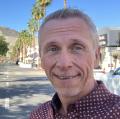
I have been the Winnebago County Supervisor for District 2 for two years this April. I currently sit on the Land Conservation Committee, the Human Services Committee, the Aging and Disability Resource Commission, and the Housing Authority Commission. I am honored that the residents of my district in Menasha have entrusted me to raise issues that directly impact them during my work on these committees and commissions.
I have an undergraduate degree from UW-Green Bay and, during college, I interned over two summers at Menasha Utilities. I then moved to Buffalo, New York for graduate school, and earned a masters degree in formal ontological systems, which is essentially theoretical computer programming. I then moved back home to the Fox Valley where I did adjunct teaching and served on the board of the Northeastern Wisconsin chapter of the ACLU for about 10 years.
All of the County buildings need energy efficiency upgrades, including better windows, better insulation, and H-VAC upgrades. County buildings need, at minimum, $100 million dollars in upgrades because we have put off repairs to curb increases in taxes. Including renewable energy in our plans for capital improvements should absolutely be on our radar, because it will save the County on energy costs in the future. Solar, wind, and geothermal energy are all being considered. As far as I know, there are no grants for these projects from the federal or state government at this time.
One major issue is the cost of living, including the lack of affordable housing, heating and energy costs, medical & pharmaceutical costs, internet accessibility, and the cost of healthy food. The county is working to address housing costs (see below). And sometimes the county is able to help with food, like helping stock food pantries when there was a delay in FoodShare benefits. But affordability is addressed more sustainably at the state and federal level.
Cuts in federal funding for county programs are another big issue. Those cuts not only affect major programs where federal funding is distributed by the counties, such as FoodShare and Medicaid, but also smaller programs like Solutions Recovery, which is a nonprofit substance abuse recovery organization that has helped many residents in Winnebago County. When their federal grant that was cancelled, I submitted an amendment to the county budget to replenish their funding, and the board approved it with an overwhelming majority.
The Winnebago County Board is considering allocating the current Spirit Fund balance to capital projects. I support this move because, as stated above, updating current county buildings to follow building codes will ultimately cost at least $100 million. These are necessary updates, and it is important to minimize their impact on our taxes. The County Board will be considering this allocation soon.
Historically, housing has always been a local government issue. The majority of rules, regulations, ordinances, etc. that regulate housing are imposed by cities, towns, and villages. But the county does have access to Housing and Urban Development Administration (HUD) funds, and it uses such funds to distribute housing vouchers to those who qualify, which are like coupons provided by HUD that bring rent down to a range that is affordable.
Winnebago County has taken the first steps to establish a Revolving Loan Program to bring a new affordable housing option to residents, with the hope that cities and businesses in Winnebago County will also provide funds for this project. The county could also sell its public housing free-standing properties that are harder to fill, which will add less expensive housing to the market. For every property it sells, it can build one public housing unit that is more suitable for our community’s needs, with help from HUD.
I have spent the last 30 years solving hard problems and have 29 patented inventions to prove it. I also intend to solve some of the hard problems we face in Winnebago County.
I have spent 57 years living in the Fox Valley and understand many of the ways government has and has not helped the people living in Menasha and Neenah. I have a one page list of a dozen ways I will try to help this area whether I'm elected or not. A few ideas are controversial to some but still have a good chance to be successful such as merging the Twin Cities into one city with a population of 45,935 so we can become a noticeable destination city with a beacon on a tower that can be seen from Green Bay and Oshkosh.
I have spent years at my work looking into alternative energy and the limitations with those technologies. It's a very big discussion; however, government has historically gotten in the way of new technologies and slowed down the efforts that private industry is capable of. Wisconsin is a poor choice for solar panels or wind mills.
The big problem that few seem to notice is that Downtown Menasha is a ghost town after dark. The City of Menasha government has put many rules, regulations, and signs in place that hinder small businesses and hinder people from other cities from coming to Menasha to spend money.
There is a big problem of 90% of people within a 30 mile radius of Menasha all knowing about the bad jokes of "Metrasha" but doing nothing to stop the verbal abuse that has gone on for over 200 years between Neenah and Menasha. In some small way it just might be affecting the youth and leading to 6 teenagers committing suicide every year in Menasha. That is one reason I spent months in 2025 trying to get the teenagers of both cities together. It eventually led to my latest pending patent of logs for building forts like Lincoln Logs but 12 times larger. Kids can use their imaginations and creativity to build forts large enough to go inside with other teenagers as they put down their phones and talk face to face
Use it to help the homeless and almost homeless. I have talked to a lot of people struggling without a traditional home but they don't like to ask for help from the government because of how it makes them feel. They are not cattle, they are just down on their luck. One option is providing a 5 or 10 year personal loan with NO interest.
One idea is to follow Arizona's lead. Last week I saw about 75,000 vans and small campers parked in the desert at one special area where they can camp for 14 days for free. In Arizona if people want to stay 6 months in one spot it costs them $180. There are easy ways to let the free people of this free country live here for little money.