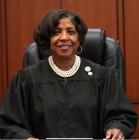
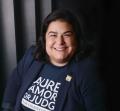
Before becoming a Judge in 2018, I was a Solo Practitioner in Bexar County for 22 years. I received a BA Degree from UT Austin (1989) and a Law Degree from St. Mary’s School of Law (1996). In my practice I did criminal law and adoptions/CPS cases. I am going into my eighth year and my third term as presiding Judge of County Court 12 and the Mental Health Court. I sit on many Boards and I have lead several organizations as president. To educate the community about the judiciary is my goal.
There are 15 Specialty Courts in Bexar County. All of them are doing great and needed work for defendants in the Judiciary. I preside over the Mental Health Court for Bexar County. I have reformed this Court into one of the best Specialty Courts in the state of Texas. Other cities routinely reach out to me and the team for advice and training. I won the Texas Specialty Court Judge of the year in 2023. I formed the Bexar County Specialty Courts Coalition in 2019 and I chair that coalition.
I do believe the Court-at-Law systems impacts all economic classes equally. The County Courts at law are the workhorses of the judiciary. These courts receive volumes of cases. If a defendant cannot afford an attorney one is quickly appointed to a defendant. I have set up a system in my court where the goal is to depose of each case in 180 days. This insures fairness and less time in the judiciary for every defendant.
In my Court I perform weddings for all couples. Love is love and I make no distinction between same sex couples. Not only do I consider not marrying everyone unfair and unethical as a Judge, I personally would never discriminate against anyone based on gender, sex, race, age or disability. Everyone is treated fairly in County Court 12 and the Mental Health Court.
I think the Bexar Gives Back program is a wonderful way for defendants to give back to the community and work off their sentences. The defendants are nonviolent and they provide much needed help to county facilities.
Over my twenty year career, I have served as an assistant public defendant, in private criminal defense, as a child welfare attorney, and a prosecutor. Today, I work in the Conviction Integrity Unit, an autonomous division with the District Attorney's Office. Our team corrects injustices because even one wrongful conviction is too many. Each of these roles has provided me a unique perspective of the judicial system—its strengths, flaws, and the impact it has on real people and their families.
The most successful specialty courts are the Esperanza Court, the Early Intervention Courts in Children's Court, and the Felony Drug Court. I would continue to support the Community Court, the newest speciality court I co-created in 2023 to reduce recidivism and address the root causes of homelessness. Through the Community Court, I have gained expertise in ensuring the success of a speciality court. As Judge of County Court 12, I would use this expertise to strengthen the Mental Health Court.
No. Defendants and victims from low-income communities, who are unable to afford a private attorney, have a harder time navigating the court system. They are forced to rely on attorneys who are often overburdened and underpaid. They face the inability to post cash bail, which leads to longer pretrial detention, potential job loss, and pressure to accept a plea deal even if innocent. The justice system generates revenue through fines and fees that disproportionately burden low-income communities.
Yes. My parents, who recently celebrated their 50th wedding anniversary, have shown me and my brother that marriage is about love, commitment, and the freedom to build a life with a partner who brings you joy, stability, and purpose. As a proud member of the LGBTQ+ community, my belief in same-sex marriage equality is deeply personal. It would be my honor to perform marriage ceremonies for all couples.
Justice must be fair, thoughtful, and informed by a deep understanding of criminal law and the human stories behind every case. Programs like Bexar Gives Back and specialty courts help divert low-level, non-violent offenders to workforce opportunities and treatment programs that help address the root causes of the offenses. Program graduates are eligible for clearing their records, which helps remove barriers to housing and employment. These programs also alleviate over-crowding in jails.