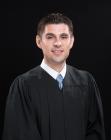
This court handles all levels of felony cases: state jail felonies (180 days to 2 years and $10K fine), third degree felonies (2 to 10 years in prison and $10K fine), second degree felonies (2 to 20 years in prison and $10K fine), first degree felonies (5 years to 99 years or life and $10K fine), and death penalty cases. Typical felony cases range from drug and gun cases, serious assaults, and property crimes and of course child abuse, sexual assault and murder cases. The judge serves a 4 year term and all appeals are heard by the 5th Court of Appeals, except death penalty cases which go directly to the Court of Criminal Appeals in Austin. Must be a US citizen and Texas resident between 25 and 74 years old, a practicing lawyer or judge, or both combined for at least 4 years (per 2021 constitutional amendment this requirement changes to 8 years for terms beginning after 1/1/25), and have lived in Dallas County for at least 2 years.
Occupation
Attorney at Law; former Judge
Education
Juris Doctor,Thurgood Marshall School of Law, BS,Texas Woman’s University, Woodrow Wilson H.S.
Campaign Phone
2149433319
My legal and judicial career, spanning over 34 years, uniquely qualifies me for this position. My experience is defined by high-stakes litigation; as a defense attorney, I tried every level of felony, including capital murder death penalty case, and performed extensive criminal appellate work. As a former Presiding Judge, I guided courts through substantial backlogs, managing thousands of cases and consistently achieving one of the highest rankings in productivity. I combine my experience with a seasoned perspective to maintain a fair and balanced courtroom for the community.
Impartiality is the cornerstone of the judiciary. I ensure my rulings remain free from outside influence by strictly adhering to the Code of Judicial Conduct and the rule of law. I view every case through the lens of the law and the evidence presented, not the interests of donors or political entities. I maintain transparency and recuse myself whenever a conflict real or perceived arises. My loyalty is to the Constitution and the pursuit of justice, ensuring every individual receives a fair day in court.
Equity means justice is accessible and attentive to individual needs. By maintaining a highly efficient court, I ensured swift justice for all. True equity requires addressing the "revolving door" of the system; I pioneered a young offender program that reduced recidivism by addressing root causes, promoting educational advancement, and assisting with employment and transportation. I also advocate for better identification and treatment for the mentally ill. I believe the bench must empower the community by combining disciplined management with programs that offer genuine rehabilitation.
A critical issue facing our courts is the intersection of criminal justice and mental health. We must improve how we identify and support mentally ill individuals to reduce recidivism and ensure public safety. My blueprint involves comprehensive judicial reform: using the efficiency of highly productive docket management to allow for specialized attention to mental health and rehabilitation. By expanding programs like my successful young offender initiative and maintaining professional docket precision, we can protect taxpayer resources and ensure a system that is both safe and humane.
I believe a judge must strictly follow the Rule of Law while maintaining a productive and fair court. Having tried the most serious cases, from capital murder death penalty trials to appellate work, I understand that the stakes of justice are life-altering. I believe in a hardworking judiciary that integrates restorative practices for substance use, family violence, and mental health with strict docket discipline. This ensures an environment of integrity and professional respect where the law is upheld and the public’s expectation for a high-performing legal system is met every day.
Occupation
District Judge
Education
2005 J.D. SMU School of Law; 2001 B.A. UT-Arlington; Duncanville High School
Elected in 2016 to be the Presiding Judge of the 195th Judicial District Court, I have built a judicial reputation of being hard-working, knowledgeable on the law, listening to all the parties involved, and applying the law fairly. My prior experience includes prosecutorial and criminal defense. While in law school, I was a student attorney representing indigent defendants, and during my undergraduate studies, I was a legal assistant for a criminal law firm. In the course of my over-twenty-year career, I have handled thousands of cases from initial investigation to their conclusion.
As the Presiding Judge of the 195th, I make rulings that are impartial and free from both political pressure and the interests of any donors and will continue to do so as long as I am a judge. I have a reputation of keeping an open mind and ruling based on the law. I also ensure that I follow all ethical rules.
In order to improve justice for all, more resources need to be made available for individuals with substance and alcohol use disorders, and for those with mental health needs. Additional resources such as counseling, housing, and employment training/justice opportunities should also be made available, but are often lacking due to funding.
The high number of cases charging individuals who have substance/alcohol disorders and mental health issues is one of the most pressing challenges. To address this issue, for the last eight years, I have volunteered as the presiding judge of Dallas County’s pre-adjudication adult drug court (D.I.V.E.R.T.) that helps offenders overcome addiction by providing drug treatment and regular meetings with the court team. Although Dallas County currently has specialty courts such as D.I.V.E.R.T., more services are still needed to address the root of the problem and reduce recidivism.
A judge’s rulings on cases should only be made after a fair application of the law to the facts. Their rulings should always be impartial and free from political pressure or personal beliefs.