St. Paul City Mayor Choose 6
The mayor is usually the head of the city and may represent the city in front of other government bodies. They also can preside at council meetings and appoint city workers. A mayor usually has a role in proposing a city budget which influences services provided to residents and can veto ordinances proposed by the city council.Learn more here: https://www.lwv.org/blog/voting-local-matters-why-you-should-vote-mayorWatch the candidate forum, recorded September 17, 2025.
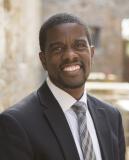




Biographical Information
Facebook (Full URL)
http://www.facebook.com/MelvinWCarterIII
Campaign Twitter Handle
@melvincarter3
Campaign Email
tristan@melvincarter.org
List three priorities you'll address in the beginning of your term as Mayor.
-Our Community-First approach has helped drive violent crime to historic lows by investing in youth jobs, violence interruption, and mental health response. I’ll expand these strategies and keep building trust.
-Every family deserves a safe, stable, affordable place to call home. We’ve led record investments in affordable housing, while launching programs to help families repair and stay in their homes. In my next term, I’ll cut red tape so more homes can be built across Saint Paul.
-We’ve converted vacant buildings into housing downtown, supported small businesses, and filled our streets with life through art and community. I’ll focus on attracting new employers, creating good-paying jobs, and ensuring growth benefits every neighborhood.
What specific steps will you take to increase the pool of affordable housing for all ages and family types in St. Paul, including renters and homeowners?
Everyone deserves a safe, stable home. That’s why we’ve reestablished the Affordable Housing Trust Fund, strengthened tenant protections, and launched innovative programs to make homeownership more accessible. The Inheritance Fund, one of the first programs of its kind in the nation, provides up to $100,000 in down payment assistance for descendants of families displaced from the historic Rondo neighborhood—helping to rebuild generational wealth and expand homeownership opportunities in Saint Paul. These policies are closing racial homeownership gaps and creating long-term housing stability for our residents. We need to continue building more housing than ever before at all income levels and cutting red tape for new development.
How will you build consensus between your office and city council members?
Building consensus starts with listening. I believe the best ideas come from bringing more people to the table, not fewer. Throughout my time as mayor, I’ve worked closely with our City Council to move Saint Paul forward by focusing on what unites us, like building safe neighborhoods, expanding opportunity, and investing in families. In my next term, I’ll continue fostering open communication, transparency, and respect across City Hall so that every voice is heard and every community is represented. When we lead with shared values and a commitment to collaboration, we can deliver results that move our city forward, together.
Outline your top two or three ideas to increase vitality in downtown St. Paul.
We’re bringing downtown back stronger than ever by turning vacant offices into housing, attracting new employers, and filling our streets with energy through art, events, and small businesses. In my next term, I’ll expand housing for all income levels, support local entrepreneurs, and activate public spaces that invite people to live and gather downtown. A vibrant, inclusive downtown is one of the best keys to expanding our tax base.
As St. Paul Mayor, what will be your overall strategy to address current federal unpredictability, including ICE immigration raids, grants withdrawn, and decreased SNAP benefits?
St. Paul has never made immigration status a condition for accessing city services — and it is my absolute promise to keep it that way. When federal policies threaten our residents, we respond by standing together and using every legal tool at our disposal. I’ll continue fighting for our values in court, protecting our sanctuary policies, and working with state and local partners, as well as with Mayors across the country, to fill gaps so families can access food, housing, and safety without fear.
What plans do you have to generate revenue and attract businesses throughout St. Paul neighborhoods?
We’re growing Saint Paul’s economy the right way, by investing in our people and the communities they support. I’ll keep supporting small and minority-owned businesses, streamlining city processes, and helping entrepreneurs open and expand across every neighborhood. By converting vacant spaces into housing and storefronts, hosting community events, and investing in public infrastructure, we’ll attract employers, generate new tax revenue, and build shared prosperity citywide.

Biographical Information
telephone
6127183672
Contact Phone
6127183672
Facebook (Full URL)
http://www.facebook.com/profile.php?id=61572314556508
Campaign Twitter Handle
@https://x.com/YanChenMN
Campaign Email
YanChenMN@gmail.com
List three priorities you'll address in the beginning of your term as Mayor.
I will hold the line on taxes by keeping city levies in line with inflation and urging the County and School Board to do the same
We must reduce crime and petty offenses while ensuring real rehabilitation opportunities. Safety and security must remain a top priority for city government, because trust is the foundation of a strong community.
I will give residents a stronger voice by engaging the community early—preventing conflicts before they arise and shaping smarter, lasting solutions for St. Paul. I will also redirect the ½-cent sales tax into micro-grants that strengthen small businesses and empower local organizations to reinvest in our city’s future.
What specific steps will you take to increase the pool of affordable housing for all ages and family types in St. Paul, including renters and homeowners?
I will streamline the permitting process and shift our city’s focus away from subsidizing large developers for new construction toward restoring naturally affordable housing. By providing tax credits for homeowners and landlords, we can keep rentals affordable and safe while preserving our existing neighborhoods. At the same time, I will encourage new housing along transit corridors and on vacant parcels that have become eyesores—turning underused land into homes that strengthen our communities.
How will you build consensus between your office and city council members?
As a scientist, I know the value of facts and clear communication. Because the mayor oversees city departments, it is essential that the mayor shares what she learns with the city council—and that council members share what they learn from the community. I will build consensus by listening, communicating openly, and focusing on long-term goals. By collaborating regularly with council members and respecting their perspectives, we can prevent misconceptions, avoid unnecessary conflict, and always keep residents’ financial future at the center of our decisions.
Outline your top two or three ideas to increase vitality in downtown St. Paul.
Improve safety—both real and perceived. We must engage a wide community to ensure not only effective law enforcement but also real rehabilitation opportunities, so people can successfully reintegrate into our broader community.
Attract more visitors with accessible parking. Offering a couple of hours of free parking in city-owned ramps will encourage more people to come downtown, shop, and enjoy events.
Support local businesses and vibrant neighborhoods. We will streamline the permitting process, provide tax credits, and explore reduced rents in key storefronts—making it easier for small businesses to thrive and for residents to enjoy more shopping and dining options close to home.
As St. Paul Mayor, what will be your overall strategy to address current federal unpredictability, including ICE immigration raids, grants withdrawn, and decreased SNAP benefits?
Protecting St. Paul’s sanctuary policies is a priority, and I will deepen collaboration with local organizations to stretch our city resources further. But true change also comes from knowledge—residents deserve to know how their federal tax dollars are working for them. Together, we can demand greater federal investment to meet the real needs of our community.
What plans do you have to generate revenue and attract businesses throughout St. Paul neighborhoods?
My plan to generate revenue has two steps. First, we must stop losing revenue by overusing TIF and taking on debt for projects we “want” but don’t “need.” We should improve safety and streamline permitting so businesses choose St. Paul, not leave it. And we can partner with nonprofits through Services In Lieu of Taxes (SILOTs) so they provide services that offset the cost of city resources they use. Second, we must build long-term growth by positioning St. Paul as a hub for small businesses and entrepreneurs, and by expanding homeownership to stabilize neighborhoods, strengthen families, and grow our tax base without raising rates.

Biographical Information
Contact Phone
6514200488
Campaign Email
MayorDullinger@gmail.com
List three priorities you'll address in the beginning of your term as Mayor.
Climate change through continued investments into geothermal and solar projects. Public safety on our roads through automated enforcement of speeding and red light running so that the police can more effectively spend their time investigating crimes. Affordability through a safe interconnected bicycle network that allows anyone to choose not to own a car while also giving the freedom of transportation to children and those who cannot drive.
What specific steps will you take to increase the pool of affordable housing for all ages and family types in St. Paul, including renters and homeowners?
Get developers to build more housing, but not through massive tax breaks and handouts that do more harm to the city's financial stability long-term. If developers are unwilling to build on their own, then the city should step in and start building our own quality publicly owned housing. I also believe that the city should have better ways of offering groups of people a framework for organizing together to finance and build co-op housing, even if they don't initially know each other. And beyond this, we need to do everything we can to make the city a more desirable place to live so that all the people building homes in the suburbs view us as a better place to invest their life in.
How will you build consensus between your office and city council members?
By following the ordinances as the city council adopts them! If I have personal disagreements or questions I will be in constant communication to come to a resolution with them, but I believe in the separation of the powers of government and it is the mayor's job to execute on the laws of our city. While I may have policy objectives and will obviously advocate for issues I believe in, it is ultimately the city council who has the sole authority to enacts laws and budgets and I intend to respect that. We need to stop electing mayors based on policies they advocate for but have absolutely no direct governmental power to enact.
Outline your top two or three ideas to increase vitality in downtown St. Paul.
We absolutely need to pedestrianize as much of downtown as physically possible. Downtown is an unpleasant place to hang out because there are two interstates, three state highways, and a county road running directly through it which makes it a haven for loud, fast, and dangerous interactions with cars at literally every corner. We need downtown to be a place where people want to spend time, regardless if they intend to spend money as well. Treating downtown only as a destination for out-of-towners creates a boom and bust cycle that gets a lot of people in for a short period of time and leaves the place empty afterwards. I struggle to get friends to go downtown with me because the first thing they ask is "but is there an event going on?".
As St. Paul Mayor, what will be your overall strategy to address current federal unpredictability, including ICE immigration raids, grants withdrawn, and decreased SNAP benefits?
Unfortunately, I don't believe there really is much the mayor has the power to do to push back against the federal government beyond simply not actively helping them, and I also think it's important we don't inflame them even more by making toothless statements that will trigger them to retaliate against us. I think we need to plan and coordinate our response quietly while also ensuring that our residents are protected from economic hardships and illegal actions taken by the federal government.
What plans do you have to generate revenue and attract businesses throughout St. Paul neighborhoods?
Attracting businesses starts with attracting the people to start and work for those businesses. I would love to see more zoning changes to allow anyone to start a low-impact business in their own home anywhere in the city, but once again, that is up to the city council to enact. Where the mayor can make a difference is in creating a built environment that people want to spend time in and running things efficiently enough to reduce our tax burden so that people are not discouraged from living here. The answer is not giving private businesses public handouts, it's to use public funds to lift all of us up so that we all can have the opportunity to build a better city together.

Biographical Information
telephone
6514676643
Facebook (Full URL)
http://www.facebook.com/kaohlyforstp
Campaign Email
info@kaohlyforstp.com
List three priorities you'll address in the beginning of your term as Mayor.
The main challenges to progress in our city: safe communities, a vibrant economy, and affordable housing.
First, funding has not kept up with ballooning non-emergency calls, putting all of our safety at risk. Second, development has stalled — at the former Ford site, Midway, and downtown. Major retailers, such as grocery stores, are leaving our neighborhoods, leaving them without the resources they need to thrive. Closing businesses stretch our tax base thin, putting the burden on residents. Third, housing is too expensive and inaccessible for residents. We need abundant housing by working within and across government, community partners, and developers to build public housing, affordable housing, and market-rate units.
What specific steps will you take to increase the pool of affordable housing for all ages and family types in St. Paul, including renters and homeowners?
I am a strong advocate for affordable and abundant housing. I was on the Housing Committee at the State Legislature and carried several bills aimed at addressing the housing crisis, not just in Saint Paul but across the state. We need investment in public housing that will guarantee low-cost housing in perpetuity. What I hear most from stakeholders right now is a hesitancy to build in Saint Paul due to a lack of political stability and insufficient support from city leadership. Building more housing (public, affordable, and market-rate) and encouraging investment in that area will have a direct impact on the trajectory of affordable housing in Saint Paul.
How will you build consensus between your office and city council members?
I have strong relationships with members across the city council. One of the biggest issues I’ve observed in the last few years is a lack of communication between the mayor’s office, the city council, and other government partners. Working collaboratively so that no partners are caught off guard by a request, and building as much consensus as possible before rolling out a proposal, will benefit all of us and make our city much more productive and welcoming. I have committed to meeting one-on-one with each of the Councilmembers to learn their priorities, projects important to Ward, and issues most pressing in my first month in office. I believe that if my Council Members are successful, I will be successful as mayor.
Outline your top two or three ideas to increase vitality in downtown St. Paul.
There has been significant discussion about revitalizing downtown. A review to identify buildings for renovation/demolition has already been completed. I would leverage that plan. As mayor, I would take the lead on recruiting businesses by collaborating with the chambers, Visit StP, Greater MSP, and the Department of Commerce. I will work with arts, cultural, and entertainment organizations to incorporate their ideas, and I will partner with researchers to identify the habits of the next generation, building the type of community they want to live in. To support this work, I propose establishing an urban wealth fund. Similar investment tools have succeeded in Copenhagen and Singapore. We must show investors that downtown is worth attention.
As St. Paul Mayor, what will be your overall strategy to address current federal unpredictability, including ICE immigration raids, grants withdrawn, and decreased SNAP benefits?
As a refugee, this question is deeply personal to me. Since Trump’s inauguration, I've attended ICE check-ins with community members who feel threatened. It's crucial for all residents to participate in “Constitutional Observer” trainings to protect our neighbors. While Saint Paul has a non-compliance agreement, we need to go further by developing a community response system and providing timely alerts. The withdrawal of grants is alarming, especially as our city faces financial strains. With limited resources and being one of the few cities managing its own EMS, we must be vigilant about how healthcare cuts from Washington could impact our community's safety and well-being.
What plans do you have to generate revenue and attract businesses throughout St. Paul neighborhoods?
I’ve heard from too many business owners or people exploring moving their business that a lack of communication from city hall and departments makes it challenging to start up in our city. Saint Paul needs to be competitive in attracting small, medium, and large businesses. Cities around us have more responsive and transparent processes, and as a result, business owners choose to open there. I’ve also heard considerable frustration with the permitting process in Saint Paul. When liquor licenses and other permits take months to years to obtain or, in some cases, are lost in the administration, it makes it difficult for people to do business here at all. We need a mayor who can get the basics of running a city right.

Biographical Information
telephone
6128687312
Contact Phone
6128687312
Facebook (Full URL)
http://facebook.com/hilbornforsaintpaul
Campaign Twitter Handle
@@HilbornforSTP
Campaign Email
info@HilbornForStPaul.com
List three priorities you'll address in the beginning of your term as Mayor.
Lower taxes. Saint Paul has the highest sales tax in Minnesota at 9.88%. Minneapolis is 9.03%. Saint Paul has the highest property taxes in Minnesota. Saint Paul is the most expensive place to live and the most expensive place to run a business in Minnesota. Unacceptable.
Lower Crime. Saint Paul’s crime rate is twice the rate of Minnesota. People are afraid to visit Saint Paul. All of our criminals will be held accountable and face the consequences of their actions.
Eliminate homelessness. Compassion isn’t letting people live in tents. The mentally ill will receive services. Drug users will be offered help. We will adopt the Houston model.
What specific steps will you take to increase the pool of affordable housing for all ages and family types in St. Paul, including renters and homeowners?
Housing is too expensive because taxes are too high. Saint Paul restricts new housing through rent control which limits the number of housing units available, which drives up prices. Taxes will be lowered. Rent control will be eliminated.
How will you build consensus between your office and city council members?
We are all going to operate from a place of common sense.
Outline your top two or three ideas to increase vitality in downtown St. Paul.
Lower taxes. Lower crime. Eliminate people sleeping on sidewalks and living in tents.
As St. Paul Mayor, what will be your overall strategy to address current federal unpredictability, including ICE immigration raids, grants withdrawn, and decreased SNAP benefits?
We are going to reduce the cost of living in Saint Paul. We are going to make our capital city of Saint Paul be a true reflection of our beautiful state of Minnesota. One of the most beautiful states in America.
What plans do you have to generate revenue and attract businesses throughout St. Paul neighborhoods?
Lower taxes. Lower crime. Eliminate people sleeping on sidewalks and living in tents.