The North Carolina State Senate is the upper body of the North Carolina Legislature and consists of 50 members who serve a term of two years. Each member represents an average of 190,710 residents, as of the 2010 Census. The Senate elects officers from their membership including the President Pro Tempore.The North Carolina General Assembly, of which the Senate is a part, is to convene a new regular session every two years. The NC legislature makes decisions on the budget: taxes, tax credits, economic development, education funding, Pre-K, the courts, Medicaid, etc. It also passes laws that set environmental standards such as water and air quality, tax rates, tax credits, criminal justice. Legislators in both chambers serve two-year terms without term limits. Sessions begin at noon on the third Wednesday after the second Monday in January.
Position/philosophy statement
The maps were drawn so your senator doesn't need your vote. So who does Raleigh listen to? Companies. Second in the nation for business, dead last for workers. I'd put the people who live here first: schools, power bills, data centers, Medicaid.
Current Occupation
Software developer and stay-at-home dad
Age (optional)
49
Campaign Phone
336-705-1238
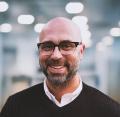
I co-founded a health tech company that helped patients manage chronic conditions at home, so I know how healthcare actually gets paid for and where the bills come from. Before that I spent years helping nonprofits use technology on tight budgets. Now I'm a stay-at-home dad who builds software, and I've spent this campaign building tools that explain Raleigh to people who don't have time to read a 634-page budget: a searchable budget browser, a property tax explainer, a guide to your power bill. I read the bills. I read my opponent's voting record. I showed up at the county commissioners' meeting on the data center. The job is understanding what's in front of you and explaining it to the people who sent you. That's what I do.
Flip who Raleigh works for. For a decade the legislature has cut taxes for corporations and the people at the top, then quietly pushed the bill down to the counties. That's a big part of why your property tax keeps climbing. It's why the HVAC at the school is broken, why the teacher job stays posted all year, why your county is voting on a data center for the revenue. This is what happens when Raleigh treats companies like the customer and the rest of us like overhead. My priority is putting the people who live here back at the front of the line: stop the corporate rate slide to zero, fund what the state already promised the counties and the schools, and make anything that uses our power and water pay for it.
Fund the schools almost every kid in this district actually attends before sending another dollar to voucher schools that don't have to publish test scores, take your child, or answer to anyone. Almost every public school in Forsyth and Stokes is short on teachers, and North Carolina is projected to fall to 46th in the nation on teacher pay this year, behind every state on our border. In the coming year that means three things: pass a budget with a real raise to the base salary schedule and master's pay back, fund the Leandro plan the state paid to have written and then ignored, and refile the Voucher School Accountability Act: public test scores, graduation rates, and a real audit for any private school taking public money.
Somebody has to pay for the state. The question is who. For a decade the answer has been a smaller share from corporations and the top, and a bigger share from you, mostly through a property tax bill you never got a vote on. I'd flip it. Stop the corporate rate slide to zero in 2030 and put that cut where the work is: no state income tax on the first $100,000 you earn, childcare deductible, the child tax credit back. Expand the property tax circuit breaker so it covers working families under the area median income, not just seniors. And stop treating tax policy as a scoreboard for business rankings. A tax code works when the people who live and work here come out ahead, not when a site-selection consultant does.
Start with the people who answer the call. Deputies, EMS, and 911 dispatchers are paid by the county, and every year the state hands counties more to cover with the same property tax base. I'd send that money back so a sheriff can keep a deputy instead of training one for the next county over. Second, kids. Curfews and "teen takeovers" are a real worry, and a curfew only tells kids where not to be. The fix is somewhere for a 15-year-old to go on a Friday night with an adult who's trained to be there: rec centers, libraries, after-school programs. And keep the concealed carry permit and the training that comes with it. My opponent cosponsored the bill to eliminate both and let 18-year-olds carry without either.
You just read the profile of a guy whose website says that he can't win. So here's why you'd vote for him anyway. Everything above has a bill and a source behind it, and on most of it my opponent already voted... the voucher money, the Duke rate law, the concealed carry bill. You can look those up. That's the whole point. The map decides who gets the seat. Fine. It doesn't get to decide whether that person has to show their work, and this year I'm asking. I'm a stay-at-home dad doing this from the kitchen table because nobody else was going to. Read what I'd do, look up what she did, and figure out who this seat is actually for. The rest is on my website. Argue with me if you want, I mean that. Just don't sit this one out.
Candidate has not yet responded.
Candidate has not yet responded.
Candidate has not yet responded.
Candidate has not yet responded.
Candidate has not yet responded.
Candidate has not yet responded.