Campaign Phone
610-551-5767
Facebook
http://facebook/CharFitzwaterForStudents
Education
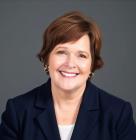
I have a B.S. degree in education from Vanderbilt University, 1979, an MBA from the University of Kansas 1982, and a Ph.D. in Organization and Management from Capella University 2007. I also graduated from Brandywine High School, Wilmington, Delaware 1975.
Experience
I am a retired educator, business executive and finance professional with extensive leadership experience. My 22-year business career included being chief financial officer of Monroe Guaranty Insurance as well as assistant treasurer and assistant vice president of strategic planning at USF&G, a Fortune 500 company. In higher education, I was a professor and business department chair at Immaculata University where we achieved ACBSP accreditation, launched a Business Advisory Board, and developed new programs under my leadership. For more information, refer to Linked In. I have also been a volunteer and leader in nonprofit organizations addressing community needs including food insecurity, violence against women and education.
I prioritize high quality education for all our students and desire to see qualified, collaborative and effective governance on the board. The school board’s responsibility is not to run the district, but to ensure it is run well while keeping the primary focus on what’s best for our students to thrive. After following the board for several years, I believe I can contribute constructively.
My education and background uniquely qualify me for this role. Through my experiences, I have perspective as an educator and insights as a leader, as well as first hand involvement with financial statements, organization structure, planning, policies, change leadership, employment dynamics, assessment, operational effectiveness and more. I have been a professor and education leader; a finance executive; a strategy executive; negotiator; analyst; board member; a parent and a grandparent.
My skills to serve encompass analytical skills, financial oversight, operations redesign, facilitating meetings, working collaboratively with others, explaining complex concepts effectively, evaluation, and fostering an environment of respect and appreciation.
CCSD faces wide-ranging, pressing challenges. The district has (1) an aggressive agenda pursuing improvement in student learning results, transforming the peninsula (Peninsula Promise) and rolling out new programs with goals for more changes in the future. The district is already wrestling with and continuing to push to (2) address mental health needs and classroom behavior challenges, (3) strengthen special education, and (4) address the learning gap. At the same time, there is pressure to (5) navigate and strategically consider concerns about the use of technology in classrooms including possible corollaries with student engagement in their learning. Furthermore, (6) the district faces impacts of the systemic changes unfolding at the federal level and pending state legislation.
For these challenges, I know I have more to learn to understand the current status and gain insights on the perspective of Superintendent Huggins and our district leadership. Exploratory conversations with the other board members (although not all at once so as to not to violate FOIA requirements) would also be valuable. It would be important to continue to investigate, address and/or monitor the pressing concerns.
Creating and deploying weighted student funding (WSF) represents excellent progress and the district's dedication to deploying financial resources based characteristics of students. Through WSF, schools get more funding based on the numbers of students from low income households, learning English as their Second Language, and with learning differences. The funding is then deployed by the schools to provide learning support.
Another benefit of moving the decision-making to the schools is that district leadership has dedicated time to training and developing our principals. This is commendable development of our district's leaders.
While measuring the Return On Investment is very complex and may be subject to interpretation, the district is working toward establishing those metrics. ROI information would be another tool available to principals making front line investment decisions.
One hesitation I have related to WSF has to do with the funding of support staff. This year, there were learning support roles eliminated from the budgets of individual schools. The money that was spent on staff in prior years was added into WSF funds distributed. When resources may need to be shared between multiple schools, such as having a specialist half time at two different schools, I believe the district is better served by centralizing those staffing decisions instead of leaving individual schools without the ability to afford the same level of learning support.
There are two big questions here: (1) how to make all students feel safe, supported and able to succeed in their schools and (2) how to include immigrants and mixed-status students who should feel the same way.
Our frontline educators, the teachers, aides, and learning specialists have the highest impact on helping students feel safe, supported and able to succeed. Their care, concern and personal connection create the environment for students that makes a world of difference. Particularly considering gun violence risk in schools and wanting to address physical safety considerations, school safety procedures are slated to be augmented by a security system with badges. The proposed security system is already in pilot status and expected to enhance the safety of our schools.
Unfortunately, the situation for immigrants and mixed status students is influenced by stronger forces including, raids, detention and reasons for families to fear. I am grateful that our district tries to reach at-risk students who may have been avoiding school or have moved elsewhere. I also am glad that remote learning can be available to them as well if they are still local. An added dynamic I would like to see considered is inviting the community to extend support to these children, although I am not sure how.
Immaculata University ("IU") faced declining undergraduate enrollment, extreme financial pressures and wildly divergent views of what the future should hold in 2003. While the graduate and off campus undergraduate programs were going strong and included men and women, only women lived on campus and their numbers were dwindling. The university started as an all-women's college, with some degree of fame since its team won the first three national women's basketball championships.
There were staunch positions at all ends of the spectrum. Some were adamant the identity of the university would be lost if IU became coed. Others thought it was foolish to even consider staying women-only, because all most women’s colleges were failing financially.
Working with other members of a planning team, a colleague and I facilitated community engagement in a large gathering of faculty, staff, alumni and community members. By asking positive questions, building listening practices and sharing, the community leaned into a listening and understanding mode that had not been evident before our sessions. The practice of listening to and considering divergent perspectives and possibilities carried over into the continuing work. Sometimes it was accomplished through question prompts. Other times through inviting critique and input.
Ultimately the victory of that project was not the extensive detailed plan that emerged to transform the college housing, living spaces, recruitment, sports and resources to coed, but the understanding, buy-in and shared confidence of the community to move forward.
Campaign Phone
854-238-0330
Facebook
Keith Grybowski for Charleston County School Board
Education
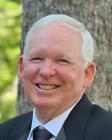
Juris Doctorate Quinnipiac University School of Law, Bachelor Science State University New York Maritime College
Experience
For more than 20 years, I was affiliated with Patriots Point Naval & Maritime Museum, including serving as Director of Education. There, I authored educational books for students and helped develop innovative, one-of-a-kind, multi-station programs that provided students with real-world career awareness and hands-on learning experiences. My professional background also includes serving as a U.S. Merchant Marine officer, practicing as an admiralty attorney, and working as a CFO and founder of shipping and electronics companies engaged in international trade. I have also served on the boards of numerous nonprofit organizations and foundations.
I am seeking reelection to help CCSD build upon the academic progress, financial discipline, and organizational stability achieved during my first term. This progress would not have been possible without the trustees who supported hiring Superintendent Anita Huggins or without the exceptional leadership of the superintendent and the strengthened team she has assembled.
I am completing my fourth year as a trustee, beginning as chair of the Audit and Finance Committee, followed by two years as chair of the Board. During the past year, I have served as Policy Liaison, helping develop the goals, guardrails, and supporting policies that will guide the district for the next five years.
I helped rebuild the district’s procurement system, strengthen long range financial planning, and establish educational goals centered on measurable student outcomes. My experience as an attorney, former chief financial officer, business founder, and education director further qualifies me to evaluate policy, budgets, and organizational performance.
In more than 30 years of involvement with CCSD, I have never seen this level of progress and stability. I want to use my experience and institutional knowledge to provide steady oversight and support as the superintendent and staff implement this promising direction.
The most pressing challenge is ensuring that every student enters school ready to learn and then achieves at grade level, particularly multilingual learners, students in poverty, and students with disabilities. Meeting that challenge also requires strong attendance, positive school climates, effective educators, reliable operations, and sound financial planning.
The proposed 2027–2031 Goals and Guardrails establish measurable outcomes for expanded quality Pre-K, higher achievement in literacy, mathematics, and science, and more than 90 percent of students graduating college or career ready. As a trustee, I would align policy and funding with those goals, support Superintendent Huggins and her staff in implementing them, and require transparent reporting of progress and return on investment.
Another major challenge is complying with federal and state laws, State Board regulations, and South Carolina Department of Education requirements. These decisions directly affect funding, accountability, student services, and instruction. I have more than 20 years of experience building productive relationships with legislators and education leaders on both sides of the aisle, as well as experience participating in curriculum development. That background helps me understand the consequences of new requirements, communicate CCSD’s needs, and translate mandates into responsible local policy while respecting the professional role of our educators.
The Board must also recognize that it is the public’s financial steward. We have made significant progress in increasing teacher salaries, and we must protect that investment. However, the economic outlook requires realistic enrollment and revenue projections, careful multiyear budgeting, and an understanding that recurring expenditures require sustainable recurring revenues.
My experience as a former chief financial officer and business founder includes guiding companies through both strong and difficult economies. The Board must set a clear direction, responsibly fund it, monitor measurable results, and make evidence based adjustments while allowing the superintendent and her staff to manage daily operations.
When I joined the board in 2022, my first leadership assignment was chairing the Audit and Finance Committee. From the beginning, I asked not only how much money the district was spending, but whether those resources were being distributed equitably, reaching students with the greatest needs, and producing measurable results.
Those concerns became particularly urgent as we examined the use of federal ESSER funds. We questioned vendor expenditures, the controls used to monitor performance, whether the money was reaching classrooms and schools, and whether programs created with temporary federal dollars could be sustained after the funding expired. That review reinforced my belief that equity cannot be measured by simply giving every school the same staffing formula. Schools serving very different student populations do not have identical needs.
It was not until the board hired Anita Huggins as superintendent and she, in turn, hired Daniel Prentice to lead the district’s financial operations, that our concerns were translated into a workable student-weighted funding formula for Charleston County.
Weighted student funding represents a fundamental change in how the district distributes resources. Instead of relying primarily on uniform staffing allocations, the district directs additional funding according to the needs of the students actually enrolled in each school, including students living in poverty, multilingual learners, and students with disabilities. In practical terms, the funding follows student needs rather than a school’s ZIP code or its ability to advocate successfully for additional resources.
The model also gives principals greater flexibility to determine how those resources can be used most effectively. A principal may know that additional reading support, specialized personnel, attendance intervention, tutoring, or another strategy will provide the greatest benefit for that particular student population. Decisions made closer to students can be more responsive than decisions imposed through a single central-office formula.
However, flexibility must be accompanied by accountability. Giving a school additional money is not, by itself, evidence that the money is used successfully. Principals must be able to explain how the funds are used, identify the student need being addressed, and demonstrate the academic or operational return on that investment. That is why I have supported financial transparency dashboards, public access to weighted funding information, and the district’s ongoing return-on-investment analysis.
The early impact is encouraging. CCSD has experienced significant academic improvement over the past two years, including strong growth in schools serving some of our highest need students. It would be premature, however, to attribute every improvement to one funding model. Weighted student funding is still developing, and its long-term effectiveness must be measured through clear data and tied directly to the district’s Goals and Guardrails.
In my view, its most important impact has been changing the fundamental question. We are no longer asking only, “Did every school receive the same thing?” We are asking, “Did every student receive the resources necessary to succeed?” That is a more equitable approach, but it must remain transparent, measurable, and subject to continuous review.
Our job is to educate every student who walks through the front door of a Charleston County school. Period. That responsibility includes immigrant students, children from mixed-status families, students living in poverty, students with disabilities, multilingual learners. A student’s background or family circumstances must never determine whether that student is welcomed, protected or given the opportunity to succeed.
Safety must always come first because students cannot learn when they are afraid, hungry, bullied or uncertain that the adults around them will protect them. I believe in zero tolerance for bullying, harassment, intimidation, discrimination or threats against any student. But zero tolerance must be more than a slogan. It means taking every report seriously, responding promptly, communicating with families, providing appropriate counseling and behavioral support, imposing fair and consistent consequences, and following due process.
School safety also requires strong cooperation beyond the walls of our schools. CCSD has developed good working relationships with all our local law-enforcement authorities. Those relationships allow district safety personnel and school principals to receive appropriate information about serious incidents occurring outside school jurisdiction that could affect students or spill onto a campus.
That advance awareness allows our principals to be proactive. Depending on the circumstances, they can contact families, arrange counseling, increase supervision, separate students when necessary, coordinate with law enforcement and attempt to de-escalate a conflict before it enters the classroom. This does not mean that the district should police conduct outside its authority. It means we should never ignore credible information indicating that an outside dispute could threaten students or disrupt a school. Responsible preparation can prevent a neighborhood or social-media conflict from becoming a school emergency.
We must also recognize that poverty remains our greatest enemy in educating children. Students cannot maximize the opportunities we provide if they arrive at school hungry, lack stable housing, cannot access healthcare or mental-health services, or face transportation and attendance barriers. We must ensure that students receive meals when they need them and have access to counselors, social workers, nurses, behavioral supports and other services that allow them to concentrate on learning.
Shared governance requires more than securing five votes. It requires making certain that every trustee has a fair opportunity to understand an issue, question the proposed solution, hear directly from those responsible for implementing it, and offer better language.
A recent example involved revisions to our policies addressing bullying, school safety, and off-campus conduct that could threaten students or disrupt the school environment. As policy liaison, I worked with district staff to present the initial drafts to trustees at the first meeting. Over the next two months, trustees debated the proposals, suggested changes, and considered revised language. That is the purpose of our first- and second-reading procedure: important policies should not be rushed through simply because a majority may already support them.
During the initial review, one trustee raised serious and timely reservations about the district’s proposed language. Staff arranged for her to meet directly with principals—the people who had requested the changes and would be responsible for implementing them. They explained the real situations they face, including online threats, social-media harassment, and off-campus conflicts that can follow students into school. That discussion helped the trustee understand why the district needed the ability to intervene before a conflict escalated, while still limiting disciplinary action to what is permitted by law. After hearing directly from the principals, she agreed that the district’s language provided the appropriate balance.
When the policy later reached second reading, another trustee continued to disagree with the language but had not participated in that earlier consultation with the principals. By then, I knew there was sufficient support to pass the policy. I could have simply called for the vote and prevailed. Instead, I made the motion to postpone the vote for another month so that she would have the same opportunity to meet with the principals, question their reasoning, and fully present her alternative.
I did not support postponement merely as a courtesy. I was prepared to work with the other trustees on different language if her concerns or proposed solution proved more persuasive. Ultimately, the district’s language remained the preferred solution, but the dissenting trustee was fully heard and given every reasonable opportunity available under our policies and procedures to make her case.
Collaboration does not always produce unanimity. Sometimes it means resisting the temptation to use a majority to end debate, protecting the minority’s opportunity to be heard, and remaining genuinely open to changing course. In this case, the additional time strengthened the process, confirmed the soundness of the policy, and allowed the board to move forward knowing that differing viewpoints had received fair and meaningful consideration.
Campaign Phone
8439916955
Education
The Citadel
Experience
Parent of triplets who attended and graduated from CCSD schools, career in Strategic Partnerships with a global payment processor
Our community stands at a turning point. The decisions we make today will shape the Charleston County School District for years to come — and we deserve leadership that takes that seriously.
I’m running for Charleston County School Board District 1 because I believe in what CCSD can become. With a commitment to every corner of this community, the best days for Charleston County Schools are still ahead.
Great progress has been made in recent years and we need to continue to execute the plan. The achievement gaps in math and reading for Black, Hispanic, and special-ed students are areas where continued attention and extra focus is warranted.
Sadly, the Board itself has brought itself attention with continued infighting, personal grudges and agendas, and even criminal activity.
If elected, I'd bring calm and reason without a personal agenda or need to be in the spotlight. The Superintendent and the Board have a Strategic Plan that needs to be executed to its fullest without drama.
The impact has been extremely positive. Funding is directed to where it's needed the most and the results have been impactful. Gains have been reported across all the targeted groups - students in poverty, multilingual learners, and students with disabilities. More than 20 schools improved their overall report card ratings. I am highly supportive of the model and believe scores will continue to improve because of it.
Investing in newcomer programs, partnering with the community, and staff training are all critical to make students feel that school is a safe place where they can learn. Procedures were adopted in 2025 to address these concerns and they should be followed and reinforced by continued training.
I've worked in strategic partnerships at global payments companies for most of my career. Partnerships require collaboration and neither side usually gets 100 percent of what they want. There's negotiation with a focus on the greater good and the shared mission. Being a member of the School Board requires this exact mindset. Student education and well being is the mission and the Board should look at every decision through that lens.