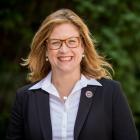
Description of office: The General Assembly is the legislative branch of government in Pennsylvania. It is composed of two houses: the Senate is the upper house, and the House of Representatives is the lower house. A majority vote in both houses is necessary to pass a law. The PA House of Representatives consists of 203 members representing one district each, with an equal number of constituents. Representatives must be at least 21 years old, have been a citizen and a resident of the state four years and a resident of their respective districts one year before their election, and shall reside in their respective districts during their terms of service. The House develops budget packages, makes taxation decisions, allocates spending, and passes laws (including redistricting in collaboration with the Senate). The House also has the exclusive authority to impeach public officials. Representatives also serve on various policy committees that may propose legislation.Term: 2 yearsSalary: $113,591Vote for ONE.
County
Delaware
Occupation
State Representative
Education
MBA in Economic Development; BA in Sociology
Qualifications
Running for reelection so I can continue to serve my neighbors
I am hearing more and more from people struggling to afford basic necessities. I am fighting to reduce energy costs, protect healthcare and hold big corporations accountable.
States run elections, not the federal government, and we need to protect the access to mail in voting that is Pennsylvania state law.
Budgets are really a statement of values. Pennsylvania’s state budget should invest in the things that people need most.
Yes. As an existing member of the State House, I have voted for eight bills to put guardrails on data centers and protect our communities. Unfortunately none of these bills have passed the State Senate.
County
Delaware
Occupation
Small Business Owner / Self-Employed
Education
B.A. in Marketing, Saint Joseph’s University; M.A. in Sport Management, Neumann University. Graduate of Salesianum School.
Qualifications
Small business owner; Penn-Delco School Board Director; longtime community volunteer and youth sports coach. Experience serving on local boards and working with families, businesses and community organizations throughout Delaware County.
The loss of local hospitals and the growing strain on EMS are among the most urgent issues facing our communities. When emergency rooms close, ambulances travel farther, remaining hospitals become more crowded, and local taxpayers are asked to carry more of the cost. I would work to strengthen state support for EMS and improve accountability for healthcare funding. I also want to address the rising cost of living and doing business, protect taxpayers, support strong public schools and help small businesses grow. My approach is simple: government should take care of our needs before spending on our wants, and every tax dollar should be treated like it matters.
Voting should be accessible to every eligible voter, and every voter should have confidence that our elections are secure, accurate and transparent. Pennsylvania should continue using voter-verifiable paper ballots, pre-election equipment testing and post-election audits. I would also support giving counties reasonable time before Election Day to prepare mail ballots for counting, with strict security and observation requirements, so accurate results can be reported more efficiently. Election laws should be clear, consistently applied across all 67 counties and enacted well before an election whenever possible. Access and election integrity should go hand in hand
Pennsylvania should not routinely operate through late budgets and last-minute negotiations. Families, schools, municipalities and businesses are expected to meet deadlines, and state government should be held to the same standard. I would support beginning serious budget negotiations earlier, greater transparency about spending priorities and more accountability for whether programs are producing results. My approach would be the same one I use in business and public service: identify our needs first, determine what we can responsibly afford, and then prioritize our wants. A state budget isn't just numbers on a page — it's the taxpayers' money, and it should be treated that way.
Pennsylvania should welcome investment, technology and good-paying jobs, but development should not come at an unreasonable cost to existing residents and communities. Data centers can create significant demands on electricity, water and infrastructure, so I support reasonable statewide standards for transparency, utility planning and protection of ratepayers and natural resources. At the same time, Harrisburg should not simply override municipalities on local land-use decisions. State government should address impacts that cross municipal boundaries while preserving an appropriate local voice under the Municipal Planning Code. Growth and local control do not have to be mutually exclusive.