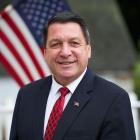
Description of office: The General Assembly is the legislative branch of government in Pennsylvania. It is composed of two houses: the Senate is the upper house, and the House of Representatives is the lower house. A majority vote in both houses is necessary to pass a law. The PA House of Representatives consists of 203 members representing one district each, with an equal number of constituents. Representatives must be at least 21 years old, have been a citizen and a resident of the state four years and a resident of their respective districts one year before their election, and shall reside in their respective districts during their terms of service. The House develops budget packages, makes taxation decisions, allocates spending, and passes laws (including redistricting in collaboration with the Senate). The House also has the exclusive authority to impeach public officials. Representatives also serve on various policy committees that may propose legislation.Term: 2 yearsSalary: $113,591Vote for ONE.Note: On Democratic and Republican primary ballots, voters will also choose members of the State and County Committees. We do not list these candidates on Vote411. For information on these candidates, we suggest you contact your local Democratic or Republican Party committee.
County
Bucks
Occupation
Customer Care
Affordability - particularly around utilities - is the top issue facing the commonwealth, especially the 145th. The cost per KWh is increasing at a higher rate than the national average and people are seeing their bills spike. We must give PUC's more power to regulate utility and make sure that data centers are paying their fair share for their electrical consumption.
Our elections are currently under fire with attempts to disenfranchise voters and make it more difficult to vote. We must protect our elections from changes in postmarkings making it more difficult to vote via mail-in to attempts to ballot purges to stopping voter ID requirements that restrict those with name changes. Our elections are free and fair and we must stop attempts to undermine them.
We cannot have a budget process that shuts the government down for four months at a clip while schools and public transportation go unfunded. We should work to pass legislation to make sure that necessary government services under continuing resolutions even when the budgets fail.
Yes. We need a government that works for the people to protect costs, environment, and land rather than serving corporations and their interests, especially when the benefits to the public are minimal to detrimental.
County
Bucks
Occupation
PA State Representative
Education
BA Johnson & Wales University
Qualifications
6 terms as Sate Representative in the 145th Legislative District, Republican Chairman of Intergovernmental Affairs and Operations, Chairman of the Richland Township Board of Supervisors, Chairman of the Richland Township Preservation Board, Member of the Richland Township Planning Commission
Families across our district are feeling squeezed by higher utility bills, rising food prices, housing costs, and the overall strain of inflation. Government should not make that worse. I believe we need to rein in spending, promote economic growth, and stop policies that drive up costs on households and employers. That includes pushing back on energy policies that would raise electric and heating bills. We need a stronger economy, a healthier business climate, and a state government that helps people get ahead instead of making everyday life more expensive.
Public confidence in elections matters. I support requiring identification to vote because it is a reasonable step that helps verify eligibility and strengthens trust in the outcome. At the same time, our system should remain straightforward and accessible for eligible voters. We should focus on clear rules, consistent procedures, and better administration so elections are secure, orderly, and worthy of the public’s confidence. Protecting the integrity of the vote and making participation simple can and should go hand in hand.
Too often, Harrisburg spends first and asks questions later. That is not sustainable. When fraud and abuse grow inside public programs, the people who pay the price are taxpayers and the communities relying on those dollars for schools, infrastructure, and public safety. I support tougher oversight, stronger auditing, and a budget process that puts essential services first instead of wasteful spending. Pennsylvania needs to pass its budget on time and treat every public dollar like it matters because it’s not Harrisburg’s money, it’s yours.
Data centers can be a real asset by expanding the tax base, encouraging investment, and creating new opportunities in our communities. However, growth has to be handled the right way. Decisions involving land use, utility demand, and environmental impact should not be dictated from Harrisburg. Local officials are in the best position to decide what fits their community. I support preserving municipal authority while making sure any project can meet its own infrastructure needs and does not shift added costs or strain onto existing residents and businesses.