Public Policy Priorities
Housing Affordability and Neighborhood Stability, Public Safety and Community Well-Being, Fiscal Responsibility and Core Services, and Transportation and Infrastructure
Qualifications and Experience
Over 37 years of working for the City of Tempe as a social worker, then in the Public Works department, and finally as a City Councilmember
Memberships & Affiliations
I serve as the Chair of the Valley Metro Regional Public Transportation Authority Board and on the Board of Directors for the YMCA, Tempe Tourism, and the National Democratic Municipal Officials Board. Her passion for service also led her to volunteer with groups such as the Assistance League of East Valley and serves as the Neighborhood Watch Captain in her neighborhood.
Endorsements
All 40+ available at https://www.electjenadams.com/endorsements
Community Service
My dedication to Tempe extends beyond my professional life. I am deeply involved in community organizations, including: Habitat for Humanity, The Kiwanis Club of Tempe, and Tempe’s Litter and Graffiti Cleanup Programs.
Education
I have a Bachelor's degree from the University of Nebraska and a Maters in Social Work from Arizona State University
Housing affordability requires multiple tools working together. I prioritize public-private partnerships like Tempe’s Hometown for All program, which leverages development to fund affordable housing without raising taxes. I support faster permitting for affordable projects, preserving existing naturally affordable housing, and targeted down-payment assistance for first-time buyers. Growth must be paired with infrastructure and neighborhood input so new housing strengthens Tempe rather than displacing residents. The goal is a balanced housing supply that serves renters, families, seniors, and essential workers.
I evaluate large developments based on compatibility with surrounding neighborhoods, infrastructure capacity, and clear public benefit. Height and density must align with adopted plans and include mitigation for traffic, utilities, and public safety. Student housing and major projects should contribute to affordability, transportation solutions, and public amenities. I do not support one-size-fits-all development; every proposal must earn community trust through transparency and meaningful engagement.
If revenues decline, my priority is protecting core services that directly impact residents’ safety and quality of life. That includes public safety, infrastructure maintenance, and housing and human services. I would seek efficiencies, delay non-essential projects, and aggressively pursue grants before reducing frontline services. Programs that show measurable results, like CARE 7 and pavement restoration, should be protected or expanded because they prevent higher costs later.
My public safety approach is data-driven and balanced. I support investing in policing, prevention, and alternative response programs that match the need. CARE 7, park rangers, and co-responder teams allow sworn officers to focus on serious crime while addressing mental health and homelessness effectively. Resources should follow outcomes, ensuring residents feel safe while responses remain appropriate, humane, and effective.
I ensure engagement by meeting residents where they are, not just at City Hall. That includes neighborhood meetings, one-on-one conversations, partnerships with community organizations, and early outreach before decisions are made. I work to amplify voices that have historically been underrepresented by building trust and maintaining accessibility. Listening first leads to better policy and stronger community confidence in government.
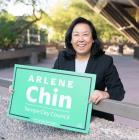
Public Policy Priorities
Ensure Tempe Grows Responsibly, Protect Our Communities, Care for the Vulnerable, and Make Tempe a Leader in Sustainability
Qualifications and Experience
In 2019, Arlene Chin was selected from a pool of 50 applicants to fill a vacant seat on Tempe’s City Council. She served from May 2019 to July 2020, becoming the first Asian American to hold the position in the city’s history. In 2022, she ran and won the most votes in a city-wide election, thus starting her first full term as an elected Tempe City Council member. Born in San Francisco to Chinese immigrant parents, Arlene moved to Tempe as a child and attended Kyrene and Tempe Union public schools. Her passion for public service began as a teenager when she joined the Mayor’s Youth Advisory Committee and was part of the delegation that earned Tempe’s All-American City designation. For more than 45 years, she has actively contributed to Tempe through many leadership roles.
Memberships & Affiliations
See them here: https://www.arlenefortempe.com/learnmore
Endorsements
See them here: https://www.arlenefortempe.com/endorsements
Community Service
President, Tempe Community Council Board of Directors and Chair, Tempe Human Relations Commission
Education
I am a graduate of Arizona State University (B.A., Organizational Communication) and Northern Arizona University (M.Ed., Educational Leadership)
Housing affordability requires steady, multi-layered action. I support expanding affordable and workforce housing through inclusionary policies, incentives for developments that include affordable units, and partnerships with nonprofit housing providers. We should continue prioritizing housing near transit, jobs, and services to reduce overall costs for residents. I also support using city-owned land strategically, streamlining permitting for projects that meet affordability goals, and protecting existing neighborhoods. There is no single solution, but consistent progress using proven tools can help renters and homeowners stay in Tempe.
I evaluate large developments based on alignment with the General Plan, neighborhood context, and whether infrastructure can support the project. Height and density must make sense for the location, especially near transit, while respecting nearby neighborhoods. I look closely at traffic, water, public safety, and park impacts, and I expect meaningful community benefits such as affordability, open space, or infrastructure investment. Most importantly, residents must be meaningfully engaged early in the process. Growth should strengthen Tempe, not overwhelm it.
In times of uncertainty, stability and planning matter. I would prioritize protecting core services such as public safety, infrastructure maintenance, and programs that prevent crises, like housing and human services. I believe in avoiding reactionary cuts that cost more long-term. Instead, I would look for efficiencies, delay non-essential expansions, and carefully evaluate programs for impact. Investments that save money over time, such as sustainability and preventative services, should be protected or expanded.
Public safety must be both effective and compassionate. I support strong police, fire, and medical services, while also investing in prevention and co-responder programs like Care7 that reduce repeat calls and improve outcomes. Resource decisions should be guided by data, response needs, and what best resolves situations safely. When we address behavioral health, housing instability, and substance use appropriately, our first responders can focus on emergencies and our community becomes safer overall.
Listening first is central to how I govern. I hold office hours, attend neighborhood meetings, and meet residents where they are, not just at City Hall. For underrepresented communities, I work with trusted organizations, provide multilingual communication, and ensure engagement happens early, before decisions are finalized. Community input should shape outcomes, not simply be a box we check. When people feel heard, we make better decisions and build lasting trust.
Campaign YouTube
Public Policy Priorities
Joe Forte, running as an independent for Tempe City Council, is a Navy veteran, small business owner, and longtime Tempe resident whose public policy priorities focus on common-sense solutions that put people first. He wants to keep taxes low by spending city money wisely and avoiding waste, strengthen public safety through community policing and mental health support, and make life easier for small businesses by cutting red tape and creating opportunities for young entrepreneurs. He supports balanced growth that includes affordable housing incentives without harming single-family neighborhoods, aims to ease traffic congestion and improve infrastructure like bike paths, and pushes for a cleaner, greener Tempe through efforts like Keep Tempe Beautiful. Joe also champions personal freedom with a “Live and Let Live” approach, fewer unnecessary rules, better support for youth and education, and transparent government that listens to residents and stays free of party politics.
Qualifications and Experience
Joe Forte is well-qualified to serve on the Tempe City Council thanks to his strong background and community involvement. He is a U.S. Navy veteran who learned leadership and discipline during his service. A longtime Tempe resident of over 20 years, he graduated from Arizona State University as a first-generation college student and is currently earning his MBA there. As a small business owner, he co-founded D-MAK Productions, a video company, and co-owns an insurance adjusting firm, giving him firsthand knowledge of what entrepreneurs need to succeed. Joe founded Keep Tempe Beautiful, a nonprofit dedicated to keeping the city clean and green. He currently serves on Tempe’s Development Review Commission, the Kiwanis Club of Tempe board, the Tempe Sister Cities board, and is a member of the Tempe Diablos. Running as an independent, Joe brings real-world experience, hard work, and a deep commitment to making Tempe better for all residents.
Memberships & Affiliations
Joe Forte has strong memberships and affiliations that show his deep involvement in Tempe's community. He is currently a commissioner on Tempe’s Development Review Commission, where he helps review building and land-use projects. He serves as a board member for the Kiwanis Club of Tempe, focusing on youth programs, and on the board of Tempe Sister Cities, which builds international cultural connections. He is also a member of the Tempe Diablos, a civic group that raises over $1.5 million each year for scholarships, teacher grants, and youth activities. Joe founded Keep Tempe Beautiful, a nonprofit dedicated to cleaning up litter, planting trees, and improving sustainability—he now serves as an emeritus (honorary) board member and advisor after leading it for several years. These roles highlight his commitment to service, youth support, environmental efforts, and local leadership as a longtime Tempe resident and independent candidate.
Endorsements
Joe Forte has received endorsements from the Maricopa County Libertarian Party and the Arizona Legislative District 12 Republicans in his run for Tempe City Council. The Maricopa County Libertarian Party officially backed him in December 2025, praising his support for limited government, low taxes, personal freedom, cutting red tape, and his "Live and Let Live" philosophy that focuses on individual rights without unnecessary government rules. The Arizona Legislative District 12 Republicans also endorsed him, showing he has backing from both libertarian and conservative groups even though he runs as an independent. These endorsements highlight his appeal across different political views that value fiscal responsibility, small business support, and less government interference in people's lives.
Community Service
Joe Forte has a strong record of community service in Tempe. He founded Keep Tempe Beautiful in 2021, leading efforts to remove over 20,000 pounds of trash, plant nearly 200 trees, and engage thousands of volunteers to make the city cleaner and greener—he now serves as an emeritus board member and advisor. He is a board member of the Kiwanis Club of Tempe, supporting youth programs and events for kids. He serves on the board of Tempe Sister Cities, promoting cultural exchanges. As a member of the Tempe Diablos, he helps raise over $1.5 million annually for scholarships, teacher grants, and youth activities. Through these roles and regular neighborhood cleanups, Joe consistently gives back to Tempe’s environment, young people, and community.
Education
oe Forte's education includes a bachelor's degree from Arizona State University, which he earned in 2010 after serving in the U.S. Navy. He moved to Tempe in 2006 to start his undergraduate studies as a first-generation college student, majoring in small business and communications. He is currently pursuing an MBA at ASU and is set to graduate in May 2026. His college experience helped him build skills in business and leadership that he uses today as a small business owner and community leader.
To make housing more affordable in Tempe for renters and homeowners, I would speed up approvals for new homes in already higher-density areas, offer builders incentives like faster permits or fee reductions for including affordable units (for those earning 60-80% of area median income), support accessory dwelling units by simplifying rules, and work with nonprofits to add more income-restricted rentals. I would also use city tools such as density bonuses, expedited reviews, and smart zoning updates to increase overall housing supply, ease price pressure, and help lower rents and home costs over time without raising taxes or changing single-family neighborhoods.
Candidate has not yet responded.
When voting on large development proposals in Tempe, including student housing, I would follow the Tempe General Plan 2050 by supporting taller, denser buildings downtown or near transit while rejecting excessive height or density near single-family neighborhoods to protect their character. Every project must prove it won’t worsen traffic, parking, water, or schools without developers fully funding needed upgrades upfront, and I would require meaningful community benefits like affordable or workforce housing and public amenities such as parks or transit improvements. I would strongly consider resident input, voting against projects with overwhelming neighborhood opposition, and prioritize developments that add needed housing while making life better and more affordable for current residents through transparency and fairness.
Candidate has not yet responded.
My public safety priorities for Tempe center on creating secure neighborhoods through strong community policing with trusted officers, expanded co-responder programs pairing mental health professionals with police for crisis calls, and prevention via youth programs and community partnerships to address root causes like substance abuse. When allocating resources among policing, prevention, and alternative or co-responder programs, I would use these criteria: proven effectiveness based on data and results, direct input from residents and officers, cost-efficiency for maximum safety impact, balanced funding across approaches, and flexibility to shift resources as needs evolve, such as increasing co-responder support for rising mental health calls. This evidence-based, resident-first approach keeps Tempe safe without wasting resources.
Public Policy Priorities
Community Development, Public Safety, Engagement, Equity in Education
Qualifications and Experience
Berdetta Hodge is a trailblazing public servant, trusted advocate, and the first African American woman ever elected in the City of Tempe. Throughout her first term, she has become a respected leader known for championing public safety, strengthening community partnerships, and pioneering solutions that reflect the values and needs of Tempe residents. With more than twenty years of experience serving children, families, and educators as a longtime community volunteer and former Governing Board President of the Tempe Union High School District, Berdetta entered city government with a clear belief that strong cities are built on strong schools, safe neighborhoods, and leaders who always show up for the community.
Memberships & Affiliations
Please see my Council page for a full list: https://www.tempe.gov/government/mayor-and-city-council/berdetta-hodge-councilmember
Endorsements
Berdetta is the only candidate endorse by all 5 living Mayors in Tempe. Please see my website for more: https://www.hodgefortempe.com/endorsementsl
Community Service
Please see my Council page for a full list: https://www.tempe.gov/government/mayor-and-city-council/berdetta-hodge-councilmember
Education
All of my education has been in Tempe. Nevitt Elementary, Moseley Middle School, and Arizona State University.
Tempe is a land locked city that is frequently preempted by the state legislature for policies to mandate affordability. We need to be able to build mixed unit housing from affordable to luxury on the same property to provide a wide range of housing in a limited amount of space. This also allows for upward mobility for residents which keeps Tempe a desirable place to live. We can also make the process of building ADUs and affordable units more accessible and easy to build. We can also continue to use city property to build affordable housing like we did on Apache at the former Food City location.
Tempe voters overwhelmingly approved the 2050 General Plan and we try to stay as close to those guidelines as possible. We need to make sure we have a good balance between historical preservation and density. We need more housing, but that density should match the needs and culture of surrounding neighborhoods.
Tempe is facing reduced revenues in 2026. My preference is to look at the budget in its entirety and look for ways to cut the fat. The City must provide services for our residents, so we could look at increasing maintenance budgets rather than increase capital spending.
I’m a strong proponent of our co-responder programs. This council has increased our budget and headcount for our fantastic CARE7 team to join officers on calls and address the emotional needs of these incidents. We’ve reintroduced Park Rangers in city parks to provide resources without using punitive measures as the first response. I am also proud to have led the adoption of the Sandy Hook Promise in Tempe - the second city in the country to do so. And I also led the passing of the Brass Knuckles ordinance after the tragic death of Preston Lord in Gilbert.
I have endeavored to make myself as accessible as possible through my monthly Breakfasts with Berdetta, my monthly newsletter that goes out to over 20,000 people, partnerships with businesses and community organizations that foster creation of new programs and building bridges. Being a Governing Board member also allows me to built stronger relationships with our local school districts and ASU. Tempe Thrive is a program that came from these partnerships to continue developing relationships among our schools and business communities.
Campaign YouTube
Public Policy Priorities
Affordability, balanced budgets, housing and homelessness, public transit, Pre-K expansion, community security and stability
Qualifications and Experience
Attorney, Public Policy Development Expert, Community Organizer, Mutual Aid Volunteer, former Small Business Owner, former Arts and Culture Commissioner for the city of Tempe, former Legislative and Administrative Fellow for San Francisco City Supervisor Dean Preston, Tempe Resident of 25 Years, Wrote and Successfully Lobbied for passage of 2022's HB 2604 Which Expanded Arizona's Protective Orders and Emergency Protective Orders for Survivors of Domestic Abuse and Their Minor Children.
Memberships & Affiliations
Democratic Socialists of America, Working Families Party, Democratic Party
Endorsements
State Senator Lauren Kuby, State Senator Analise Ortiz, State Representative Brian Garcia, Kyrene School District Governing Board President Kevin Walsh, Phoenix City Council Member Anna Hernandez, Tempe Local Business Owner Gabe Hagan, Phoenix Metro DSA, Arizona Young Democrats, Maricopa County Young Democrats, Arizona State University chapter of the United Campus Workers of Arizona, Unity Rising, AZ Working Families Party
Community Service
Mutual Aid Volunteer with Tempe Really Really Free Market and AZ HUGS, Tempe Cranksgiving Participant 2025, Works as an Attorney for the AZ Attorney General's Criminal and Civil Litigation and Advice Section of the Child and Family Protection Division.
Education
J.D. from Golden Gate School of Law Honors Lawyering Program || B.A. from Arizona State University Herberger Institute for Design and the Arts
In order to secure affordable housing options for Tempe residents and our incoming workforce, I would...
1. Use our publicly owned parcels of land to build public housing that can be rented to Tempe residents by the city itself at sub-market rates.
2. Implement density bonus programs, especially around high transit areas to secure federal funding for affordable housing and public transit expansions.
3. Expand rental assistance programs and implement rent stabilization measures on all city owned, insured, financed, or subsidized housing to allow low income residents to secure dignified housing.
4. Establish middle-housing/mixed income overlays in Tempe neighborhoods with a need for additional housing and space for expansion.
I want development to work for Tempe, not the other way around. When reviewing development proposals, I will need to see meaningful and open-minded participation in community approval processes, significant financial donations to Tempe's housing affiliate and Tempe Community Action Agency, compliance with green codes, commitments to unionized labor, an enforceable agreement to include sub-market rate housing units, and, in a perfect world, a right of first refusal for the city to purchase several units that will be maintained by the city as permanent supportive housing.
I would cancel the contract with Flock Safety, which sells automated license plate readers which have been found to feed our personally identifying information into immigration enforcement databases.
Between 2022 and 2025, Tempe spent $137,000,000 to reduce our unhoused population from 384 individuals to 277 individuals. That comes out to over one million dollars per person. I would reduce inefficient spending on homelessness by building permanent supportive housing and implementing the historically successful housing first policy that has successfully ended homelessness in cities around the world. This will reduce costs relating to the arrest and detention of unhoused individuals, increase their willingness to participate in addiction services and mental health services, and lead to them becoming stable, tax-paying members of our local economy.
I would also call for an audit of Tempe's highest spending departments and agencies, to identify areas where budget trimming could occur.
My public safety priority is protecting our residents from the federal government's dangerous immigration enforcement operation and the opportunists taking advantage of people by pretending to work for ICE. That means cancelling Tempe's contract with Flock Safety to protect our residents' private information from immigration enforcement agencies. It means making sure that our law enforcement officers do not profile or detain anyone based on the color of their skin, the language they speak, or the job that they work. In order to keep our public facilities, like schools, libraries, and government buildings open to our residents, it means keeping immigration enforcement agencies from staging raids in our public spaces, and standing up for private businesses who don't want immigration enforcement agencies staging on their property. It also means ensuring that all law enforcement agents are readily identifiable by legal observers when they are on duty and not working undercover.
I would pass an ordinance establishing that public comment is a right in Tempe and it cannot be abridged or abolished as several cities in Maricopa county have recently done. I would work with local activists and neighbors to modernize and democratize our neighborhood associations so that tenants are included as members in the neighborhood associations where they live.
I would reach out directly to local organizations and community leaders representing historically marginalized or underrepresented groups to develop new rules and incentives around political participation.
Campaign YouTube
Public Policy Priorities
1. Balanced, Responsible Budgeting: I support a full review of city spending to identify and reduce costs that don’t directly serve residents. My priority is to protect core services—public safety, parks, transit, senior programs—without raising taxes. 2. Affordable Housing for All Generations: Tempe needs more affordable and workforce housing options for young people and families. But we also must expand elder‑care housing (1 in 4 Tempe residents is over 60!) and strengthen aging‑in‑place supports so seniors can remain in their homes if they choose. I support creative, community‑based strategies that increase housing supply while respecting existing neighborhoods. 3. Transparency and Better Communication: Residents deserve clear explanations of how and why decisions are made. Improving transparency is key to rebuilding trust and ensuring the City Council’s actions reflect what Tempe residents want and need.
Qualifications and Experience
I bring experience in corporate communications, local politics, and city operations. I’ve lived in large cities, small towns, and other countries, giving me a broad view of effective public policy and community design. I’ve run local campaigns and spent two years working in Tempe City Hall as a council assistant, building strong relationships with staff and gaining a clear, practical understanding of how Tempe works and how to deliver results for residents.
Memberships & Affiliations
Arizona Legislative District 12 Precinct Committee Member, Arizona Democratic Party State Committee Member
Endorsements
Former Tempe Mayor and U.S. Congressman Harry Mitchell, Former State Senator Sean Bowie, State Senator Lauren Kuby, State Representatives Stacey Travers and Brian Garcia, TUHSD President Armando Garcia and Board Member Nicole Gutierrez Miller, Former TUHSD President Sarah James, Young Democrats of Arizona, Maricopa County Young Dems, AZ College Dems, ASU Young Dems, AZ High School Dems, Keep AZ Blue Student Coalition, Unity Rising, American Federation of State, County, and Municipal Employees, Kyrene Elementary Board Member Amy Satre, Former Kyrene Elementary Board Member Margaret Wright, Balsz School Board Member Jacob George
Community Service
Former Kyrene Middle School PTO President, Tempe Family YMCA Advisory Board Member, Youth Impact Mentoring Board Member, Big Brothers/Big Sisters Big Night Out Committee Member
Education
Bachelor of Science in Journalism, Texas Christian University
I would prioritize increasing the supply of affordable and workforce housing while preventing displacement. Tempe should use city‑owned land, long‑term ground leases, and partnerships with nonprofits, mission‑driven developers, and churches with underused land to build mixed‑income and senior‑friendly housing. I support preserving naturally affordable homes, expanding aging‑in‑place supports, and strengthening rental assistance. Updating zoning to allow more diverse housing types in appropriate areas and streamlining permitting for projects that include affordable units will help renters, first‑time buyers, families, and seniors stay in Tempe
I'd evaluate large development proposals based on whether they fit the surrounding context, provide real community benefits, and avoid shifting long‑term costs onto residents. Height and density must be appropriate for the area and supported by existing or planned infrastructure, including traffic capacity, water, parks, and public safety. Projects should demonstrate how they will mitigate impacts on neighborhoods and contribute to Tempe’s long‑term fiscal health. I also look for meaningful community benefit, such as affordable or workforce housing, senior‑friendly units, open space, or transportation improvements, and I'd require transparent communication from applicants. Student housing should meet demand without overwhelming nearby neighborhoods or city services. My standard is simple: projects must be financially responsible, context‑appropriate, and clearly beneficial to Tempe residents
I would start by launching 90‑day zero‑based budgeting sprints in our highest‑spending departments. This process rebuilds budgets from the ground up, identifies outdated or low‑value spending, and typically reduces costs for cities by 2–5%. Tempe needs to re‑evaluate what we fund, and stop doing things simply because “we’ve always done it.” My priority is to preserve core services like public safety, parks, transit, senior programs, and essential maintenance while trimming administrative overhead, duplicative programs, and non‑essential spending. If revenues fall - and they are - we should focus resources on infrastructure repair, aging‑in‑place supports, and housing and homelessness programs that prevent higher long‑term costs. The goal is a disciplined, transparent budget that protects residents without raising taxes.
A strong public safety system starts with prevention. I prioritize Housing First and other evidence‑based models that reduce police calls, ER visits, and jail bookings by stabilizing people before crises escalate. When allocating resources, I look at what actually improves safety and lowers long‑term costs: expanding street outreach, supportive housing, mental‑health and addiction services, and co‑responder teams that free police to focus on violent crime and urgent calls. I support maintaining adequate police staffing while shifting more resources toward programs that prevent harm, reduce repeat crises, and keep neighborhoods stable. My criteria are simple: invest in what works, measure outcomes, and fund the strategies that make Tempe safer and more sustainable over time. We can learn best practices from what's working in other cities and implement them where applicable here in Tempe without reinventing the wheel.
I would start engagement earlier in the process and make it easier for people to participate. That includes holding meetings in neighborhoods, not just at City Hall. I'd offer virtual options, and request to provide clear, plain‑language summaries of proposals so residents don’t need to dig through technical documents to understand what’s happening. I would work directly with neighborhood chairs, schools, faith communities, and nonprofits to reach residents who have historically been left out of decision‑making. I also support structured feedback loops so people can see how their input shaped the final outcome - not everyone will agree with decisions Council makes, but we owe it to them to explain WHY those decisions were made. Meaningful engagement requires consistent communication, accessible information, and a commitment to listening to our residents first and foremost.
Public Policy Priorities
Transparent City Government, Public Education, Sustainability, Arts and Culture, Affordability, Homelessness
Qualifications and Experience
Lifelong Tempe Resident, Nonprofit leader, Budget realist, and Community first problem solver.
Endorsements
I’m not the establishment’s candidate, and that’s intentional.
Community Service
TCAA I-Help, Tempe Leadership, Mosley Neighborhood Association
Education
BS Communication ASU
Everyone is screaming the answer here is, “just build more units!” We’re doing a lot to build units, we’re probably doing as much as anyone in the Valley except Phoenix, and costs are not going down. I might be the only one brave enough to say, we need to think about the long-term picture. We need to share this as an entire metropolitan effort, and Tempe should be leading. We need a collaborative, multi-city effort focused on building around public transportation and infrastructure.
When voting on large development proposals in Tempe, including student housing, I would apply standards based on fairness, long-term capacity, and real community benefit. Growth is part of Tempe’s story, but it only works when it is honest about its impacts and shared by the people who live here, not just those who profit from it.
When money is tight, the city should prioritize core services that keep people safe, housed, and healthy, while being honest about what we can and cannot afford.
Protect funding for core public safety, with a balanced view. That includes fire, and emergency response, but also the upstream services that prevent crises in the first place such as HOPE and Care 7.
Prioritize infrastructure maintenance and resilience. Roads, water systems, shade, and heat mitigation are not optional in Tempe’s climate. Deferred maintenance becomes far more expensive later. Even in a downturn, maintaining what we already have must come before expanding new obligations.
Protect community-serving programs that deliver high value for relatively low costs, libraries, parks, youth programs, and arts and cultural programming that serve real people and neighborhoods. These services are often the first on the chopping block, but they are essential to quality of life, public trust, and long-term economic health.
Public safety in Tempe means more than enforcement, it means creating the conditions where people are less likely to be harmed in the first place. My priorities are reducing gun violence, preventing crisis before it escalates, and making sure public safety resources are used where they are most effective and accountable.
I would focus on access, trust, and follow-through, especially for communities that have been historically underrepresented. I come from those communities. North Tempe residents, artists, makers, renters, and service workers are often asked for input too late, after decisions are already shaped.
Engagement must happen earlier and in places people already gather, not just at City Hall during work hours. That means meetings in neighborhoods, libraries, schools, and community spaces, with flexible formats, language access, and fewer barriers to participation. Engagement should be two-way. Residents deserve to see how their input influenced decisions, with clear explanations when it cannot.
I would prioritize ongoing relationships over one-time outreach by supporting advisory groups and trusted community liaisons. When people see themselves reflected in decisions, trust grows and better policy follows.