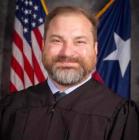
I’ve been a licensed attorney practicing law in Texas courtrooms since 2001. I have tried hundreds of jury trials as a prosecutor in both Hays and Collin Counties. I’ve authored a dozen appeals and done oral argument before the Third Court of Appeals. As the Judge of County Court at Law #2 I have presided over criminal, civil, probate and guardianship cases. I have been the Administrative Judge for the County Courts at Law. During my eight years on the bench, I’ve presided over the Veterans Court. I’ve also been the Judge of the Juvenile Court for four years.
A judge has to not only be fair, but be seen to be fair. That means being available in and out of Court to do the work. It also means treating everyone with courtesy and kindness. The judge should remember that each case is about real people with actual problems - and that usually we’re seeing them at their lowest and most vulnerable; in their moment of most need.
The Juvenile Court has changed considerably in the last four years. Hays county needs to develop a full-time juvenile court with a Juvenile Master and a dedicated courtroom facility at the Juvenile Detention Center.
The County Courts at Law are much better equipped today than ever before to address these needs. We have a fully functioning Mental Health Court, are working toward a robust AOT Court and improvements to the responsiveness of the jail in addressing competency issues of inmates. Experience in the courtroom matters to identify, address and work with others to assist where appropriate those suffering with mental health and addiction issues. I remain attentive to these issues and will continue to direct people to the resources available as appropriate in each case that comes before the court.
The court primarily handles serious criminal cases, and I've been a criminal trial lawyer for over 35 years. I've been a prosecutor, as well as a defense lawyer. I'm board certified by the Texas Board of Legal Specialization as a specialist in criminal law and have handled literally thousands of criminal cases. I've tried over 150 criminal jury trials to a verdict, and I have presented oral argument to the Texas Court of Criminal Appeals. I received my B.A. in American Studies from Rice University and my law degree from the University of Texas at Austin.
The most important obligation of a judge is to ensure that every person, and party, who comes before the court is treated equally, and fairly, before the law. The most important traits for a trial court judge to achieve this goal are open-mindedness and a willingness to listen to people. Those have been my guiding lights for my last 35 years as a criminal trial lawyer. You have to possess the humility to understand that you don't always know all of the answers. You also have to understand that no two cases, or individuals, are exactly the same. What is fair for one may not be for another.
First, breaking the cycle of family violence -- making use of conditions of bail bonds, as well as our pretrial services department, to ensure that victims of domestic violence are not victimized again while cases are pending. We should also require status hearings for those on probation for committing violence to make sure that no new abuse has occurred. Second, reducing drunk driving -- making it easier for law enforcement to get blood search warrant requests reviewed in DWI cases, and requiring hearings for those on probation for DWI to make sure they are getting the help they need.
To help people with alcohol abuse, substance abuse or mental health issues, you must first identify them. Too many defendants currently fall through the cracks. The court should begin universal screening of defendants upfront regarding possible problems. Every defendant who goes on probation, or goes into a supervised diversion program, should be given an alcohol and drug abuse assessment regardless of their charge. They should also be screened to make sure they do not have any potential mental health issues. In addition, screening can be made a condition of bond for pending cases.
Career courtroom litigator handling this court’s mix of cases: Class A/B misdemeanors (DWI, assault/family violence, theft), county-court civil disputes, probate/guardianship, juvenile, mental-health matters, and de novo appeals. Handled hundreds of contested hearings and bench and jury trials from intake through enforcement. Also tried serious felonies and led accountability suits—helped remove an unfit Hays County District Clerk and pursued UPL, resulting in a felony conviction. Air Force veteran/intel analyst; UT Austin, Seattle U Law; represent veterans and counsel Task Force Butler.
Uphold the Constitution and the rule of law—impartially and transparently—so everyone receives a fair process, even in unpopular cases or under pressure. Protect due process, counsel, and participation; enforce evidence and procedure; and issue clear, plain-language orders. Ensure qualified interpreters, including Spanish, are essential to accurate records and meaningful access. Manage the docket efficiently and treat all with respect. Rights and public safety advance together.
Hays County is growing—our courts must keep pace while safeguarding impartiality, due process, and ethics. Priorities: launch an 18–24 year old diversion court and a juvenile mental-health diversion track, and expand the evidence-based Veterans Treatment Court; guarantee qualified, in-person Spanish interpreters at every hearing; secure sustainable funding for the Public Defender; end private fine collections and the 30% surcharge; publish clear court metrics and fully staff courts and pretrial services.
Expand diversion: treatment programs for eligible adults, a juvenile mental health track, and Veterans Treatment Court. Screen early, evaluate competency and commitment quickly, and tailor evidence-based plans. Apply firm, humane accountability with graduated incentives and sanctions, and with smart bond and supervision, coordinating with pretrial, probation, and providers. Work with Hays County Commissioners Court to expand wraparound services—housing, treatment access, peer recovery, and transportation—so ordered help is delivered—safer communities, fewer victims, stability.
I've been a practicing attorney since 2012, prior to that I was a law clerk for the Hays County District Attorney's Office from 2010-2012. I am a former prosecutor, criminal defense attorney, juvenile defense attorney, civil probate litigator, certified guardianship attorney, certified guardian, and a mediator with certificates in general, family law, and guardianship law. I regularly attend continuing education course related to litigation and other matters heard by this specific bench. I have testified at the state legislature relating to laws affecting cases heard by this court.
To be available to hold hearing and trials and much as possible to ensure justice is not delayed or denied. Everyone deserves a day in court and a large barrier in the American justice system is the availability to have cases scheduled to be heard by a judge.
My top priority is to have the court's schedule be predictable and reliable for the citizens to be heard. I would work to ensure efficiency so that all pre-trial requirements are met and that the case can proceed to resolution in a efficient manner.
Thankfully our County Courts at Law have implemented many tools to aid those with mental health or substance abuse issues, I would ensure that is continued and maintained. I would continue to ensure relationships with our community partners are maintained and that Hays County continues to lead Texas in prioritizing mental health or substance abuse rehabilitation among criminal defendants.